Is the Radeon RX 9070 XT Really Faster Than the RTX 5090?
Can a Radeon RX 9070 XT really beat Nvidia's flagship RTX 5090? We tested 11 games at 1440p and 4K to see when driver overhead matters, and when an ordinary CPU bottleneck is actually to blame. Read Entire Article
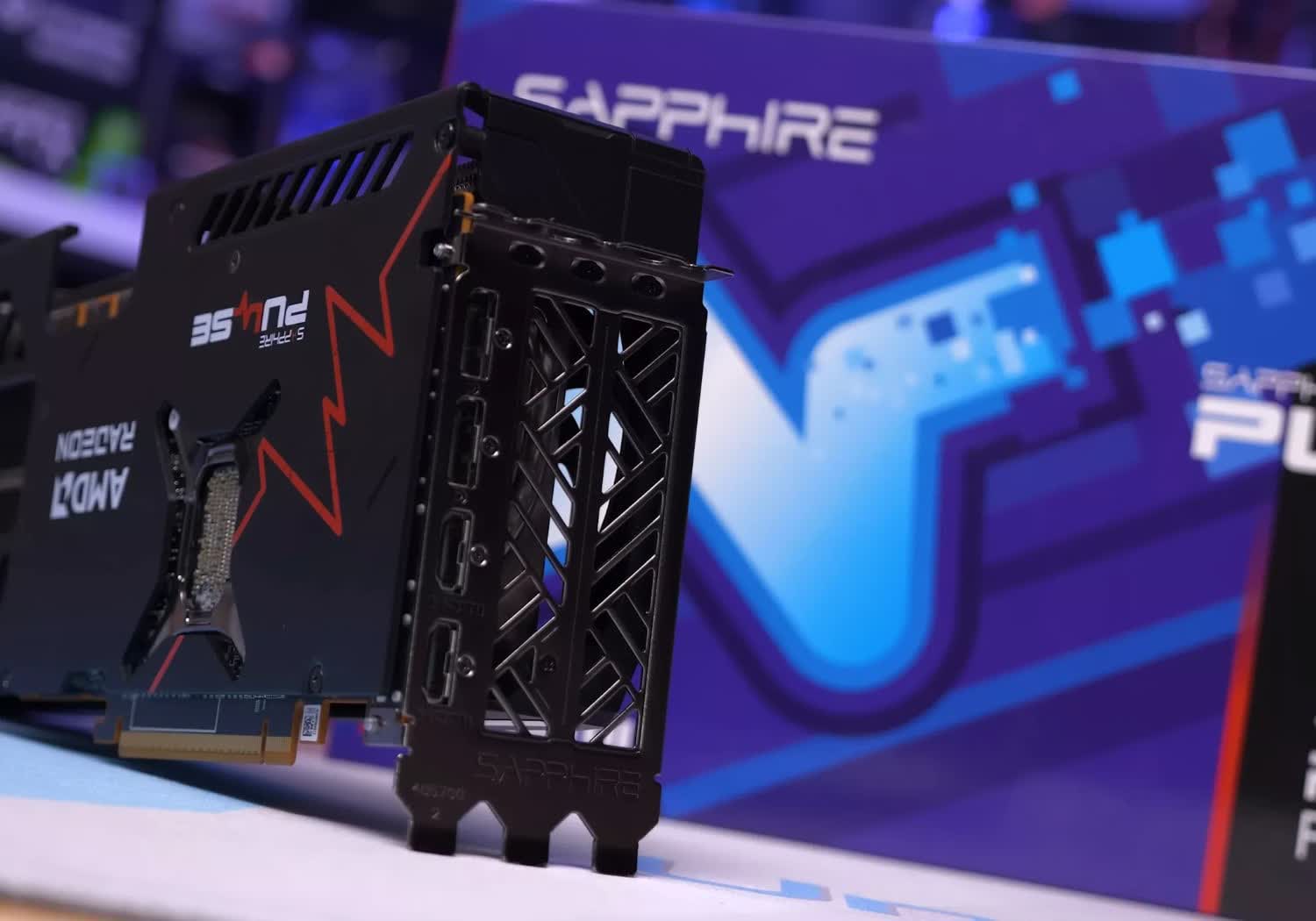
The Radeon RX 9070 XT and GeForce RTX 5090 are two high-end graphics cards, and the question of whether the RX 9070 XT is faster than the RTX 5090 is a perplexing one. While it may seem implausible at first, there are indeed instances where the RX 9070 XT can surpass the RTX 5090 in performance. However, this does not necessarily mean that the RX 9070 XT is inherently faster overall.
In the past, some Radeon GPUs demonstrated up to 30% greater performance than their counterparts in CPU-limited gaming scenarios. This was particularly true for lower-end processors, which were more likely to encounter CPU bottlenecks while gaming. Radeon GPUs, on the whole, placed less demand on the CPU in these situations, providing additional performance headroom.
A similar situation was observed in a study comparing the Radeon RX 5600 XT with the RTX 3080. Contrary to expectations, the RX 5600 XT outperformed the RTX 3080 in certain scenarios, despite the RTX 3080 being around 130% faster on average. These results were achieved using an extremely slow processor, the Ryzen 5 1400, which allowed the researchers to test the impact of driver overhead on GPU performance.
Driver overhead refers to the amount of CPU processing power required by the graphics driver to translate game engine instructions into commands that the GPU can execute. While all graphics drivers require some CPU time, Nvidia's drivers have historically demanded significantly more in specific CPU-limited scenarios. It is crucial to note that Nvidia's driver overhead is not always responsible for the marginal differences observed between the RX 9070 XT and the RTX 5090.
In some cases, the similarity in performance may be attributed to a CPU bottleneck that limits both GPUs to roughly the same speed.
Recently, some have suggested that the RTX 5090 may not be as impressive in real-world use as it appears in reviews and benchmarks. They argue that when aiming for high frame rates (200+ fps), the CPU must handle significantly more work, and Nvidia's additional driver overhead could become problematic for the RTX 5090. This theory is based on the fact that before a graphics card can render a frame, the CPU must prepare the necessary data, including processing game logic, player inputs, physics, AI movement, and collision detection.
As the frame rate increases, the CPU must prepare more frames per second, which could lead to CPU bottlenecks.
Written by urgent.news from TechSpot's reporting — not their text. Machine-written — may contain errors; check the original before relying on it.