India sends ‘cockroach’ leaders to jail after protest
NEW DELHI: Two leaders of India’s youth-led movement Cockroach Janta Party (CJP) were remanded in custody for five days on Wednesday, as police clamp down on protests against the election commission. CJP activists and opposition parties have defied a security crackdown to demand the resignation of India’s chief election commissioner, accusing the poll body of manipulating voter rolls to benefit…
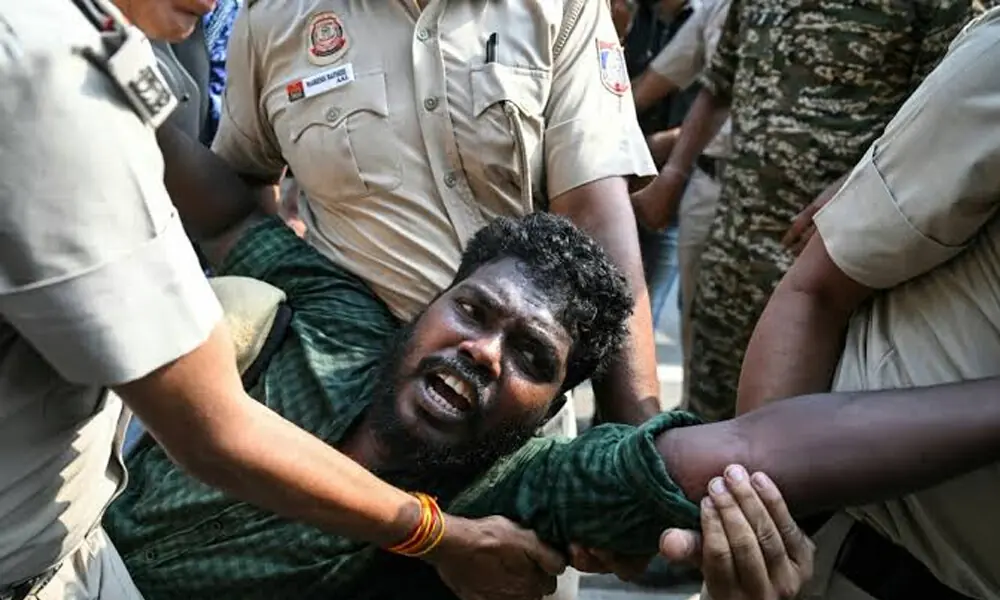
Two leaders of the Cockroach Janta Party (CJP), Ashutosh Ranka and Saurav Das, were remanded in custody for five days on Wednesday. Delhi Police stated the activists were taken into custody for alleged repeated attempts to violate the law and disturb public peace following their actions at Jantar Mantar. Business Recorder reports that CJP activists and opposition parties are demanding the resignation of Chief Election Commissioner Gyanesh Kumar, accusing the election commission of manipulating voter rolls to benefit the ruling party, a claim the commission has denied.
The Times of India reports that Rahul Gandhi expressed support for the CJP following the arrests, which occurred after the founders unfurled the Tricolour at Jantar Mantar. Several leaders from the INDIA bloc, including Mallikarjun Kharge, Dipankar Bhattacharya, MA Baby, D Raja, Manoj Jha, Sagarika Ghose, and Supriya Sule, demanded the immediate release of the CJP members.
Additionally, the Times of India notes that student protesters held a news conference detailing alleged police brutality during a protest seeking the CEC's resignation.
Separately, The Hindu reports that CJP founder Abhijeet Dipke has called for a ‘Lehra Do Tiranga’ gathering at Central Park, Connaught Place, in Delhi, on October 16.
Brief written by urgent.news from The Hindu, Times of India, Business Recorder — 3 reports on this story. Machine-written — may contain errors; check the original before relying on it.
This story
This is one outlet's version. Read the fullest account.
- Ankita Bhandari’s parents briefly detained after India Gate protest indianexpress.com
- Ankita Bhandari's parents detained at 4am during protest at Delhi's India Gate, mother threatens hunger strike hindustantimes.com
- Anti-CEC protest LIVE | Supreme Court likely to hear Rahul Gandhi, INDIA bloc leaders’ plea against SIR today thehindu.com