Houthis say targeted Saudi oil giant Aramco, vow more attacks
It has hit back with strikes against the group's stronghold in the Yemeni capital Sanaa, which for years has been under their grip.
The kingdom of Saudi Arabia dedicates a significant portion of its budget to defense, investing billions each year in an effort to safeguard its critical infrastructure. However, the nation has struggled to shield key assets, such as airports, refineries, and pipelines, from missile and drone attacks carried out by Houthi militants originating from Yemen.
Despite procuring advanced weaponry systems from the United States and Europe, the Saudi military possesses an extensive multi-layered air defense system. Despite these measures, Riyadh, the capital city, has recently faced deadly assaults from Houthi forces. Last year, Saudi Arabia allocated $83 billion to its defense budget, positioning it among the world's top ten military spenders.
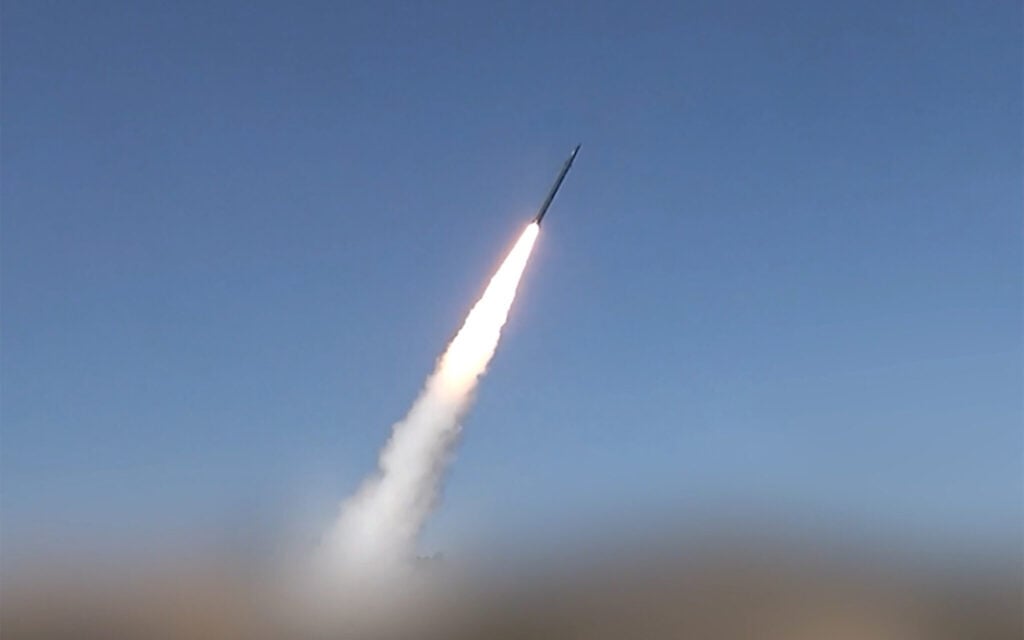
The country, roughly one-fifth the size of the United States and facing threats from three directions—east (Iran), north (Iran-backed militias in Iraq), and south (Houthi rebels), has much to protect. Iran unleashed approximately 1,000 missiles and drones during the peak of the conflict this year. Moreover, Iranian-backed militias in Iraq have targeted Saudi Arabia's vital East-West oil pipeline, while the Houthi rebels, supported by Iran, have launched missile attacks from concealed positions in Yemen's mountainous regions.
Satellite imagery reveals damage to the Saudi Arabia East-West pipeline following a drone assault on September 22. While the defense ministry manages to intercept a majority of the missiles and drones launched by the Houthis, not all are thwarted, and the Saudi authorities encounter challenging decisions in allocating their existing systems amidst numerous vulnerable installations.
Analysts from Vision2030.ai, an independent website, emphasize that defending Saudi Arabia necessitates safeguarding a vast network of targets, not just Riyadh or a single refinery. The Saudi defense system must promptly detect incoming threats, ascertain which to intercept, and warn civilians within mere moments. The Houthis have honed the technique of merging ballistic and cruise missiles with long-range drones, aiming to overpower Saudi defenses.
This strategy shares similarities with Russia's tactics, which frequently involve a swarm of drones alongside cruise and ballistic missiles in barrages against Ukraine. The Houthis employ cruise missiles that fly at lower altitudes, making them harder to identify and track. Additionally, they have introduced a new generation of ballistic missiles, boasting maneuverability.
No single air defense system can assure that every incoming threat will be intercepted. However, the Houthis have not been the sole source of the problem. Eight years ago, UN experts identified missile remnants, associated military equipment, and unmanned aerial vehicles of Iranian origin being introduced into Yemen, despite an international arms embargo.
Two years ago, the same panel asserted that the scale, nature, and extent of transfers of diverse military material and technology provided to the Houthis from external sources, including financial assistance and combatant training, were unprecedented. Experts note that the current Houthi missiles, such as the Hatem-2 and Palestine-2, share a striking resemblance to Iranian weapons, exhibiting enhanced speed and accuracy.
Written by urgent.news from Egypt Independent's reporting — not their text. Machine-written — may contain errors; check the original before relying on it.
This story
This is one outlet's version. Read the fullest account.
- Why billions spent on defense haven’t shielded Saudi Arabia from Houthi attacks egyptindependent.com
- IMF chief warns Saudi attacks could hurt global economy dailytimes.com.pk
- Oil prices rise as Houthi attacks, Hormuz strikes spur supply uncertainty hellenicshippingnews.com