GovTech and Google DeepMind developing real-time detection of AI scams on devices
Organisations will also receive funding through a new grant to protect against quantum threats.
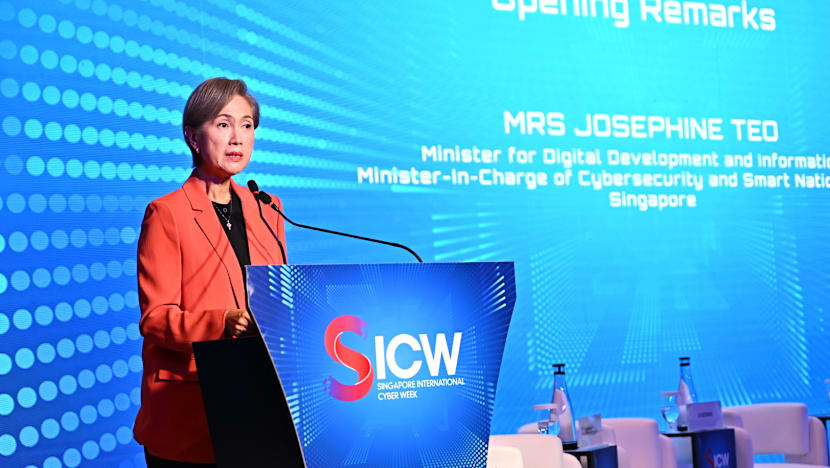
The Government Technology Agency of Singapore (GovTech) is teaming up with AI research lab Google DeepMind to create real-time detection of AI scams on devices, Minister for Digital Development and Information Josephine Teo announced on October 14. Teo, who oversees cybersecurity and the smart nation initiative, stated that this collaboration can provide enhanced protection while safeguarding user privacy.
By identifying manipulation signs early, users can prevent financial or credential losses, all while keeping their personal messages secure on their devices.
At the Singapore International Cyber Week, Teo emphasized that the fight against scams has become increasingly difficult due to AI misuse. She urged Singapore to strengthen its defences instead of avoiding AI altogether. Scammers often exploit multiple systems, interacting through social media, messaging platforms, phone calls, and financial institutions.
Each interaction presents an opportunity for intervention, but no single entity can monitor the entire chain. Therefore, Teo stressed the necessity of connecting defences so that a single signal from one part of the ecosystem can trigger action elsewhere.
AI can also play a crucial role in threat detection at scale. For instance, the Scam Analytics and Tactical Intervention System, developed by GovTech and the Singapore Police Force, utilizes AI to analyze over 600,000 websites daily in mere seconds. This system has thwarted around 20,000 malicious websites monthly and has expanded to include mobile numbers and suspicious online platforms.
Teo highlighted that Singapore's ability to detect and respond to threats at such speed and scale surpasses what human efforts alone could achieve.
In addition to addressing scams, Singapore must also prepare for potential quantum threats. Quantum computing, harnessing quantum physics principles, offers immense potential but poses a risk to current encryption methods. While it is uncertain when sufficiently powerful quantum computers will be available, Teo warned that malicious actors may already be attempting to exploit encrypted data in anticipation of this technology.
For critical infrastructure sectors such as energy, banking, healthcare, and transport, migration to quantum-safe solutions may take several years, starting with risk assessment, prioritization, and testing alternative encryption methods. In June, the Cyber Security Agency of Singapore issued guidelines for critical information infrastructure owners to complete migration by 2031.
Moreover, a new quantum-safe kickstarter grant will support organizations in transitioning from planning to implementation, with priority given to critical sectors like finance, communications, and digital transactions.
Written by urgent.news from Channel News Asia's reporting — not their text. Machine-written — may contain errors; check the original before relying on it.