Govt raises petrol price by Rs1.20 per litre, reduces high-speed diesel rate by Re0.17 per litre
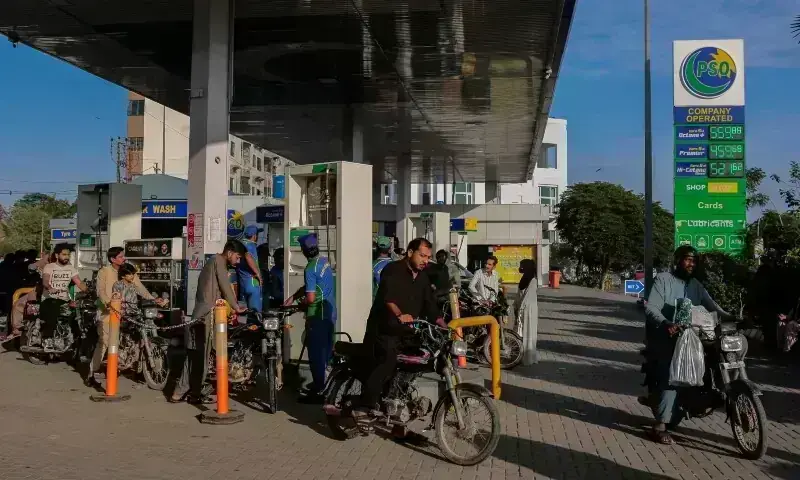
The Pakistani government announced on Wednesday a petrol price increase of Rs1.20 per litre and a reduction in high-speed diesel (HSD) prices by Re0.17 per litre. Consequently, petrol will now cost Rs393.86 per litre, while HSD will be priced at Rs396.65 per litre. The government retains taxes and duties of Rs114 per litre on petrol and Rs100 per litre on diesel.
According to a Petroleum Division notification, these new prices will be effective from October 15 (Thursday). The HSD price has dropped from a previous peak of Rs520.35, reached on April 3, following the escalation of the US-Iran war on February 28. Prior to this, petrol prices had begun rising from Rs266 in early March after the conflict began.
Meanwhile, the government has implemented various austerity measures in response to the rising fuel costs due to the ongoing Middle East conflict. These measures include curfews for markets, cutting fuel allocations for official vehicles by 50% for three months, and a relief scheme for motorcycle, auto, and 800cc vehicle users to alleviate the burden of increasing global oil prices.
Prime Minister Shehbaz Sharif announced this relief scheme on September 13. Previously, on July 17, Petroleum Minister Ali Pervaiz Malik revealed that fuel prices would now be determined on a daily basis due to fluctuations in international market prices following renewed hostilities between Iran and the US. Prior to this, weekly revisions to fuel prices had been announced since early March, alongside fuel conservation measures in anticipation of potential supply disruptions caused by the Middle East conflict.
The federal government also announced targeted relief measures in April, giving the Oil and Gas Regulatory Authority (Ogra) the responsibility of setting fuel prices daily based on international market trends. Petrol, primarily used in private transport, small vehicles, rickshaws, and two-wheelers, impacts the middle and lower-middle classes when prices change.
Diesel, used extensively in heavy transport, power plants, and large generators, also affects the general public when its price changes. Together, petrol and high-speed diesel (HSD) generate the majority of revenue, with monthly sales ranging from 700,000 to 800,000 tonnes, while kerosene sales are minimal at just 10,000 tonnes monthly.
Written by urgent.news from Dawn Business's reporting — not their text. Machine-written — may contain errors; check the original before relying on it.