Findings of addressing GBV financing study unveiled
ISLAMABAD: The Women’s Parliamentary Caucus (WPC) of the National Assembly of Pakistan, in collaboration with the Safeguarding Resource and Support Hub (RSH) Pakistan, launched the summary findings of the Safeguarding and Addressing Gender-Based Violence (GBV) Financing Study on Tuesday, at the Islamabad Marriott Hotel. The event brought together parliamentarians, safeguarding practitioners,…
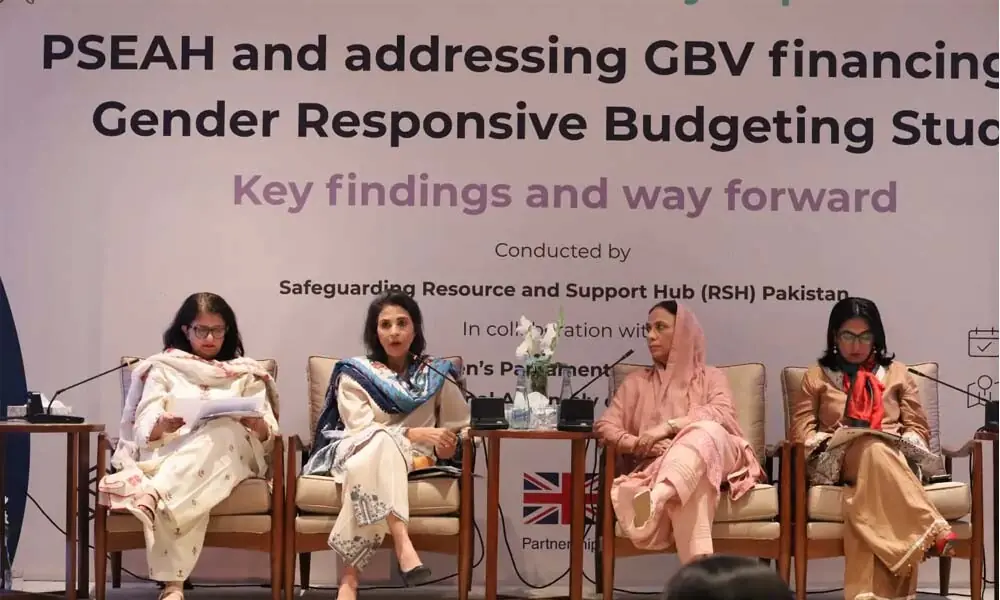
Islamabad witnessed a significant event on Tuesday as the Women’s Parliamentary Caucus (WPC) of Pakistan's National Assembly, in partnership with Safeguarding Resource and Support Hub (RSH) Pakistan, unveiled the summary findings of the Safeguarding and Addressing Gender-Based Violence (GBV) Financing Study. The gathering convened parliamentarians, safeguarding practitioners, development partners, gender experts, and other stakeholders to scrutinize how financing for GBV prevention and response, along with the prevention of sexual exploitation, abuse, and harassment (PSEAH), is incorporated into institutional and public financing processes.
The event emphasized the visibility and traceability of such financing, institutional accountability, gender-responsive budgeting, and parliamentary oversight, and offered a forum to discuss practical recommendations for advancing these issues through existing institutional mechanisms. Dr. Shahida Rehmani, a Member of the National Assembly and Secretary of the Women’s Parliamentary Caucus, underscored the crucial role of evidence-based parliamentary engagement in reinforcing institutional responses to GBV.
She emphasized that tackling gender-based violence necessitates more than robust legislation; it also demands institutional commitment, resources, and accountability mechanisms to translate policy into action. The WPC remains dedicated to advancing gender-responsive policymaking and bolstering parliamentary oversight to ensure that the prevention of violence and the protection of women remain top priorities.
Ms. Asma Kiran, Country Lead of RSH Pakistan, stressed the importance of enhancing the visibility and accessibility of financing for safeguarding and GBV prevention to institutional scrutiny. She highlighted that effective safeguarding hinges on a clear understanding of how resources are allocated, the integration of financing within existing systems, and the ability to trace its effectiveness in prevention and response efforts.
This study aims to bring these critical questions into sharper focus, bolster the evidence base, and stimulate constructive dialogue among Parliament, institutions, and development partners on practical pathways forward. The study's presentation dissected the visibility and traceability of financing, highlighted key findings and recommendations, and pinpointed areas necessitating further research and action.
Discussions also centered on how existing processes could better facilitate institutional action, accountability, and the execution of safeguarding commitments. Ms. Fauzia Viqar, Ombudsperson at the Federal Ombudsperson Secretariat for Protection Against Harassment (FOSPAH), addressed the audience with a keynote speech on translating evidence into prevention, response, and oversight.
The ensuing policy dialogue delved into the shift from budget allocations to implementation, focusing on financing, accountability, and institutional responses. Ms. Fauzia Viqar remarked that the efficacy of any policy framework is contingent on its consistent implementation and effective institutional accountability. She reiterated that making financing more visible and fortifying institutional oversight are vital steps to ensure that commitments on safeguarding and GBV prevention materialize into concrete action.
Rewritten by urgent.news; may contain errors — check the original.
Source: brecorder.com