Factoring In Lessons From The War In Ukraine: NATO’s Top Commander Presents Alliance’s “Theory Of Victory” In Warsaw
Supreme Allied Commander Europe General Alexus Grynkewich presented the Alliance's "theory of victory," which envisions blocking an initial attack, halting the enemy's further advance, and, if necessary, breaking the enemy's forces and its system for conducting combat operations. Grynkewich stated this at the Warsaw Security Forum, UATV English reports. According to the general, this isn't a…
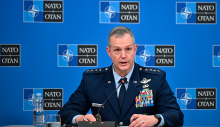
General Alexus Grynkewich, NATO's top commander for Europe, unveiled the Alliance's strategy for victory in the event of a Russian aggression, during the Warsaw Security Forum. The strategy, known as the "theory of victory," focuses on halting an initial attack, halting further advance, and if necessary, breaking the enemy's forces and combat operations. While not a specific military plan, it is a shared vision of how NATO should deter and defend.
This theory of victory is based on a strategy agreed upon by all 32 allies, incorporating lessons from modern wars, including Russia's conflict with Ukraine. The alliance's ground forces must stop the enemy's advance at the point of contact and prevent them from seizing Alliance territory. In the interim, aviation, naval, space, and cyber capabilities must rapidly secure freedom of maneuver and apply powerful, precise strikes.
If the attack persists, NATO should target not only the advancing forces but also all elements that support, sustain, and control their actions, combining precise munitions with numerous scalable systems across all domains.
Grynkewich explicitly stated that this concept does not aim for a strategic defeat of the adversary. The goal is merely to prevent any attack and the enemy from seizing and holding their territory. He emphasized that he does not view military conflict as inevitable. Instead, he works to dissuade conflict by openly communicating defensive intentions and maintaining open communication channels to address misunderstandings and foster transparency.
However, he also emphasized that readiness to fight necessitates planning based on what is possible, not just probable.
During a follow-up discussion, Grynkewich revealed that the final classified version of the strategy was completed about three months ago. The decision to release it now arises from heightened security concerns, such as acts of sabotage and arson, as well as the need to reassure citizens of Alliance countries about NATO's readiness to defend them. He stressed that if attacked, they are prepared to engage in battle immediately, but they remain committed to continuous preparation and training.
Written by urgent.news from UATV English's reporting — not their text. Machine-written — may contain errors; check the original before relying on it.