‘Egypt-Japan Schools’ in Egypt introduce Japanese classes
The schools, established under a 2016 agreement, incorporate Japanese school practices such as classroom cleaning and student duty rotations.
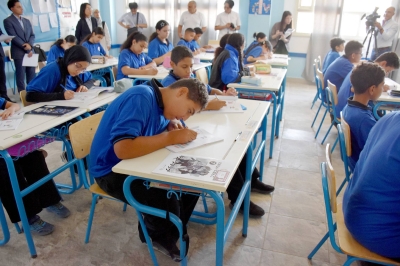
Cairo – Last month, Japanese-language education commenced for select junior high and high school students across Egypt, as part of the country's 2016 agreement with Japan. These classes are offered at a network of "Egypt-Japan Schools," which integrate Japanese school customs like cleaning and rotating student responsibilities. The curriculum focuses on Japanese, serving as a secondary foreign language after English.
A recent demonstration at a school in Suez, northern Egypt, showcased 49 first-year junior high school students practicing self-introductions and phone calls in Japanese under the supervision of an Egyptian educator who has undergone Japanese-language training through the Japan Foundation.
One enthusiastic student, 12-year-old Farida Said, expressed her fascination with Tokyo after encountering images of the city on social media. She acknowledged that while studying Japanese can be challenging, she finds it rewarding due to her passion for the language. Her aspiration is to become an interpreter, aiming to facilitate communication not only between languages but also in conveying the positive attributes of Japanese culture, such as organization and cleanliness.
Principal Suzan Youssef was taken aback by the high demand for Japanese-language education in regional cities, expressing optimism that the students would not only acquire language skills but also share and promote positive aspects of Japanese culture, including punctuality and environmental responsibility. Approximately 400 students from 10 Egypt-Japan Schools are currently engaged in Japanese-language studies.
Ayumi Hashimoto, head of the Japan Foundation's Cairo office, expressed her hope that these students would assume a proactive role on the global stage in the future, potentially assisting Japanese individuals in need.
Written by urgent.news from Japan Times's reporting — not their text. Machine-written — may contain errors; check the original before relying on it.