‘Early on I saw how much depends on the environment around science’
Germfree’s Carol Houts discusses how lab breakthroughs are irrelevant if progress can not be made in a safe and consistent space. Read more: ‘Early on I saw how much depends on the environment around science’
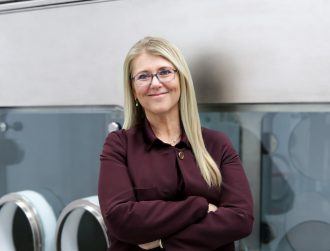
Carol Houts, CEO of Germfree Laboratories, stresses the importance of environment in scientific progress. Houts, who began her career in a quality control lab at Upjohn, which later became Pfizer, always found her inspiration in the moment when scientific breakthroughs translate into tangible therapies or consistent processes. Houts believes that while lab breakthroughs are crucial, they become irrelevant without a secure and reliable environment to support them.
She joined Germfree as head of regulatory affairs, later serving as CFO before becoming CEO in February 2026.
Germfree Laboratories specializes in creating environments for the production of sterile medicines, cell and gene therapies, and the study of dangerous pathogens. Houts notes that despite significant scientific advancements, many therapies are still produced using research-oriented processes rather than production-ready facilities.
This gap, she explains, can take years and significant capital to bridge before a program proves itself viable. The same issue exists in hospitals, where sterile medication compounding depends on the environment, and in public health, where a nation's ability to respond to future outbreaks hinges on containment capacity that was established years earlier.
Houts explains that the defining factor in scientific progress is not the idea itself but the physical, validated environment that makes the idea safe and repeatable. She sees this as a solvable engineering problem that moves medicine forward. Houts emphasizes that while different questions guide various sectors—science asks 'Is it true?', regulation asks 'Can you prove it every time?', and business asks 'Can it last?'—the most successful solutions address all three simultaneously.
She advocates for a holistic approach that considers scientific elegance, compliance, and sustainability.
Houts also highlights the importance of listening to local constraints, particularly in international projects. She finds that complex problems are best solved by teams that understand the entire system, not just the smartest individuals. For her, the most rewarding aspect of her work is the "proximity to impact," as her industry builds the environments where therapies become real.
She observes three trends currently energizing her field: the movement of manufacturing closer to patients, the convergence of automation and containment, and increased investment by governments in advanced therapy infrastructure, bringing therapies closer to patients.
Houts urges aspiring STEM professionals to consider careers in cleanroom construction and biopharmaceutical infrastructure, noting that the field needs a diverse range of skilled workers, from scientists and engineers to technicians, welders, and validation specialists. As many experts in the field approach retirement, there is a significant opportunity for the next generation to step in and make meaningful contributions. Houts believes that in this industry, hands-on work and meaningful work are fundamentally the same.
Written by urgent.news from Silicon Republic's reporting — not their text. Machine-written — may contain errors; check the original before relying on it.