Crew Preps for Dragon’s Arrival During Vision and Robotics Research
A SpaceX Dragon spacecraft is orbiting Earth on its way to the International Space Station for a docking on Thursday. The post Crew Preps for Dragon’s Arrival During Vision and Robotics Research appeared first on NASA Science .
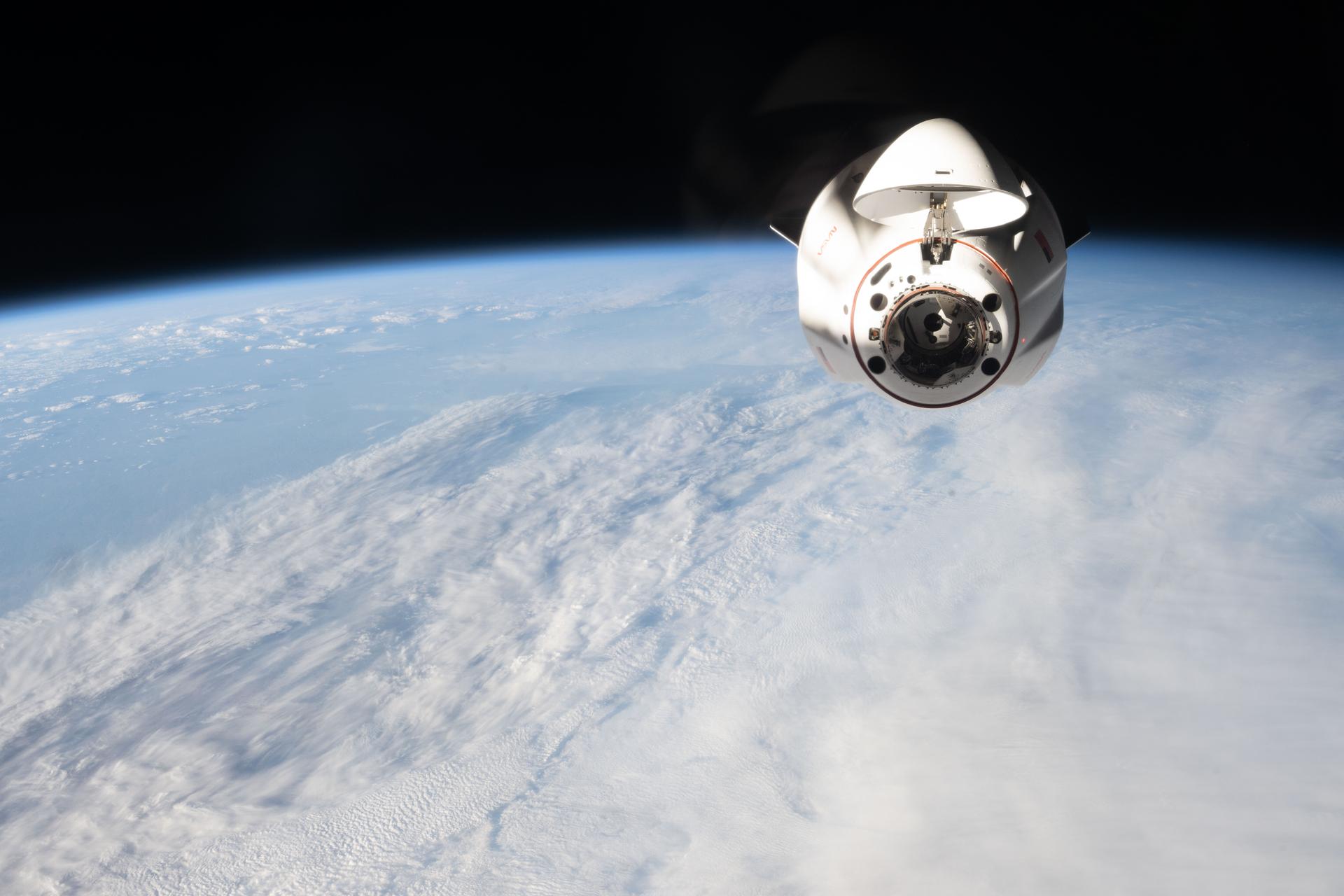
On May 17, 2026, a SpaceX Dragon spacecraft headed toward the International Space Station to deliver provisions for Expedition 74, according to NASA/Jessica Meir. As the Dragon approached Earth, astronauts Anil Menon of NASA and Joshua Kutryk of the Canadian Space Agency stayed on duty, ready to monitor the spacecraft's automated rendezvous with the station.
Flight engineers Jessica Watkins and Luke Delaney joined the duo on Wednesday, where they discussed cargo operations with mission controllers once the Dragon docked to the Harmony module's space-facing port at 11 a.m. EDT.
The Dragon carried nearly 6,300 pounds of supplies, including scientific equipment and roll-out solar arrays, which would be installed on the space station's truss structure for power generation during future spacewalks. While waiting for Dragon's arrival, all four astronauts underwent eye examinations inside the Harmony module, allowing doctors on the ground to observe changes in their retinas, lenses, and corneas in real time.
These findings could provide valuable insights into how prolonged spaceflight affects vision and eye shape, helping to ensure mission success.
Meanwhile, Menon transferred Earth observation hardware from the Destiny laboratory module to the Columbus laboratory module, while Kutryk cleaned the inside of an EXPRESS rack installed in Columbus. Delaney and Watkins prepared a spacesuit and its sensitive components for return to Earth in the Quest airlock. Roscosmos cosmonauts Pyotr Dubrov and Anna Kikina were busy testing an exoskeleton suit at the Nauka science module, investigating its potential for remote robotics operations on future long-term space missions.
Cosmonaut Sergey Teteryatnikov updated software on a laptop computer controlling the European robotic arm, which had been launched to the station in July 2021 and activated for a spacewalk in April 2022.
Written by urgent.news from NASA Science's reporting — not their text. Machine-written — may contain errors; check the original before relying on it.