Chip tool giant ASML nudges up outlook as AI-driven demand outruns supply
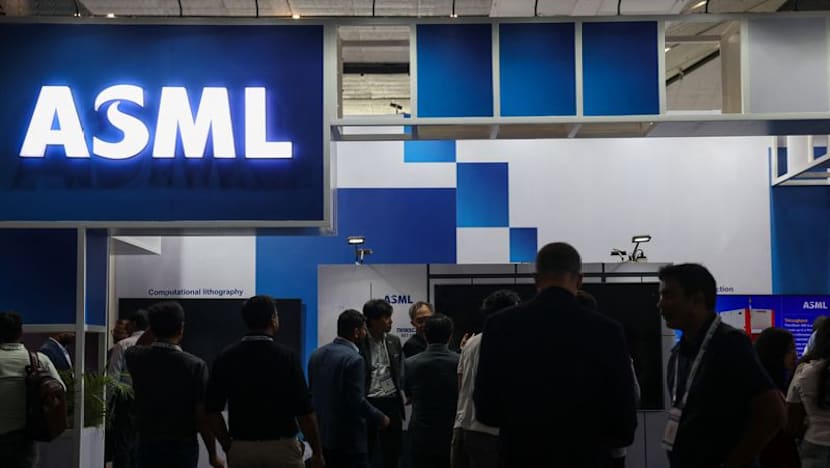
ASML, the Dutch chip equipment manufacturer, is struggling to meet the surging demand for its equipment, particularly in the AI-related sector. The company's CEO, Christophe Fouquet, revealed that customers have already placed orders for 2029 and 2030, indicating that the demand for its sophisticated lithography machines is growing. In its latest Q3 results, ASML reported total net sales of €11.7bn, with full-year sales expected to reach around €45bn, and Q4 sales forecasted between €14.2bn and €15.2bn.
The company sold over 120 of its advanced lithography machines in the current quarter, compared to just over 70 during the same period last year. ASML plays a crucial role in the global semiconductor supply chain, as it is the sole company capable of producing the equipment needed for advanced chips. The company's clientele includes major global corporations such as Taiwan Semiconductor Manufacturing Company, Samsung, SK Hynix, Micron, Apple, and Intel, who have committed billions to expand their manufacturing capacity to meet the demands of consumers and enterprises.
ASML had planned to increase its supply capacity by 30% in 2027 and another 30% in 2028. However, CEO Christophe Fouquet stated that the current plan is insufficient to cater to the skyrocketing customer demand. The company is now exploring alternative ways to meet customer requirements. Furthermore, ASML has begun constructing its second major industrial campus in the Netherlands' Brainport to complement its existing facilities, aiming to address the growing demand beyond 2027.
ASML's sales to European customers have notably dwindled, with no sales reported in the last quarter, which may pose a challenge for the region as it strives to compete with the US and China in the semiconductor market. A senior executive from ASML highlighted that "very little happens here" from factory to chip design to cloud computing, emphasizing the region's underperformance.
This situation comes more than a year after an EU special report found that the region's Chips Act, aimed at boosting the semiconductor industry, was not sufficient to achieve its Digital Decade goal of a 20% share in the global semiconductor market by 2030.
Written by urgent.news from Silicon Republic's reporting — not their text. Machine-written — may contain errors; check the original before relying on it.
This story
This is one outlet's version. Read the fullest account.
- AI boom drives record sales at Dutch tech giant ASML bangkokpost.com
- AI-led demand overwhelms ASML’s 2027, 2028 supply capacity siliconrepublic.com
- ASML raises 2026 sales outlook on soaring AI demand, plans capacity expansion investing.com
- European shares edge higher as ASML's AI demand outlook boosts tech brecorder.com
- AI demand to exceed supply for 2 more years, says ASML ft.com
- ASML says supply will not meet demand at least until 2028 seekingalpha.com
- ASML forecasts Q4 sales above expectations on AI chip demand channelnewsasia.com