China’s Dune-like sand crawler could turn the whole Taklamakan Desert into an iron mine
Chinese researchers have built a self-propelled crawler robot that harvests iron from sand and tested the device in the dunes of the vast Taklamakan Desert – an area the size of Germany – in northwestern China’s Xinjiang Uygur autonomous region. In Frank Herbert’s classic science fiction novel Dune, mobile factories traverse the sands of the fictional planet Arrakis to extract the drug melange,…
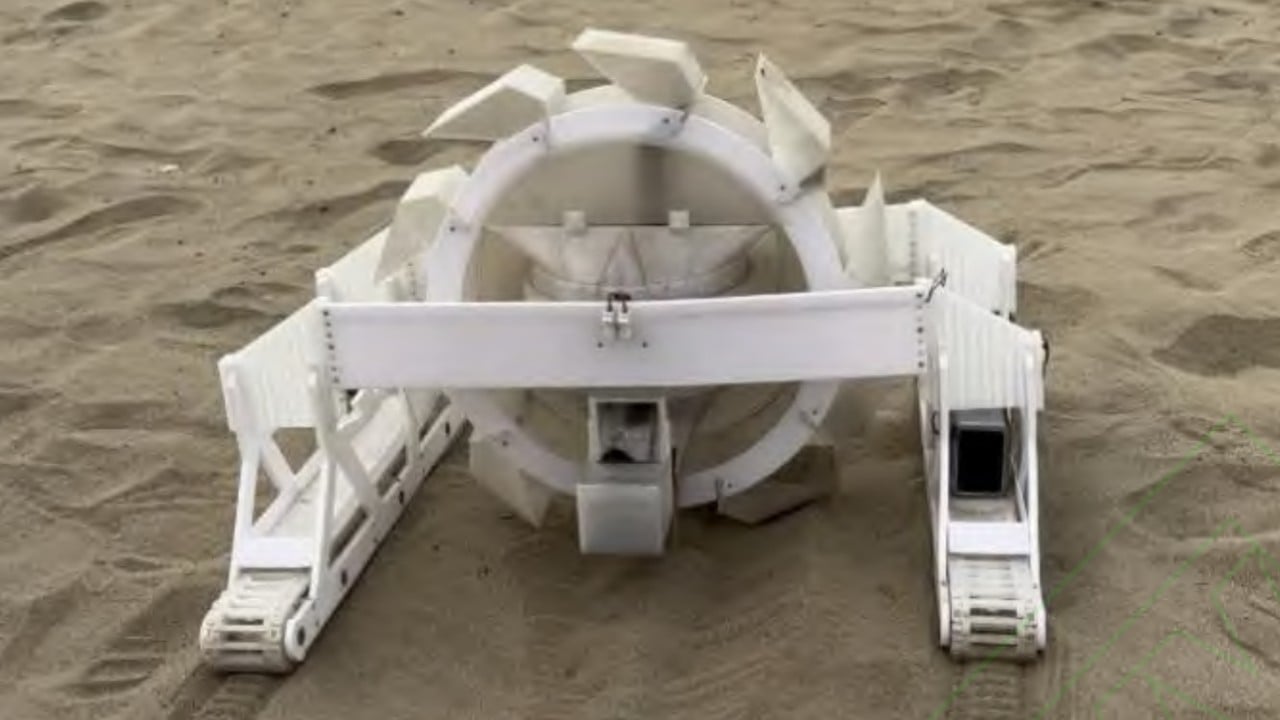
A self-propelled sand crawler robot, developed by Chinese researchers, has been tested in the vast Taklamakan Desert, harvesting valuable iron from the desert sands. This device, inspired by the mobile factories in Frank Herbert's science fiction novel Dune, traverses the desert, extracting ferromagnetic materials using dry magnetic separation.
The Taklamakan Desert, the world's second-largest shifting sand desert and the largest desert in China, covers an area of 337,600 square kilometers. Researchers from Tarim University in Xinjiang Uygur autonomous region developed a rare earth-magnet-based separator that filters ferromagnetic materials from sand. According to their study published in the Chinese-language journal Metal Mine, the prototype extracted an average yield of 0.46 percent magnetic material from the desert sands, with the harvested magnetic material containing about 28 percent total iron.
The device operates on a power bank equivalent to a large phone, lasting for 12.5 hours at an average speed of 1.5cm per second, while navigating 20-degree slopes. The crawler's mounted solar panel could extend its operational range. Iron is a widely used resource, and China, despite having significant iron ore reserves, still relies on imports for most of its consumption due to complex compositions and low grades.
The prototype's dry magnetic separator, using a ring of neodymium iron boron permanent magnets, sorts through the sand and pulls out magnetic particles, addressing the challenges of traditional manual separation techniques in the extreme desert environment.
Written by urgent.news from Reuters Business via SCMP's reporting — not their text. Machine-written — may contain errors; check the original before relying on it.