China leverages electric vehicles to stabilise the power grid
As technical standards are improved, market mechanisms are put in place and business models mature, more than 100 million EVs will effectively form a vast network of 'mobile power banks' for the grid, providing strong support for energy transition.
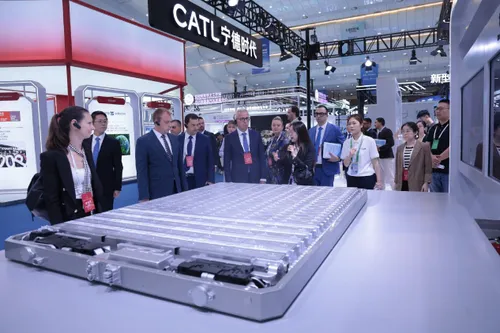
China is leading a global energy transformation by integrating electric vehicles (EVs) into its power grid infrastructure. With the number of EVs projected to reach 110 million to 160 million by 2030 and potentially 300 million to 400 million by 2040, the vehicles are becoming a crucial part of the next-generation power system. The surge in ultra-fast charging networks is causing strain on local grids, with charging 5 million EVs simultaneously at 10 kW each demanding 50 million kW—more than most municipal grids can handle.
This necessitates a shift from unmanaged, decentralised charging to coordinated, bidirectional energy flow through vehicle-to-grid (V2G) technology. V2G enables EVs to act as active, mobile energy storage units, drawing power during off-peak hours and feeding electricity back into the grid during high demand. This alleviates grid congestion and creates new revenue streams for owners.
Properly managed V2G operations can enhance battery life and safety, as they do not accelerate battery degradation but may extend calendar life. In three scenarios—industrial parks, transportation, and buildings—EVs are already being employed in V2G applications. By 2030, China's V2G-enabled charging capacity is expected to reach 50 million kilowatts, with potential V2G energy storage capacity surpassing 4 billion kilowatt-hours by 2040.
This capacity, derived from the battery capacity of 350 million EVs, could meet the country's electricity demand for one day in an emergency. The next five years will see the launch phase of the V2G industry, with technical standards, market mechanisms, and mature business models fostering the formation of a massive network of mobile power banks for the grid.
Written by urgent.news from IOL's reporting — not their text. Machine-written — may contain errors; check the original before relying on it.