Bangladesh’s First Dollar Bond Can Wait
The BNP government plans to issue sovereign bonds in December amid slow economic growth, fiscal strain, rising dollar bills, and a global downturn in the bond market.
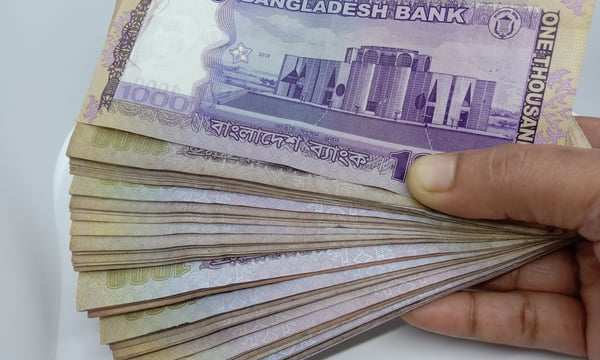
Bangladesh is poised to issue its maiden dollar-denominated sovereign bond, likely in December. This move is in line with the BNP-led government's economic strategy to bolster the nation's bond market and lessen reliance on international financial institutions like the IMF and World Bank. The bond, expected to have a coupon of 7-8 percent, would range from $500 million to $1 billion.
For years, Bangladesh has faced challenges in attracting foreign direct investments and raising capital through the market, with no initial public offerings since March 2024. Simultaneously, the banking sector has been grappling with non-performing loans. The economic outlook has been further clouded by IMF loans, which come with stringent conditions, including boosting revenue collection and reducing public spending, sometimes at the expense of social welfare for the most vulnerable.
The government's decision to issue this first-ever sovereign bond in dollars might provide fiscal independence and an alternative route to augment dollar reserves. However, the decision to issue the bond and pay regular coupon payments in dollars appears premature. The fiscal situation, coupled with the global bond market scenario and political instability, indicates Bangladesh might not be prepared for the costs associated with issuing the bond and making regular coupon payments.
Historically, the country has managed loan repayments and maintained steady reserves, except during 2022-2024 when a balance-of-payments crisis arose due to the pandemic-induced global supply chain contraction and the Russia-Ukraine war. The current external balance sheet appears promising, with remittances hitting a record high of $35.6 billion in 2026.
The public debt-to-GDP ratio stands at 41 percent, lower than most of its neighboring South Asian countries. Before proceeding with the bond issuance, two crucial questions need to be answered: whether Bangladesh can meet its obligations to foreign creditors and if its fiscal condition can support the debt. On the former, Bangladesh's repayment history is impeccable, with no defaults since its independence.
As of June 2026, the country's total external debt amounted to $110.93 billion, with debt servicing at $4.49 billion, representing about 5 percent of total export and remittance receipts. The Economic Relations Division reports that remittances, even during the highest repayment level year, could cover annual external obligations for less than three months.
This raises concerns about relying on remittance inflows to fund coupon payments, especially if remittance flows fluctuate due to a global slowdown. For instance, September 2026 saw one of the slowest remittance inflows in recent times. The coupon cost for a $1 billion bond at 7.5 percent is approximately $75 million per year, a figure that can be absorbed by the balance of payments.
However, the bond is not a one-year commitment. When considering Bangladesh's fiscal condition, more careful scrutiny is required. The World Bank reports a GDP growth rate of 3.4 percent for FY26-27, a rate eclipsed only by Afghanistan, amid rising inflation. Slowed growth, coupled with price inflation, could negatively impact Bangladesh's ability to service debt in two ways.
It could shrink the revenue base of the Bangladeshi taka used to purchase dollars for bondholder coupon payments, thereby depleting foreign reserves and exerting downward pressure on the taka's value. A weaker taka elevates the cost of dollar-denominated coupons, a phenomenon known as "original sin" in economic terms. For example, Zambia, Ghana, Ethiopia, and Sri Lanka have launched their first sovereign bonds, but all four later defaulted as they resorted to borrowing again and spent the proceeds on projects yielding no foreign exchange.
The depreciation then increased the local currency cost of every coupon. Given that Bangladesh must pay bondholders in dollars, every drop in taka's value makes the debt costlier at home. At 7-8 percent interest, the dollar bond seems cheaper than the roughly 8.5 percent the Treasury pays on ten-year taka bonds, provided the taka depreciates by less than 0.5-1.5 percent annually.
However, over the past decade, the taka has fallen faster than that, suggesting the dollar bond could end up being more expensive. Moreover, Bangladesh's foreign loan commitments are gradually decreasing, implying fewer dollars will be available in the country's external accounts. Meanwhile, grace periods on loans used to finance the Rooppur nuclear power plant, metro rail, and Padma rail link are ending, and external debt servicing is projected to rise to about $5.5 billion by FY30.
At home, interest has become the largest item of current spending, amounting to 1,275 billion taka (approximately $10.4 billion) in the FY27 budget. In short, more dollars will flow out while fewer will be received. On the income side, the National Board of Revenue (NBR) fell short of its FY26 target by 875 billion taka. For FY27, the revenue target necessitates more than 45 percent growth in a single year, a goal Fitch believes is improbable.
Consequently, spending is likely to surpass the NBR's revenue collection target. Introducing additional sovereign bond programs, such as Panda, Samurai, Sukuk, and diaspora bonds, and oversubscribing could exacerbate Bangladesh's debt situation. For example, Zambia's initial outstanding Eurobond debt rose from $750 million to $1.36 billion following the issuance of a $900 million bond program.
Rewritten by urgent.news; may contain errors — check the original.
Source: thediplomat.com