Bahasa belanjawan, lingua franca Melayu global
Janganlah kita terlalu pantas menghukum ‘sesat’ atau ‘liberal’ kepada sesiapa hanya kerana mereka guna istilah luar yang kita sendiri tidak tahu hujung pangkal.
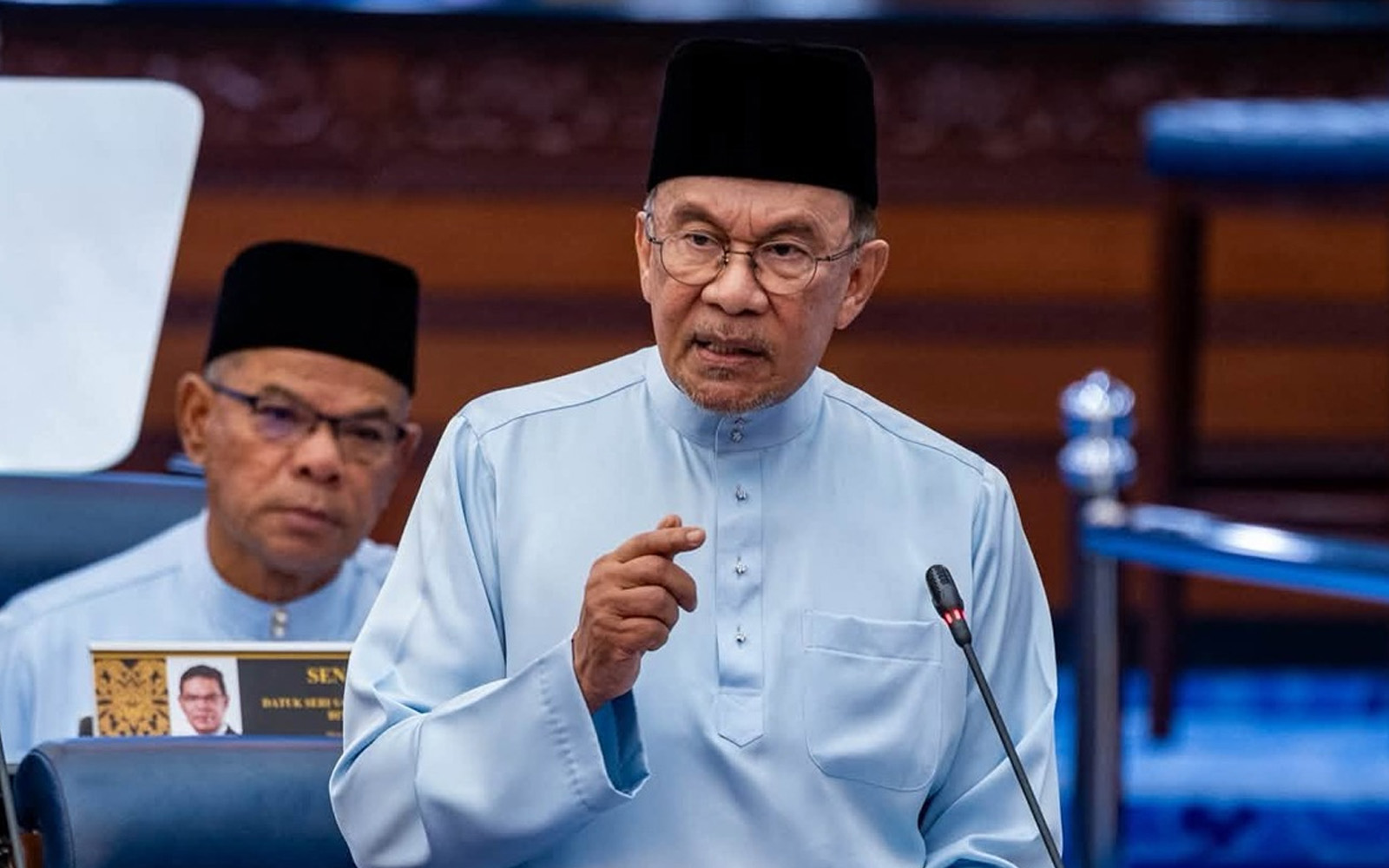
In this article, I aim to discuss my friend A Kathirasen's piece titled "Poets, Philosophers and Policy: The moral language of Budget 2027," which delves into the philosophical, poetic, and religious language within Anwar Ibrahim's budget. The article's message is Kathirasen's own observation of how Anwar attempts to convey a "universal humanity" through the fiscal translation and the allocation of ringgit figures.
Kathirasen seeks to draw attention to the fact that the budget represents a milestone of human advancement, not just a mere collection of whimsical spending. The veteran writer also seeks to highlight Anwar's efforts to make issues of necessity visible despite ethnic divisions.
In this article, I will extend Kathirasen's analysis by adding my own message: language and references used by the government and state agencies need a global Malay language. There are two aspects I wish to address regarding the use of references from various ethnicities and religions, as well as different sources of human wisdom from religious scriptures to philosophical ideas and poetical reflection.
First, the accusation of being "liberal" against Malay Muslims who use sources of thought or philosophy and spiritual reflections from outside the Islamic source. Secondly, what I mean by a global Malay language franca as a means for Anwar's intellect as a Muslim intellectual. The first is the accusation often leveled at anyone who brings arguments, discussion, or concepts from non-Islamic Sunni thought to be labeled as "liberal," undermining and misleading the Muslim community.
As an architectural scholar, I fully understand the need to utilize concepts, ideas, and principles of Western architecture, such as Frank Lloyd Wright, Louis Sullivan, William Morris, Walter Gropius, Mies van der Rohe, and Le Corbusier. Drawing upon philosophical and ideological sources from the United States, England, France, and Germany is also essential for me to reinterpret Islamic architectural theory, Malaysian architecture, and modern Malay architecture.
Borrowing ideas from foreign or other sources from within and outside our own community is not an endorsement of Western or Eastern supremacy but rather an acknowledgement that other human societies have progressed through different levels of awareness and time from our own in Malaysia. The wave of the industrial revolution connected society, government, and Enlightenment thought, challenging the interpretation of life, cosmos, and geography from only a church perspective.
Our country, despite having various smartphones, AI, and the latest technology, still struggles with a mix of scientific, political, and religious interpretations dating back more than 200 years before us. Malaysians have been slow to catch up. Therefore, the use and borrowing of concepts, terms, and ideas from sources other than Islam depict a Malay's ability to carve and shape a morally ambitious budget, far-reaching insights, and humanistic wisdom.
National budgeting is not merely corporate profit-seeking; it is unjust for anyone to label someone as "liberal Malay" or "someone submissive to colonialist thinking from the West and of enemy Islamic origin." As scholars, all well-educated individuals know that truth transcends ethnicity and religion, as the understood ethnicities and religions have been narrowed down by the group tasked with preserving their integrity.
However, guardians of religious heritage with limited academic disciplines can only view it from one angle. The second aspect is how Anwar plays the role of a global Malay and not a Malay-party or Malay-ulee. To become a successful nation, Malays need to understand various thought sources coming from various countries and cultures.
Like Hang Tuah who asked his father to teach him more than 10 foreign languages. Malays with access to ideas from other sources will not be limited to Malay unity rhetoric for power and religious sanctity without comprehensive and global advancement. I often teach PhD students that all knowledge is a human interpretation made at that time and within the context of human technology, science, and culture.
Therefore, a knowledge like religious knowledge can be expanded or contracted according to one's will. Knowledge must flow to the shifting thoughts and reinterpretations of each era and adaptation to the current situation. Finally, I propose we should not hastily condemn someone as 'off' or 'liberal' just because they use foreign terms we ourselves do not understand.
The core message I and Kathirasen want to convey through this article is that the budget is not merely a collection of numbers being thrown around for the general public's consumption. Another point is the use of terms, concepts, and philosophies that bridge ethnic, religious, and cultural divides, which is the ability to think beyond traditional tradition.
Only by mixing and immersing ourselves in other cultures can we carve out new solutions and shared goals that are eternal and unchanging. This article is the author's viewpoint and does not necessarily represent FMT.
Written by urgent.news from Free Malaysia Today's reporting — not their text. Machine-written — may contain errors; check the original before relying on it.
This story
This is one outlet's version. Read the fullest account.
- Bahasa belanjawan, lingua franca Melayu global freemalaysiatoday.com