Autoindustrie: BMW verlagert Produktion nach Ungarn – und muss deutsche Fachkräfte einfliegen
Die deutsche Autoindustrie hat in den vergangenen Jahren viele Milliarden in Ungarn investiert. Nun stößt die Branche dort auf Probleme. BMW greift zu einer ungewöhnlichen Lösung.
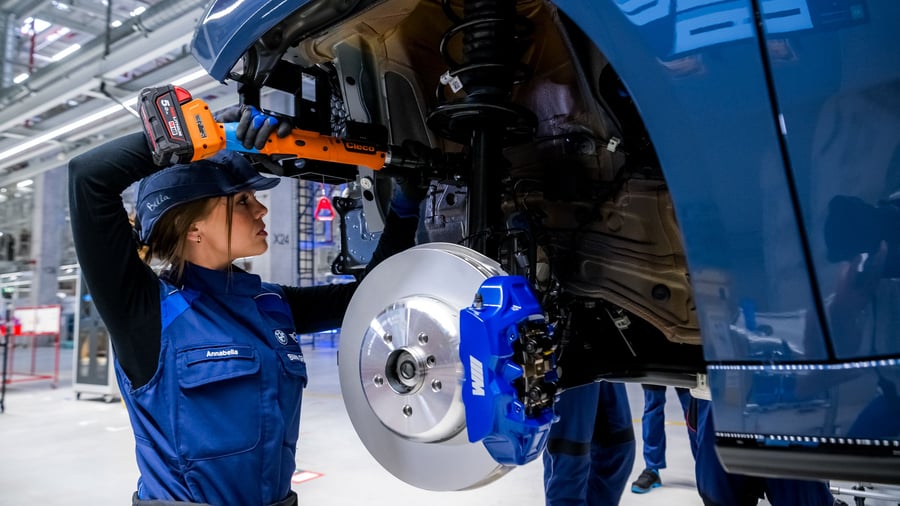
BMW has shifted its production to Hungary, requiring the import of German specialists. A Lufthansa flight carrying BMW employees departed Munich on Monday, en route to Debrecen, Hungary. BMW has been sending employees to Hungary several times a week for months. A union representative explained that these employees are needed to start production at BMW's flagship plant in Debrecen, where they are building the popular electric SUV iX3.
The Munich-based team lacks sufficient trained personnel, so German colleagues are flown in to train local workers. Some insiders suggest an even higher proportion of Germans will be needed in Hungary. The flights from Munich to Hungary have been well-filled, especially at the start of the week. Lufthansa's Airbus 321 planes often have up to 200 passengers.
The cost of this arrangement is not disclosed by BMW, but it is likely to be expensive for the company. Hungary has become a preferred location for the German automotive industry in recent months. While Volkswagen, Mercedes, and BMW have cut jobs in Germany, they have massively invested in Hungary over the past years. The low taxes, lower labor and energy costs in Hungary compared to Germany were the main reasons for these investments.
Mercedes has doubled its production capacity in Kecskemét from 200,000 to 400,000 units, making it the largest European plant for the Stuttgart-based company. BMW opened its latest and most innovative factory in Hungary about a year ago, with former BMW CEO Oliver Zipse praising the event. Despite being one of the low-wage countries, Hungary has attracted industrial capacities like few others in Europe.
The scheduling of important supervisory board meetings in Hungary shows just how important this location is to the auto companies. However, finding enough qualified personnel has been a challenge for the companies. BMW has had to pay a lot of money to create the human resources base for its production, even importing highly-qualified expatriates from Germany to train new employees in Hungary.
BMW has already flown numerous employees to Debrecen since at least two years ago. The company needed the concentrated engineering expertise from its home country to build the plant. Even before the factory was completed, there were indications that skilled workers would become scarce. By 2024, there were hardly any qualified people on the market in Debrecen, and many workers from neighboring Ukraine had left the country due to the war.
Hungarian workers were also in demand politically. The Hungarian government has passed the strictest immigration law to date, as explained by István Joó, the head of the state investment agency HIPA. BMW sent a recruitment bus across the country, and the company has also hired people from Hungary without much prior knowledge, teaching them how to build cars.
The first building at the factory site was a training center for apprentices. And the battle for qualified Hungarian workers is set to intensify in the coming years, as Chinese automotive manufacturers increasingly settle in Hungary. The largest manufacturer, BYD, plans to start production at its plant in the southeast of the country this year, with the company aiming for around 40,000 employees in Europe by the end of the decade.
The union IG Metall criticizes the increasing relocation of German companies to Eastern Europe, stating that the density of qualified workers is an important argument for the location of the German auto industry.
Written by urgent.news from Handelsblatt's reporting — not their text. Machine-written — may contain errors; check the original before relying on it.
This story
This is one outlet's version. Read the fullest account.