Aurangzeb discusses targeted fuel subsidies in meeting with senior IMF official
Finance Minister Muhammad Aurangzeb met International Monetary Fund (IMF) Deputy Managing Director Nigel Clarke in Bangkok on Wednesday, with their discussion covering targeted fuel subsidies among other matters. Aurangzeb “outlined targeted fuel subsidies to protect vulnerable groups and preserve social cohesion” during the meeting, a statement issued by the finance ministry said. The government…
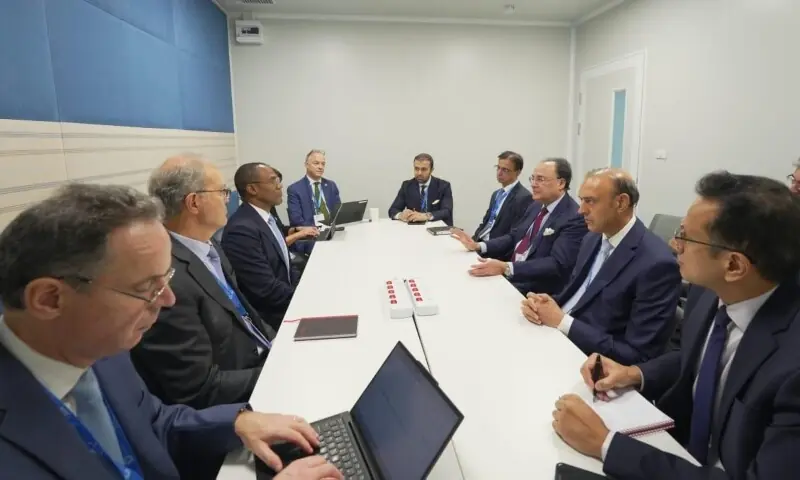
On Wednesday, Finance Minister Muhammad Aurangzeb met with International Monetary Fund (IMF) Deputy Managing Director Nigel Clarke in Bangkok. Their conversation included a discussion on targeted fuel subsidies, aimed at supporting vulnerable groups and maintaining social cohesion. The government had previously introduced a fuel subsidy scheme for motorcycle, auto, and vehicle owners up to 800cc, following a rise in global oil prices.
In September 13, Prime Minister Shehbaz Sharif extended the scheme to include motorcycles, rickshaws, and Qingqi rickshaws that were 20 years old or younger.
Pakistan is currently in negotiations with the IMF for a $7 billion Extended Fund Facility (EFF) and a $1.4 billion Resilience and Sustainability Facility (RSF). These talks culminated in a staff-level agreement earlier this month, which allowed Pakistan to access around $1.2 billion in Fund resources. On Tuesday, the IMF urged nations to provide narrow, targeted subsidies in response to the energy crisis triggered by the US-Israeli war on Iran.
During the IMF meeting, Aurangzeb expressed appreciation for the Fund's collaboration and emphasized the importance of strong political commitment to reforms and consistent implementation. He also highlighted Pakistan's achievements, such as returning to international capital markets, robust investor participation, stronger reserves, three consecutive years of primary surpluses, and a declining debt-to-GDP ratio.
The finance minister further discussed the significance of adequate reserve buffers, enhanced revenues, and investments in human capital, infrastructure, and public services. They also touched on sustainable growth, policy consistency, and preserving spending in health and education while maintaining fiscal discipline.
In another meeting, Aurangzeb conversed with Ambassador Hugo Yon from the US State Department to discuss economic cooperation. They reviewed advances towards a trade framework agreement and explored energy diversification through increased imports from the United States. Aurangzeb also outlined measures to ensure fuel supplies and protect vulnerable consumers.
The talks further covered anti-money laundering and counter-terrorism financing arrangements, the Financial Action Task Force follow-up, and investment financing via the US Development Finance Corporation and Exim Bank. Additionally, they discussed Reko Diq cooperation on critical minerals, project security, and potential private investment mobilization.
Other subjects included Boeing aircraft acquisition and financing, aviation clearances, digital asset regulation, and potential remittances and Eurobond tokenization applications.
Written by urgent.news from Dawn Business's reporting — not their text. Machine-written — may contain errors; check the original before relying on it.
This story
This is one outlet's version. Read the fullest account.