Asian stocks mostly down as tech firms struggle to claw back losses
HONG KONG, Oct 14 — Asian stocks mostly fell today as investors struggled to claw back the previous day’s st...
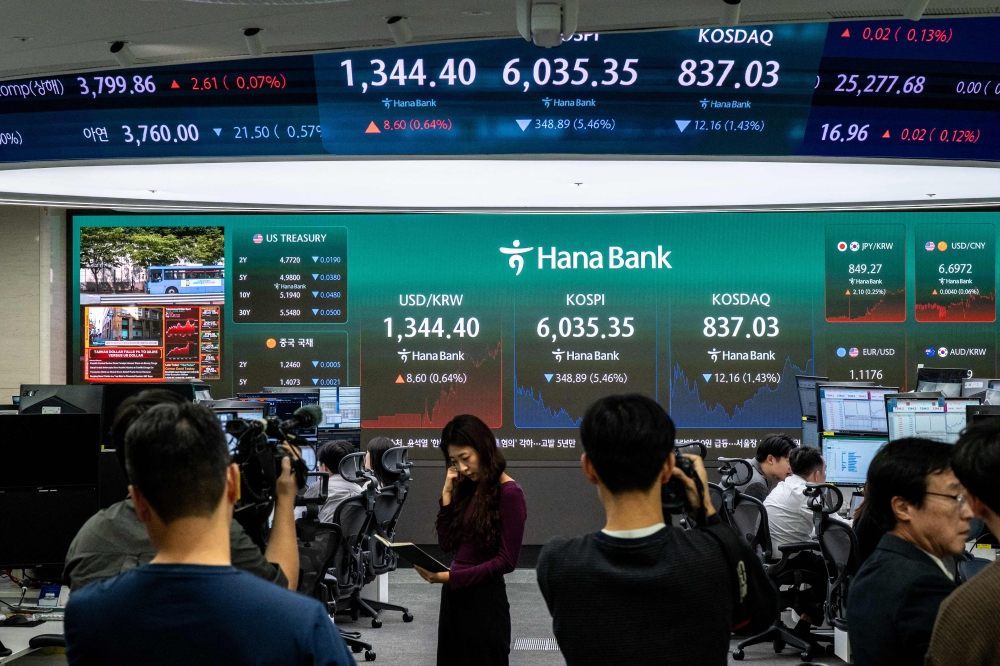
Asian stocks mostly declined on October 14 as investors grappled to recover from yesterday's sharp losses in the technology sector following ASML's disappointing comments. The focus shifted to US inflation data. Tech firms experienced significant declines yesterday due to concerns over China's progress in developing AI chips and Broadcom's CEO comparing the AI buying frenzy to gambling.
In Seoul and Tokyo, which have substantial tech weightings, major tech companies such as SK hynix and Advantest suffered substantial losses, pushing their stocks back to levels last seen after their summer slump. Despite early morning rallies as these firms offered support, Tokyo and Seoul ended lower with traders disappointed by ASML's earnings.
Taipei closed higher. ASML, a crucial component of the global economy and a leading indicator for the semiconductor sector, reported an increase in third-quarter net profit but raised its full-year sales forecast, citing high demand for AI and a pledge to expand production. However, the company warned that demand currently exceeds supply and is seeking ways to increase capacity for 2028 beyond the 30 percent increase previously announced.
Taiwan's TSMC, which manufactures advanced processors for companies like Nvidia and Apple, was scheduled to report its results shortly. Prior to ASML's announcement, Saxo Markets' Charu Chanana noted that semiconductor stocks had faced pressure after higher bond yields, geopolitical uncertainty, and doubts about AI capital expenditure prompted investors to reassess valuations.
The recent sell-off across US and Asian chipmakers indicates that robust demand alone may no longer suffice to maintain the rally. The performance of ASML and TSMC serves as a useful barometer for the AI investment cycle. TSMC reveals whether demand for advanced chips continues to rise, while ASML indicates if chipmakers are investing sufficiently in equipment to meet that demand.
SK hynix and Advantest ended lower, while markets in Hong Kong, Sydney, Singapore, Manila, Mumbai, and Bangkok all declined, although Wellington and Jakarta saw gains. London experienced no change, while Paris and Frankfurt rose. The gains were driven by hopes the US Federal Reserve could avoid further rate hikes next year, following a statement by New York Fed President John Williams, who indicated he sees no reason to push for additional rate hikes after the bank's recent increase.
High expectations are placed on consumer price data expected later today, which could influence the bank's decision on whether to raise rates for a second consecutive meeting on October 28. Matt Weller at FOREX.com stated that the labor market shows signs of deterioration, and price pressures have remained above the central bank's target for over five years.
Markets currently expect a 25 percent chance of another rate hike at the Federal Open Market Committee's meeting, setting a high bar for the committee to move toward another increase. Crude prices surged due to concerns over the Middle East crisis, with Iran intensifying attacks in the Strait of Hormuz and the Houthis continuing their strikes on oil giant Saudi Arabia.
The International Monetary Fund (IMF) boss, Kristalina Georgieva, raised concerns about the impact of recent attacks on Saudi Arabia by Iran-backed Houthis, warning of potential negative spillovers for the global economy.
Written by urgent.news from Malay Mail's reporting — not their text. Machine-written — may contain errors; check the original before relying on it.