As EU debates local-content rules, Chinese automakers are already adapting
As European lawmakers consider new local manufacturing requirements, Chinese automobile manufacturers are proactively establishing factories and supply chains across the continent. The EU's proposed "Made in Europe" rules, part of the Industrial Accelerator Act, aim to bolster the bloc's industrial sector by encouraging more production and sourcing within Europe. This move comes as Chinese automakers have rapidly expanded their presence in Europe, with additional entrants anticipated.
However, the EU's "Made in Europe" initiative has ignited a political disagreement in Europe regarding the countries subject to the regulations. Chinese automakers, undeterred by the unfolding political debate, are advancing with their localisation strategies. They are expanding manufacturing and supplier networks in Europe before the specifics of any new prerequisites are finalized.
Changan Automobile's Zhao Fei, speaking at the Paris car show, emphasized the company's commitment to building local production capacity and expressed interest in exploring opportunities in Europe. Zhao mentioned having already visited Europe twice for in-depth discussions with suppliers and is currently engaging with European automakers regarding joint vehicle production.
Changan plans to manufacture 180,000 cars annually in Europe by 2028 and 350,000 by 2030, with its first vehicle potentially being produced in Europe by mid-2027.
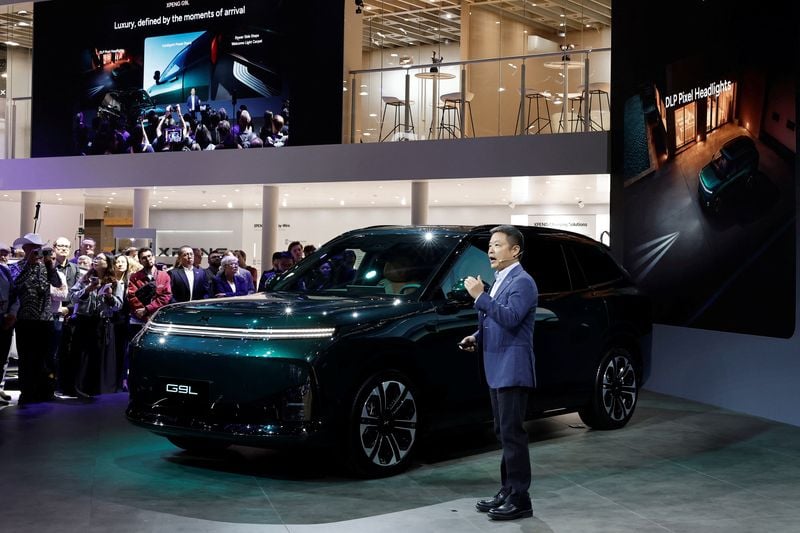
Other Chinese automakers, such as Xpeng, Chery, and GAC, are also pursuing European production initiatives centered around local supply chains. Xpeng's Vice President Yeqing Zheng revealed plans to increase its production capacity in Europe as soon as the "Made in Europe" rules come into effect. Magna already manufactures EVs for Xpeng in Austria.
Some industry experts argue that Chinese automakers are outpacing EU policymakers, raising doubts about the potential impact of the final rules. John Bozzella, CEO of the US auto industry lobby group Alliance for Automotive Innovation, pointed out that Europe is being perceived as a cautionary tale in the US for acting too late in response to Chinese competition.
The US Senate is working on a bill to permanently ban Chinese cars, driven by concerns over data security. Bozzella noted that policy responses are emerging in reaction to market realities in Europe.
In a speech at the Paris motor show, Volkswagen CEO Oliver Blume expressed support for "Made in Europe," emphasizing the importance of a strong European industry. However, the proposal currently excludes non-EU countries like Turkey, Britain, and Morocco, which have significant automotive industries integrated with Europe's automotive sector. Turkish automakers, and their stakeholders, argue that limiting the definition of Europe to the EU would harm supply chains that have developed across the wider region.
China's Automotive Industry Exporters' Association (OIB) emphasized that Turkey's automotive industry supports 250,000 EU jobs and that over 50% of Ford's electric Transit vans produced in Turkey rely on EU-supplied parts, including batteries from Hungary and Poland and components from various European countries. OIB Chairman Kemal Yazici stressed that Turkey is an integral part of Europe's auto industry.
When asked about the EU's deal with China to reduce hybrid vehicle imports, Chery Chairman Yin Tongyue stated that the company would first review the details but expressed a greater interest in discussing Chery's European plans, including designing locally, establishing local engineering and production, and creating a local supply chain.
Automotive analyst Felipe Munoz noted that Chinese automakers are unlikely to be deterred by the policy debate, as they have demonstrated a remarkable ability to act swiftly even when faced with challenges.
Written by urgent.news from Investing.com's reporting — not their text. Machine-written — may contain errors; check the original before relying on it.