A 4,700-Year-Old Shipwreck Hailed as the World’s Oldest May Have Carried Goats and Been Bound for Troy
Learn how ancient pottery from a shipwreck off Turkey offers insight into Bronze Age trade and daily life at sea
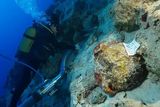
A 4,700-year-old shipwreck near Turkey's Kekova Island has been hailed as the world's oldest, potentially carrying goats and bound for Troy. The Turkish news agency DHA reports that researchers from Akdeniz University discovered the wreck in 2024 while surveying the area in Antalya province's Demre district. The boat, measuring approximately 33 feet in length, rests about 100 feet beneath the surface, holding more than 30 jars, some of which are broken.
The recovered jars, resembling Levantine types from the same period, suggest that the sailors might have brought goats onboard and produced their own butter or cheese during the voyage.
The amphorae, clay storage jars with handles on the sides and flat bottoms, vary in clay, technique, and intended use. One jar, with a zigzag pattern across its middle, closely resembles jars used to transport farm goods like wine or olive oil. Clay analysis points to workshops in the Jordan Valley, while similar jars have been found near the Egyptian pyramids at Giza, Saqqara, and Abusir, as well as at Troy and Crete.
Researchers believe the boat likely departed from a harbor along the Levantine coast and was heading towards Troy or Crete, though this remains a hypothesis.
Three stone anchors found near the wreck may or may not belong to it, though they resemble Bronze Age anchors from Crete, Cyprus, Anatolia, and the Levant. At present, no timber from the ship remains, and the age of the wreck is determined by the similarity of the jars to those found in Egypt and other parts of the Middle East. The Turkish Culture and Tourism Minister Mehmet Nuri Ersoy has called the find the world's oldest shipwreck, but the BBC notes that the age is based on the jars' comparison with pottery from Egypt and elsewhere in the Middle East.
Excavations have started under the Antalya Museum Directorate with the ministry's permission, with more of the wreck expected to emerge in deeper parts of the seabed. Researchers are still working to determine what the jars held, and the recovered jars are currently being conserved. The finds will eventually be displayed in a new museum of underwater archaeology in Antalya, which is expected to open within months.
Written by urgent.news from Discover Magazine's reporting — not their text. Machine-written — may contain errors; check the original before relying on it.