Your CRM Is Feeding AI Agents Mutually Exclusive Truths
AI agents can act on conflicting CRM data. This framework resolves identity, authority, freshness, consent, and action risk before execution.
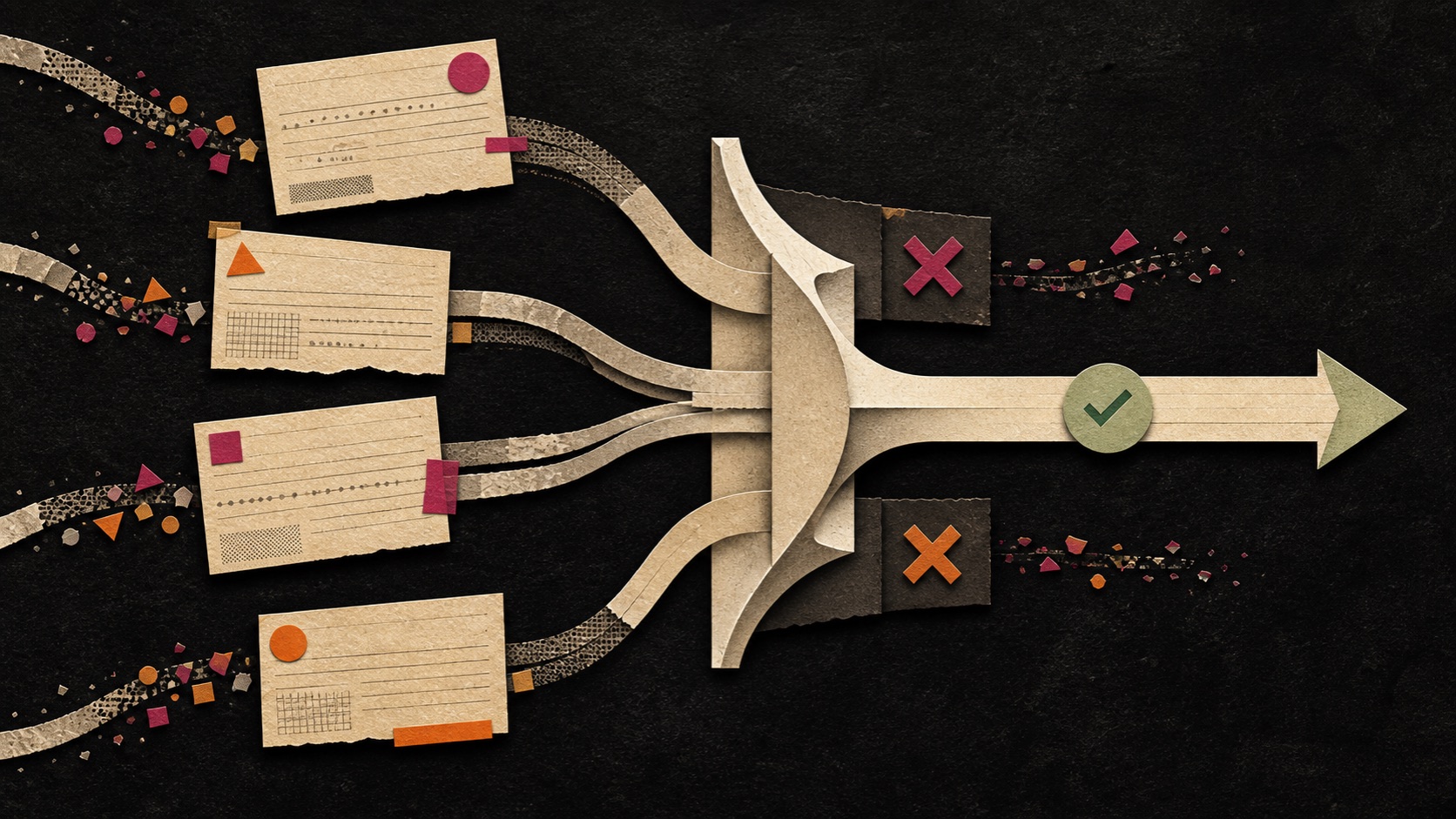
In the world of Customer Relationship Management (CRM) systems, there exists a hidden danger that can lead to mutually exclusive truths being fed to AI agents. Consider a hypothetical revenue agent tasked with following up with an account that has visited the pricing page multiple times. The CRM presents conflicting information from various sources.
The deal status says the deal is active, product analytics indicates high intent, billing confirms the customer is current, while support reveals an unresolved severity-one escalation. The consent service prohibits marketing outreach, and a territory table assigns a different owner. Each system may be accurate, but when an agent attempts to compress these claims into a single answer, a failure in resolution occurs.
This is not a hallucination in the usual sense, but rather a failure in the system's ability to provide a clear and accurate response. The issue lies in the fact that most CRM architectures expose a record as a collection of current values, such as company ID, deal stage, account status, owner ID, and contactability. While this representation is useful for reporting and interfaces, it falls short when it comes to autonomous action.
AI agents require a more comprehensive understanding of the context in which the information is being used. HubSpot offers some capabilities, such as returning selected current and historical property values through the propertiesWithHistory field, and the ability to support custom properties with unique values. These features provide valuable raw material, but they do not determine which assertion should govern an action.
An assertion is a claim made by a source about an entity at a specific point in time, under a defined authority and policy context. It includes details such as the assertion ID, entity ID, predicate, value, source, observed time, and confidence level. By representing assertions as separate entities from field values, a more nuanced understanding of the data can be achieved.
The Assertion Conflict Graph is a tool designed to detect incompatible claims for a proposed action and produce a controlled resolution before execution. This graph consists of assertion nodes representing claims about an entity and typed edges representing relationships between claims. The minimum useful edge vocabulary includes edges for identifying the same entity, contradictions between assertions, supersedence of one assertion by another, derivation of a claim from another event, and authorization of a claim based on policy or approval.
By implementing the Assertion Conflict Graph, enterprise teams can ensure that AI agents receive accurate and controlled information, reducing the risk of making decisions based on conflicting and mutually exclusive truths.
Written by urgent.news from HackerNoon's reporting — not their text. Machine-written — may contain errors; check the original before relying on it.