Wealthy French quit failing state schools squeezed by pensions and austerity
CLEMENCE Remy moved to the French city of Nantes in 2020 and enrolled her two girls in the local state school.
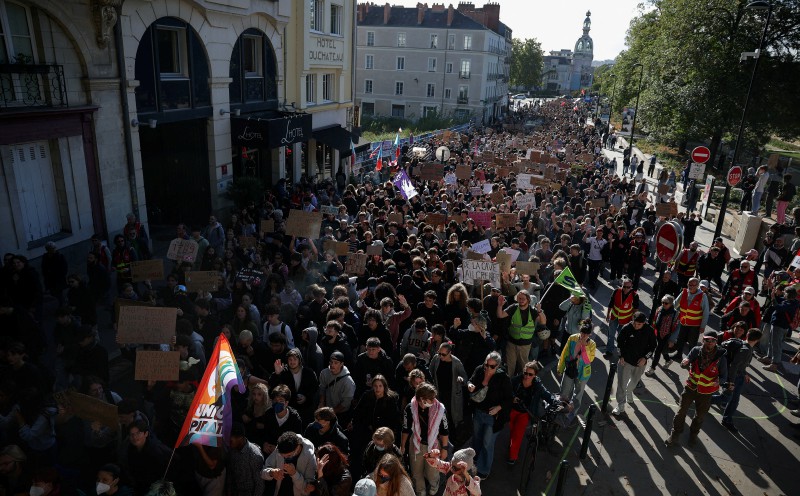
Clemence Remy relocated her family to the French city of Nantes in 2020 and placed her daughters in a local state school. While the teachers were competent, she became increasingly frustrated by continuous teacher strikes, eventually enrolling them in a private institution. This experience highlights the growing dissatisfaction with France's state schools, which has contributed to some of the most violent protests in recent decades.
These demonstrations erupted last month in Paris's poor northern suburbs, where grievances over teacher absences and substandard facilities escalated into a nationwide movement against inequality, underfunded public spending, and declining educational standards.
France's public schools, once considered a bastion of the republican ideal, have faced declining performance for years. The government has struggled to address the issue amidst significant pension obligations and the need to curb public finances. This has led many affluent parents to abandon the public system in favor of private education. Clemence Remy, a resident of Nantes, expressed her exasperation with the rolling strikes at her daughters' school, stating that the institution they should trust is no longer reliable.
National assessments reveal a steep decline in the reading and math skills of French students aged 15, with levels falling to a record low below the Organisation for Economic Co-operation and Development's average. French secondary schools struggled to fulfill nearly 10 percent of teaching hours in the 2024/25 school year, with over half of those absences due to unreplacement of absent teachers.
Additionally, nearly half of France's school buildings are in a significantly deteriorated condition, according to a 2025 report by Banque des Territoires.
The government's inability to improve education is linked to a rapidly increasing pension bill, which consumes valuable resources. France's 2027 education budget stands at €64 billion, but teachers' pensions account for an additional 28 percent of this expenditure. Government spending on pensions, projected to reach €436 billion next year, has grown faster than any other public expenditure category over the past two decades while education spending has declined.
This disparity is exacerbated by an aging population and voters' reluctance to raise the retirement age or reduce benefits. Economist Erwann Tison of the Institut de l'Entreprise suggests that pension spending "cannibalizes" the education budget, leaving early-career teachers underpaid and susceptible to strike action.
France's 7,500 under-contract schools, primarily under Catholic control, cater to over two million children or 17.6 percent of all pupils. These institutions receive state funding, with fees covering non-teaching expenses. They are less affected by strikes and absences, employing substitute teachers. The rich have increasingly favored private education, with over 40 percent of private school pupils belonging to very affluent families in 2021, compared to just 26.4 percent in 2000.
This shift reflects a growing perception that private institutions offer better opportunities for children from affluent backgrounds. While many parents pay significant sums for private education, the system remains inaccessible to everyone, leaving poorer families at risk of being marginalized.
Written by urgent.news from New Straits Times's reporting — not their text. Machine-written — may contain errors; check the original before relying on it.