Trill seekers: can scientists use AI and tutors to help birds remember lost songs?
When populations fall, fledglings can struggle to learn the right notes to attract mates. But research on how birds communicate offers hope for species’ survival Listening to birdsong is one of life’s great joys, but when researchers heard a particular tune emerging from a tree in a Buenos Aires park, they were especially jubilant. This arrangement was among those chirped by the local…
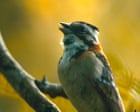
Researchers in Buenos Aires have discovered that a local bird, the rufous-collared sparrow, may be able to learn a lost song by listening to a computer-generated version. This discovery could help scientists use AI and tutors to teach birds how to sing when real-life recordings do not exist. Listening to birdsong is an enjoyable experience, but scientists are increasingly recognizing its importance in conservation efforts.
The song, which was lost in the area, was recreated using hand-drawn annotations from recordings made in the 1960s.
Birds’ songs play a crucial role in their mating and territory defense, making it essential for them to learn and perform well. However, when populations decline, fledglings may struggle to learn the right songs, leading to abnormal singing or even learning the songs of other species.
While male birds have a better chance of attracting a mate with a complex and well-performed song, females also benefit from this diversity of songs. This diversity is influenced by the environment the birds evolved in, with flat whistles common in tropical rainforests and complex motifs prevalent in temperate regions.
In the case of the rufous-collared sparrow, researchers hope that synthetic recordings can assist in teaching song to other species threatened by declining populations. About 4,000 of the world’s 10,000 bird species are songbirds, and their learned behavior or culture is an essential part of their population. The study suggests that AI could potentially provide live tutoring in the future, helping birds learn complex songs in a non-invasive way.
Written by urgent.news from Guardian Science's reporting — not their text. Machine-written — may contain errors; check the original before relying on it.