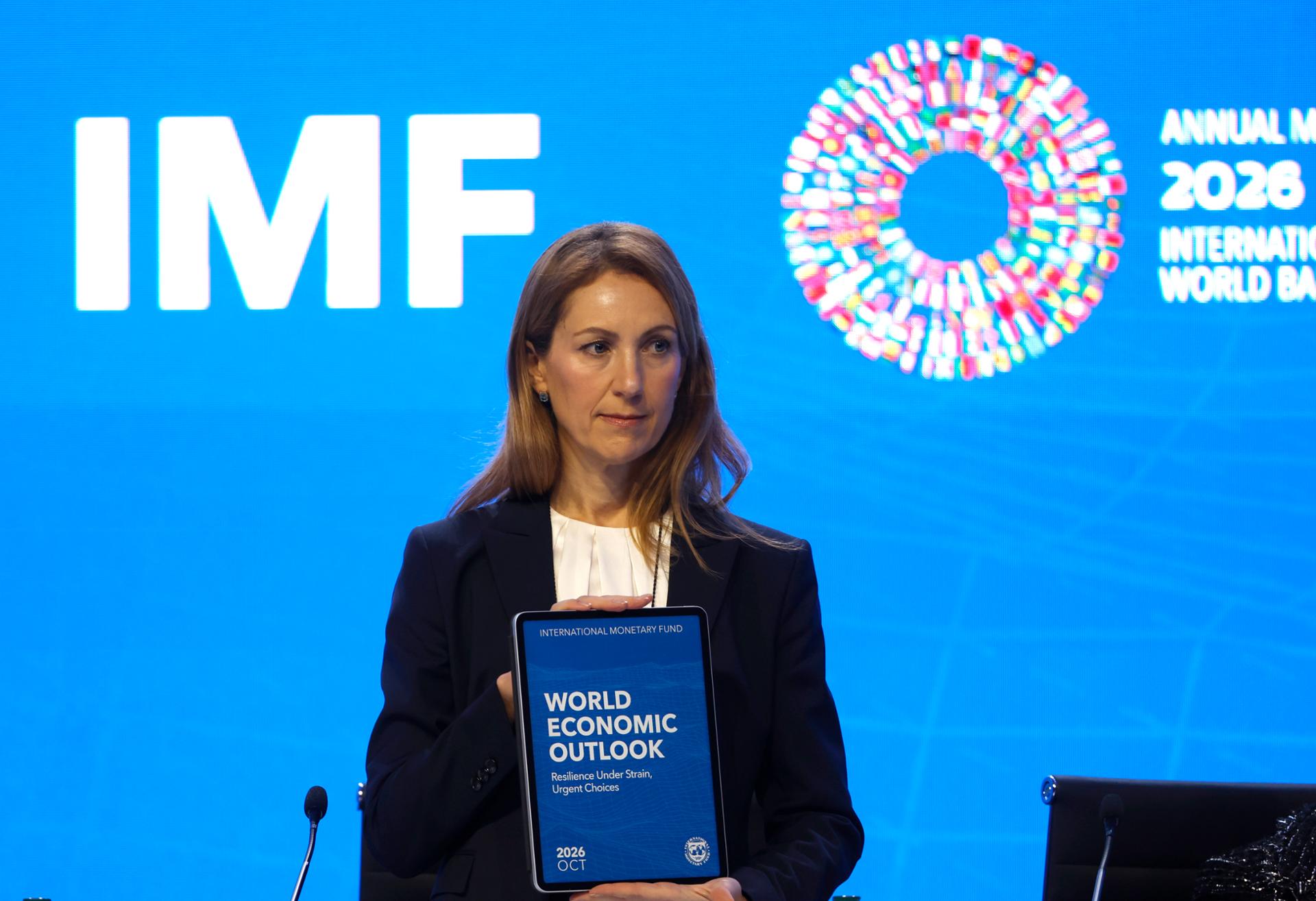
This one chart from the IMF tells the entire story of the world economy this year
A single chart, complicated though it may be, tells the story of the world economy this year.
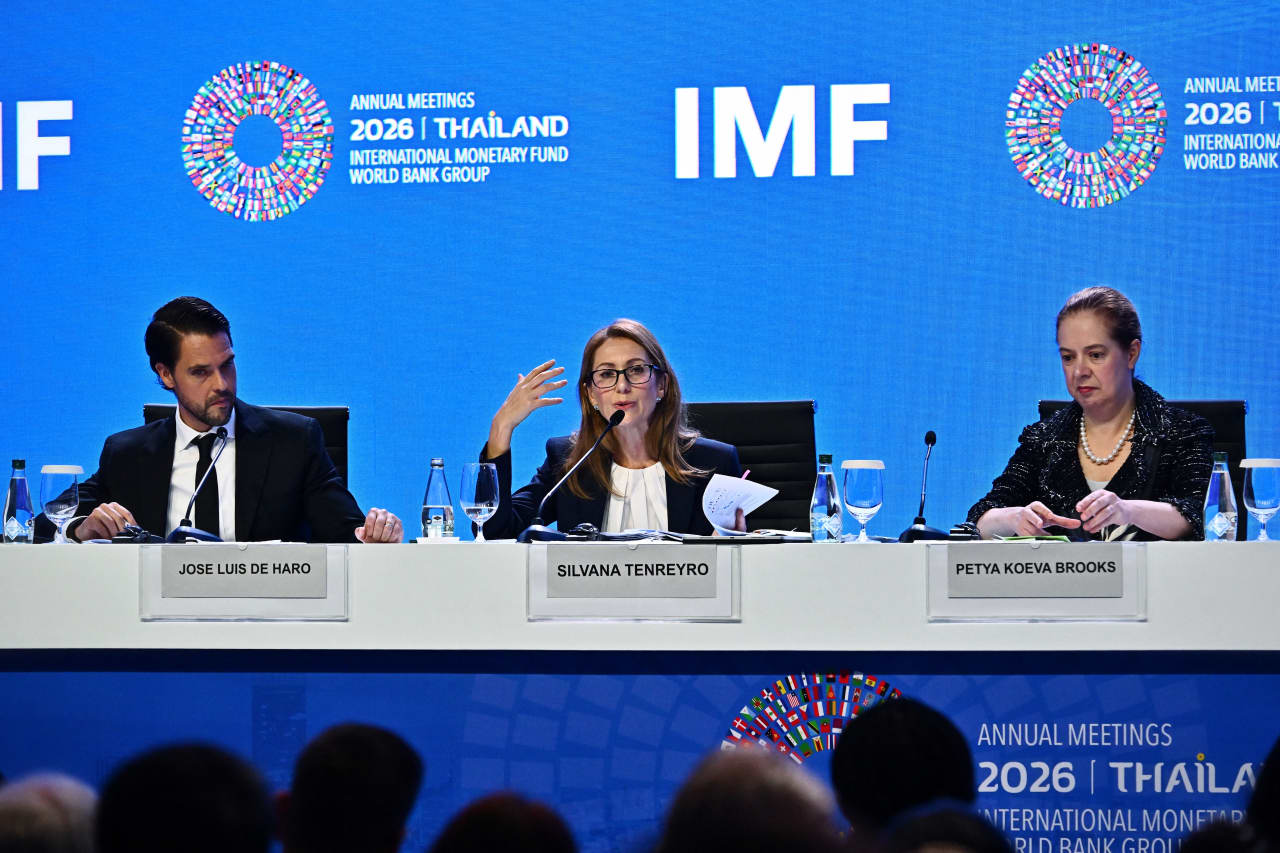
On October 12, the International Monetary Fund (IMF) delivered a stark warning that the world economy is nearing the boundaries of its resilience. In the report titled "Resilience Under Strain, Urgent Choices," the fund highlighted the mounting risks due to energy shocks from the Middle East war, thin policy buffers, and excessive reliance on AI investments. The report, presented at the IMF-World Bank Annual Meetings in Bangkok, focused on the challenges the global economy faces.
IMF Chief Economist Silvana Tenreyro emphasized that while the global economy has shown resilience, that resilience is currently under strain. Tenreyro warned that without rebuilding supply capacity and policy buffers, the world could soon reach the limits of its resilience.
The report portrays a fragmented global economy, shaped by the Iran war and the AI technology boom. Policymakers are concerned about dwindling energy reserves, mounting debt, and the growing influence of AI, which could leave the world more exposed to various risks. The fund expressed concerns over stubborn inflation, projecting global headline inflation at 4.7% in 2025, which is expected to ease to 4.1% by 2027.
The IMF urged fiscal restraint to control demand pressures and advised central banks to maintain sufficiently restrictive policies to prevent second-round inflation effects and stabilize long-term expectations.
The IMF's World Economic Outlook projected global growth to slow to 3.1% in 2026 from 3.5% in 2025, a significant decrease from previous forecasts. However, output is expected to recover to 3.4% in 2027, remaining unchanged from the earlier estimate. Advanced economies are forecasted to expand at a slower pace of 2.1% in 2026 and 1.8% in 2027, with the US holding steady at 2.3% across 2025, 2026, and 2027.
Euro Area growth is anticipated to reach 1.1% in 2026 and 1.2% in 2027. Germany's recovery is projected to reach 1.3% in 2027, while France will slow to 0.4%. Italy and Spain are expected to grow at 0.8% and 2.5%, respectively. Japan's economy is forecasted to grow at 0.7%, while the UK and Canada are projected to grow at 1.3% and 1.1%, respectively.
Emerging and developing economies are projected to decelerate to 3.7% in 2026, down from 4.5%, and then rebound to 4.4% in 2027. The Middle East and Central Asia are expected to contract by 0.3% this year but rebound to 6.3% in 2027. Saudi Arabia could experience a contraction of 3.3% in 2026 and a significant rebound to 7.9% in 2027. The UAE's economy is projected to contract by 3.9% in 2026 and rebound by 7.7% in 2027, provided shipping routes return to normal and the Strait of Hormuz reopens.
India is expected to grow at 7% on a fiscal-year basis or 7.4% on a calendar-year basis. Sub-Saharan Africa is projected to maintain growth at 4.5% in both years, while low-income developing countries are expected to grow at 4.8%. The IMF raised global growth projections for 2026 to 3.3% due to the surge in AI valuations. The World Bank forecasted that the UAE economy would grow at 5% in 2026 and 5.1% in 2027.
Written by urgent.news from Gulf News's reporting — not their text. Machine-written — may contain errors; check the original before relying on it.
This story
This is one outlet's version. Read the fullest account.