This cool interactive visual argues that generative art began in a cave
Around 71,000 BCE, someone in a place now called Blombos Cave, on the southern coast of what is now South Africa, scratched crosshatched lines into a piece of ocher. No computer. No code. No prompt. But according to The Living Timeline , launched by digital art institution Le Random , the drawing is a work of generative art, just like your latest AI -styled photo on Instagram. The Living Timeline…
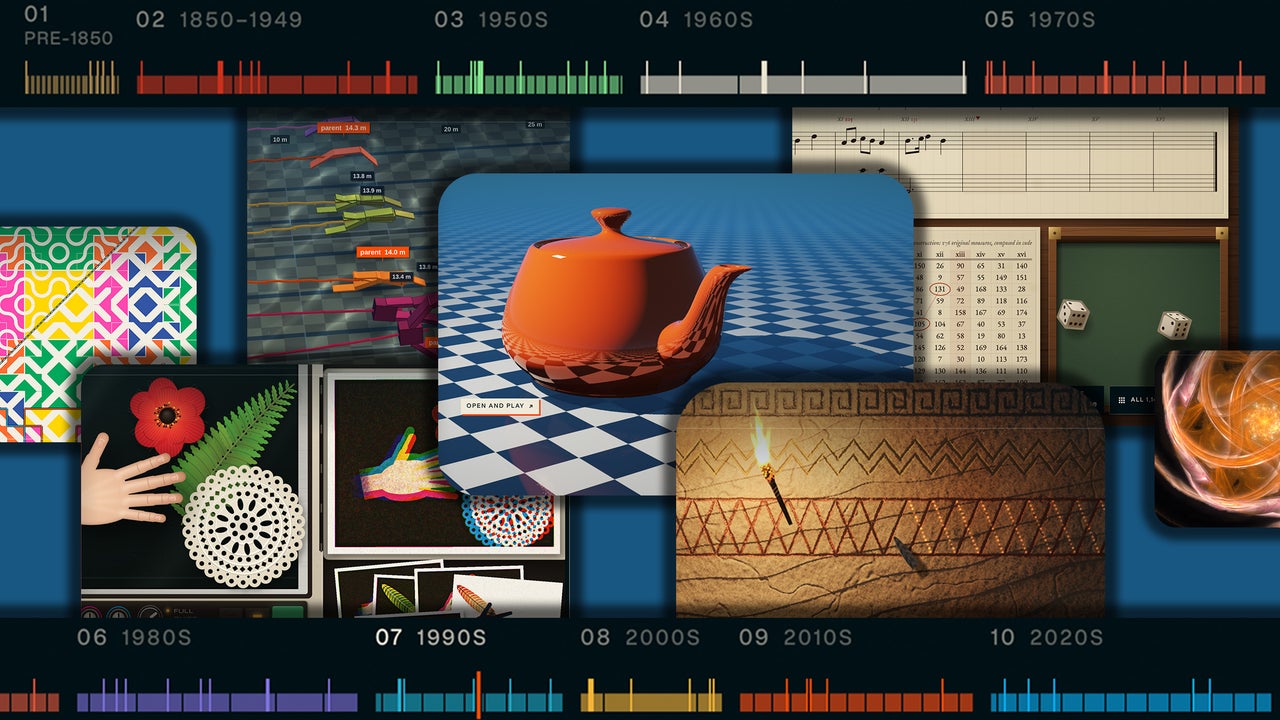
Around 71,000 years ago, a human artist at Blombos Cave, in what is now South Africa, created the earliest known drawing by humans: a series of crosshatched lines etched onto a piece of ocher. The Living Timeline, an interactive history of generative art launched by digital art institution Le Random, argues that this simple yet innovative artwork qualifies as generative art, just like modern AI-generated images on social media platforms.
The timeline chronicles 1,147 moments from 71,000 BCE to 2026, showcasing artworks, ideas, and exhibitions connected to human-made algorithms and machines.
Peter Bauman, editor-in-chief at Le Random, explains that the timeline aims to help people outside of the art world understand the significance of certain works by considering the context and the difficulty of the challenges artists faced at the time. The timeline was co-created with Sasha Stiles, a Kalmyk American poet and AI researcher, and Vuk Ćosić, a Slovenian pioneer of the 1990s net.art movement.
Art theorist Philip Galanter, professor emeritus at Texas A&M University College of Performance, Visualization & Fine Arts, defines generative art as "an art practice in which an artist uses a system (natural-language rules, a computer program, a machine, or another procedural method) that contributes to or completes the work." Galanter's thesis that generative art "is as old as art itself" has influenced the timeline's definition.
Generative art involves an artist using a system that contributes to or completes the work, such as a computer program, machine, or another procedural method. The timeline demonstrates this concept by connecting generative art to various examples like primitive cave etchings, the 1804 invention of the jacquard loom, and modern neural networks. Artworks created through strict rules, like Piet Mondrian's de Stijl-style paintings, are also considered generative.
AI has become a significant part of the conversation surrounding generative art. The timeline places AI art within the long history of artists ceding part of the creative process to algorithms, showing that AI is an autonomous system with varying degrees of autonomy. From the Dartmouth proposal in 1955 to the emergence of generative adversarial networks in the mid-2010s, the timeline highlights the progression of AI systems and their impact on generative art.
Written by urgent.news from Fast Company's reporting — not their text. Machine-written — may contain errors; check the original before relying on it.