The New Campaign Strategy: Don’t Debate
Candidates are increasingly forgoing the hallowed tradition of facing their opponent to debate ideas
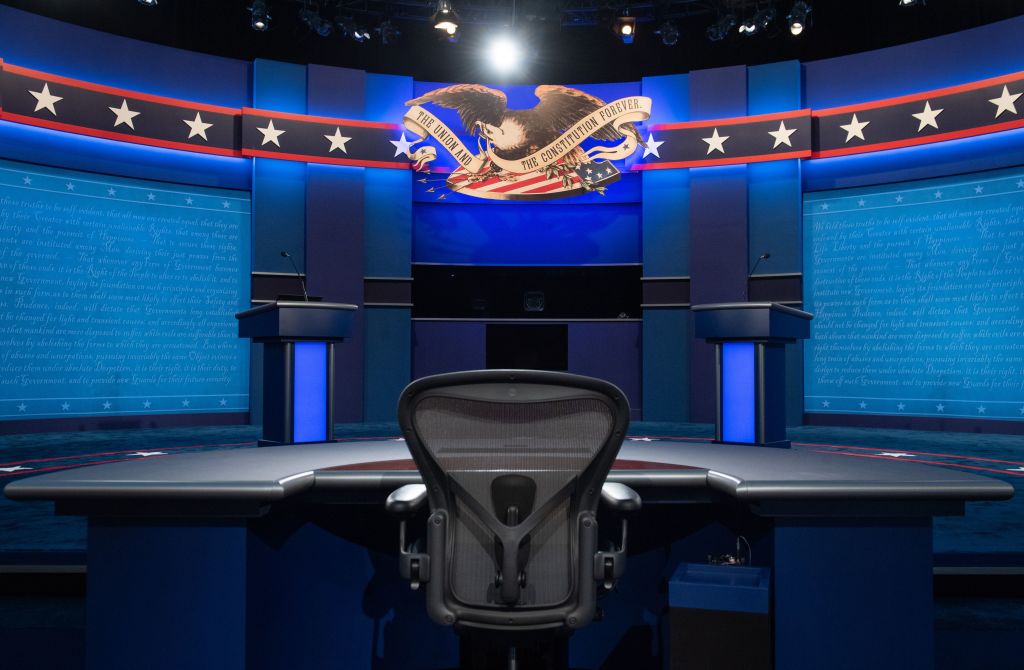
In recent months, a new campaign strategy has emerged in the world of politics: opting out of debates. This seismic shift has transformed the way candidates engage with voters and has left many scratching their heads. As the 2020 election season unfolds, candidates are increasingly choosing to forgo the traditional forum of debates in favor of other methods of political engagement.
In a variety of high-profile Senate races, Democratic candidates are making headlines for their aggressive attacks on their Republican opponents. Sen. Jon Ossoff called his opponent a bigot, while Abdul El-Sayed dismissed former Rep. Mike Rogers as a yes-man for the Trump agenda. Troy Jackson denounced Sen. Susan Collins as a war profiteer.
These scathing attacks have resonated with voters, but they are not representative of the broader trend. In fact, in over half of the races for governor and Senate, the two major-party candidates are not expected to participate in any debates before Election Day.
The decline in debates can be attributed to changing voter habits and the way political information is consumed. Despite the perceived importance of debates, few voters actually watch them. Instead, it is the gaffes and gotchas that tend to capture the public's attention. Local journalists' in-depth coverage often falls short in reaching a wide audience compared to the amplified sound bites from debates.
The decision to forgo debates is not without its challenges. In the Texas Senate race, Democrat James Talarico and Republican Ken Paxton have been at odds over the issue. Talarico has tried to force a debate, even suggesting a venue on Fox News, while Paxton has refused. The situation was further complicated when Trump inserted himself into the debate, mocking Talarico and urging him to debate Paxton. This move only served to further highlight the polarizing nature of the candidates and the contentious nature of the race.
The decision to avoid debates has also been driven by the massive amount of political advertising that has saturated the airwaves. In Texas, the already staggering $425 million spent on political ads far outweighs the cost of a debate, making the latter seem irrelevant in the eyes of many voters. In races like Alabama, where Sen. Tommy Tuberville has refused to debate incumbent Doug Jones, the argument is that the debate would be dominated by differences of opinion, rather than governing the state.
Despite the shift away from debates, some candidates are still choosing to participate. Amy Acton, the Democratic gubernatorial candidate in Ohio, has refused to debate Republican nominee Vivek Ramaswamy, citing a refusal to "platform" Ramaswamy. This stance highlights the complexity of the decision and the varied motivations behind it.
In conclusion, the trend of avoiding debates in political races is a phenomenon that is reshaping the way candidates interact with voters and the way information is disseminated. While debates have long been considered race-defining moments, the rise of social media and the saturation of political advertising have led to a new approach that prioritizes targeted attacks and avoids the potential pitfalls of live debates.
As the 2020 election season continues, it remains to be seen whether this shift will have lasting implications for the future of political campaigning.
Rewritten by urgent.news; may contain errors — check the original.
Source: time.com