Sabah Parks seeks community-led approach to marine conservation
KOTA KINABALU: Coastal communities should play a direct role in managing marine protected areas, with Sabah Parks promoting a model that allows villagers to help protect marine resources while benefiting from sustainable tourism.
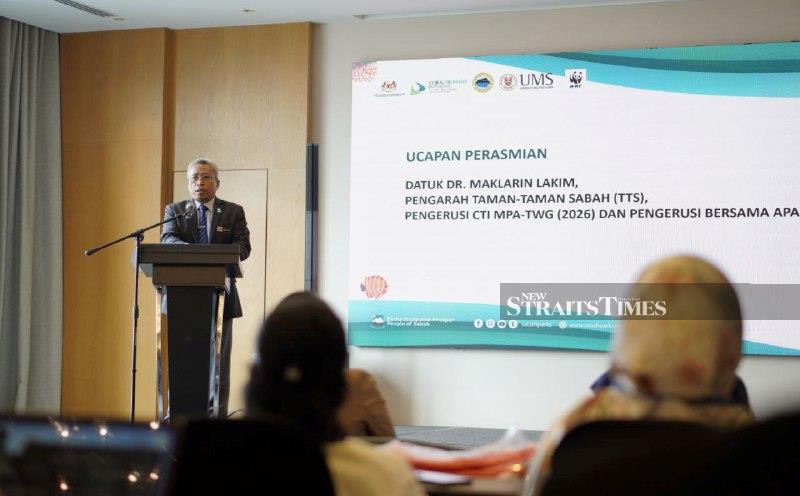
Kota Kinabalu: Local communities should actively participate in managing marine protected areas, according to Sabah Parks. Director Datuk Dr Maklarin Lakim advocates for a community-led model where villagers can safeguard marine resources while reaping benefits from sustainable tourism. This approach is already being tried in Tun Mustapha Park in Kudat, where certain areas are designated for community involvement in marine resource management.
Traditional practices like the tagal system, which protects rivers and freshwater fish, could be utilized by these communities. When a community is granted authority over a marine zone near their village, the approach can prove effective, as stated at the 2026 National Marine Protected Area (MPA) Managers Network Establishment and Coordination Workshop.
Healthy marine ecosystems can also generate opportunities for community-based tourism and ecotourism, leading to long-term economic gains for coastal areas. Maklarin emphasized the need for better coordination among marine park managers in Sabah, Sarawak, and Peninsular Malaysia, citing disparities in laws, policies, and management practices as a hindrance to conservation efforts.
While Malaysia's involvement in the Coral Triangle Initiative on Coral Reefs, Fisheries and Food Security (CTI-CFF) and its National Plan of Action 2.0 offer a framework for collaboration, Sabah's marine parks are governed by its state biodiversity policy, distinct from Peninsular Malaysia's national biodiversity policy. The regulations and governance of the marine parks managed by Sabah are fragmented, Maklarin lamented.
Greater regional and international cooperation could align conservation efforts without altering individual jurisdictional laws. He proposed a national network of MPA managers to facilitate knowledge-sharing, technical cooperation, and more effective management of protected areas, addressing shared challenges such as climate change, marine pollution, and the need to bolster the capacity of those managing protected areas.
Rewritten by urgent.news; may contain errors — check the original.
Source: nst.com.my