Qatar's government revenue fell 42% in first half due to Iran war, Emir says
Qatar's revenue fell 42 per cent in the first half of this year, as exports of liquefied natural gas (LNG) dropped due to the impact of the Iran war, Emir Sheikh Tamim said during a Shura Council meeting. LNG exports from Qatar, the world’s second-largest supplier before the conflict, has fallen sharply due to the effective closure of the Strait of Hormuz as well attacks on its Ras Laffan complex…
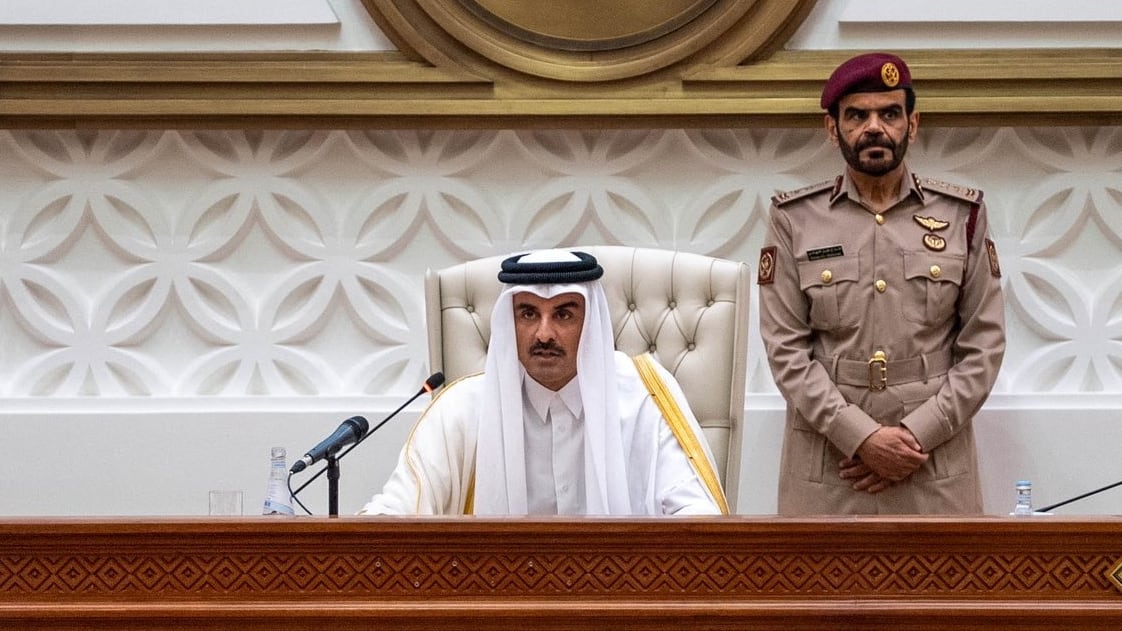
Qatar's government revenue declined by 42% in the first half of 2023 due to the impact of the Iran war, according to Emir Sheikh Tamim. The drop in revenue was primarily caused by a significant decrease in liquefied natural gas (LNG) exports, which dropped from the world's second-largest supplier before the conflict.
The effective closure of the Strait of Hormuz and attacks on the Ras Laffan complex resulted in a sharp decline in LNG exports, removing 12.8 million tonnes annually from the market. Despite these challenges, the Emir stated that essential services were not compromised, and development priorities remained intact. Measures such as strengthening reserves, reducing public debt, adopting conservative oil-price assumptions, and developing non-oil revenue helped Qatar absorb the economic fallout.
About 17% of Qatar's LNG capacity is currently offline due to damage from Iranian strikes, and repairs are estimated to take three to five years. As a result, even if the Strait of Hormuz were to reopen, access to Qatar's pre-war supply would only be partially restored.
Qatar's non-hydrocarbon industries, accounting for about 80% of real GDP, continue to grow despite the disruption in the energy sector. However, the World Bank projects that the entire economy will contract by an average of 4.3% for 2026, down from 5.7 percentage points from April, due to lower export volumes caused by the Strait of Hormuz's closure.
The International Monetary Fund expects Qatar's economy to contract by 15.6% in 2023, rebounding to 18.8% growth in 2027. Despite the crisis, the Emir emphasized that Qatar is emerging more resilient and better adapted to global changes. Over the next five years, Qatar plans to invest approximately 221 billion riyals ($60.7 billion) in infrastructure, public-private partnerships, and private-sector projects in real estate and hospitality.
Written by urgent.news from The National Business's reporting — not their text. Machine-written — may contain errors; check the original before relying on it.
This story
This is one outlet's version. Read the fullest account.
- Qatar's government revenue fell 42% in first half due to Iran war, Emir says thenationalnews.com