¿Por qué Renfe vuelve a beneficios a pesar del malestar creciente de los usuarios?
La operadora ferroviaria pública sale de números rojos impulsada por la Alta Velocidad, mientras los retrasos y las cancelaciones disparan las críticas
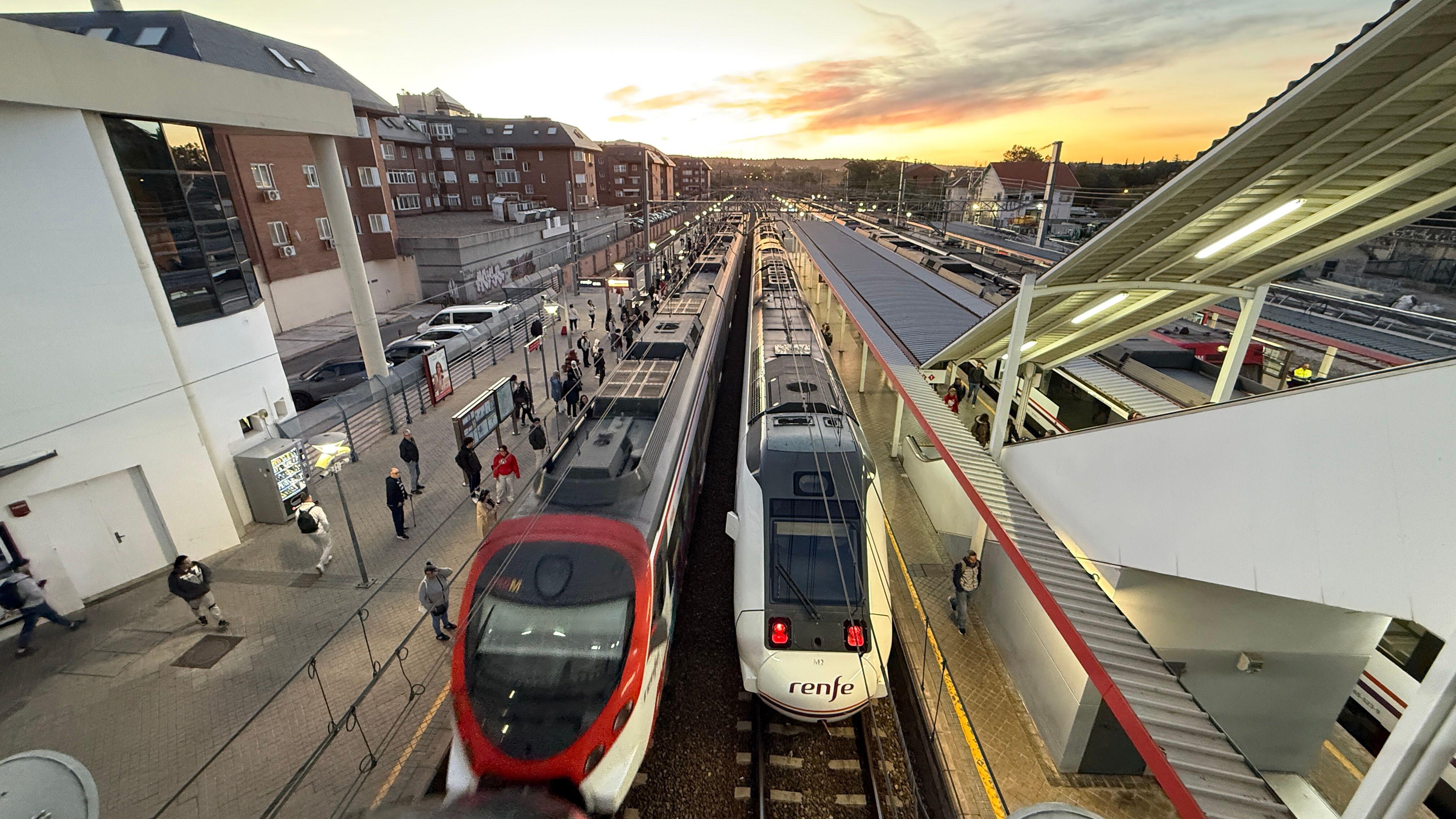
Renfe, the Spanish national railway company, returned to profit in 2025 despite increasing user dissatisfaction. This is a stark contrast to the users' experiences at train stations, which are marked by delays, cancellations, breakdowns, and a series of incidents that have become a staple of controversy. Despite these issues, Renfe closed 2025 with a profit of 60.2 million euros, compared to losses of 2.9 million the previous year.
Ticket sales reached 2,000 million euros, a 19% increase, even though the number of travelers fell by 0.7% to 531.4 million. Two-thirds of this revenue increase, 216 million euros, came from publicly obligated services such as Cercanías and Media Distancia, where the free concession ended on July 1, leading to a 70.6% increase in the average income per traveler in these services.
The company's improvement is mainly concentrated in Renfe Viajeros, with its profit multiplied over ten times, from 5.4 to over 70 million euros. This growth is driven by a surge in demand and commercial revenues, a more modern and efficient management, and international diversification. Renfe attributes this recovery to three factors: growth in demand and commercial revenues, a more modern and efficient management, and international diversification.
However, this success is not without controversy. The company's accounts show a significant penalty of 21.9 million euros to Talgo for the delay in the delivery of the Avril S-106 trains, which represent a third of the group's pre-tax result. Despite this, Renfe maintains that the impact is "very reduced" compared to traveler revenues and attributes the overall improvement to operational and commercial factors.
The increase in travelers does not guarantee more profit, as European operators face high fixed costs and wage inflation that cannot be fully passed on to fares, especially in publicly subsidized services. The company's good economic moment contrasts with the experience of some users, who note that not everything depends on Renfe.
Railways, signaling, and traffic management are primarily the responsibility of Adif. Even so, Renfe acknowledges that some indicators indicate a deterioration in service quality. Cercanías Madrid transported almost 245 million travelers in 2025, but significant incidents - those generating over 100 minutes of accumulated delay - increased from 540 to 905, nearly 70% more.
Cancelled trains increased from 1.58% to 2.09% of scheduled trains. According to data provided to the State Defender, which monitors Cercanías Madrid and Rodalies, 2025 had the worst punctuality and incident records in Madrid among the past three fiscal years. Renfe attributes part of this deterioration to Adif's works. The problem is even more visible in Catalonia.
In August, only 52.9% of Rodalies trains met the schedule, with those that arrived late accumulating an average delay of 18.9 minutes. In Madrid, compliance was around 70%, with a delay of 13.2 minutes for late trains. Renfe denies there is a structural lack of capacity, speaking instead of "operational challenges" and a transformation process.
The company recognizes the need to incorporate new units as soon as possible, given the growth in demand. The crisis is repeated across Europe, with France dependent on the delivery of new TGV-Ms from Alstom and Germany facing a bottleneck due to an overburdened and modernized network undergoing deep transformation. The challenge for Europe, according to Cantabrana, is to execute investments of this scale without the multiannual programs accumulating delays and overruns.
The S-106's crisis underscores that the risk is not theoretical. Renfe is embarking on its own cycle of investments, with over 3,500 million euros invested in renewing the Cercanías and Media Distancia fleet, 1,777 million in new high-speed trains, and 1,000 million in modernizing workshops and maintenance systems, with planned actions on 85% of its facilities by 2030.
The recovery does not evenly benefit all parts of the group. Renfe Mercancías lost 44 million euros in 2025, compared to 32 million the previous year. The company acknowledges the division as one of its main challenges, but does not set an outlook for returning it to profit. The General Intervention of the State maintains a second consecutive year of a salvage in the consolidated accounts due to the valuation of Mercancías' assets. The recurrent losses force a check on its immovable asset.
Written by urgent.news from El Pais Economia's reporting — not their text. Machine-written — may contain errors; check the original before relying on it.