Newly Discovered Ancient Crocodile Relative Had Super Thin Needle-Like Teeth for Snagging Tiny Prey
Learn about the discovery of an ancient crocodile relative with extremely thin teeth, revealing a unique feeding habit rarely seen in crocodiles.
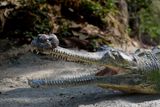
Around 170 million years ago, a crocodile relative with needle-like teeth prowled the waters of ancient Morocco for small, soft prey. This Jurassic crocodile, named Ctenosuchus tenuidens, was unlike other crocodiles due to its comb-like, thin teeth. Discovered in the Atlas Mountains of southeastern Morocco, the fossils of this species reveal teeth that were perfect for catching small fish and crustaceans, but not for tearing apart larger prey.
Lead study author Hamzah Imran of the University of Portsmouth expressed excitement over this unique discovery. The researchers found two specimens of Ctenosuchus tenuidens at a fossil site near the towns of Talsint and Anoual. The tiny black circles on a long bone led to the discovery of these delicate teeth, which inspired the species' name.
Imran explained that the thin teeth suggest Ctenosuchus tenuidens likely fed on smaller prey like shrimp, worms, and tiny fish. This discovery sheds light on ancient crocodile relatives in Gondwana during the Jurassic period.
Written by urgent.news from Discover Magazine's reporting — not their text. Machine-written — may contain errors; check the original before relying on it.


