Lebensmittel: Supermarktchef nennt Cyberangriff auf Frankreichs Lebensmittelversorgung „beispiellos“
Eine Cyberattacke störte die Funktion von Kühlschränken mehrerer französischer Handelsketten. Lebensmittel müssen weggeworfen werden. Die Staatsanwaltschaft ermittelt.
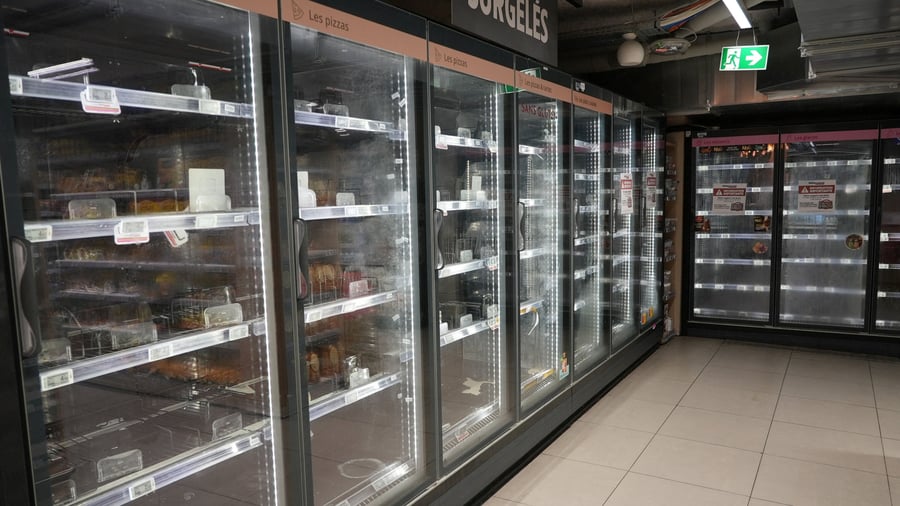
Paris and Düsseldorf, the contamination of perishable goods and empty shelves have disrupted the supply chain in France after a cyberattack on supermarkets. At least 500 stores, including chains like Super U, Carrefour, and Monoprix, were affected. Dominique Schelcher, the managing director of Coopérative U, described the attack as "unprecedented, unexpected, and extremely serious."
This incident highlights the vulnerability of certain systems and serves as an assault on the country's food safety. On Sunday night, hackers gained control over the cooling systems within a few hours. According to the Paris prosecutor's office on Monday, connected refrigerators in store locations had been heated to 50 degrees Celsius throughout the night.
Reports from the trade group "Les Mousquetaires" indicate that hackers managed to transform cooling and freezing units into defrosting mode overnight. Tonnes of food had to be discarded. The identity of those behind the attacks remains unclear. While only a small fraction of the estimated more than 10,000 supermarkets in France were affected, concerns are now being raised about the vulnerability of the food supply.
Written by urgent.news from Handelsblatt's reporting — not their text. Machine-written — may contain errors; check the original before relying on it.