Isle of Wight fossil Europe's first known long-clawed megaraptoran dinosaur
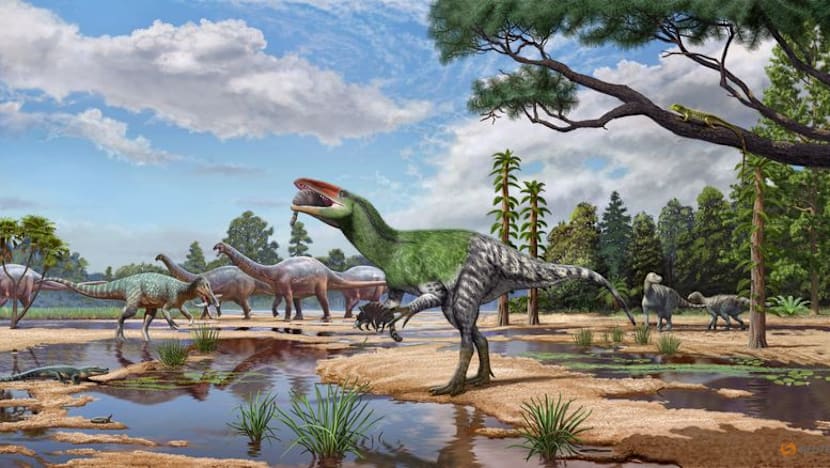
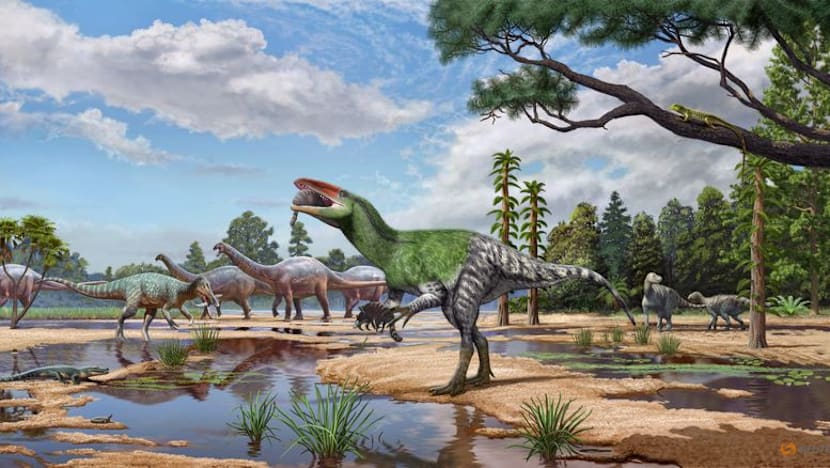
A new species of dinosaur—a long-clawed predator the size of a large tiger—has been discovered by a UCL-led team from a fossil found on the Isle of Wight. The dinosaur, described in a new paper in the journal Royal Society Open Science, belongs to a group of agile, two-legged carnivores called megaraptorans and is the first of this group to be found in Europe.

A new species of theropod dinosaur named Invictibellatrix amberina has been discovered on the Isle of Wight, a small island off the south-west coast of England. The fossil used to identify this species is a partial braincase, which has been hiding in the archives of the Natural History Museum in London since it was collected in 1924. "It was sitting unstudied in the museum for about 100 years, which is very surreal," says Cassius Morrison, a researcher at the University of Leeds, UK.
Comparing the fossil's features using CT scans, Morrison and his colleagues discovered that the skull is most similar to that of the Argentinian megaraptoran Murusraptor, found around 80 million years ago. The newly identified dinosaur is the first megaraptoran found in Europe and is believed to have lived during the 120-million-year-old Lower Cretaceous Wessex Formation on the Isle of Wight.
The genus name, Invictibellatrix, means "female unconquered warrior," and researchers estimate that the dinosaur was about 3 to 4 meters long, 1.5 meters tall, and weighed between 200 and 300 kilograms. It is believed to have been a fast, agile, two-legged carnivore that had feathers and claws 10 to 20 centimeters long, suggesting it preyed on small dinosaurs, lizards, and mammals.
The discovery of Invictibellatrix adds a new piece to the puzzle of dinosaur evolution, as it is thought to have evolved from Asian megaraptorans that dispersed into Europe around 130 million years ago. These dinosaurs are believed to have spread from Europe to Africa, South America, and Australia before the continents completely separated. However, more fossil discoveries are required to confirm or reject this hypothesis.
Written by urgent.news from New Scientist's reporting — not their text. Machine-written — may contain errors; check the original before relying on it.
This story
This is one outlet's version. Read the fullest account.
- Dinosaur named new species 102 years after fossil found on Isle of Wight newscientist.com
- Isle of Wight fossil sheds light on enigmatic meat-eating dinosaurs channelnewsasia.com