Indonesia’s haze problem starts underground: How peatland fires keep burning
JAKARTA, Oct 14 — For weeks, parts of Indonesian Borneo have resembled an Armageddon landscape, with masked reside...
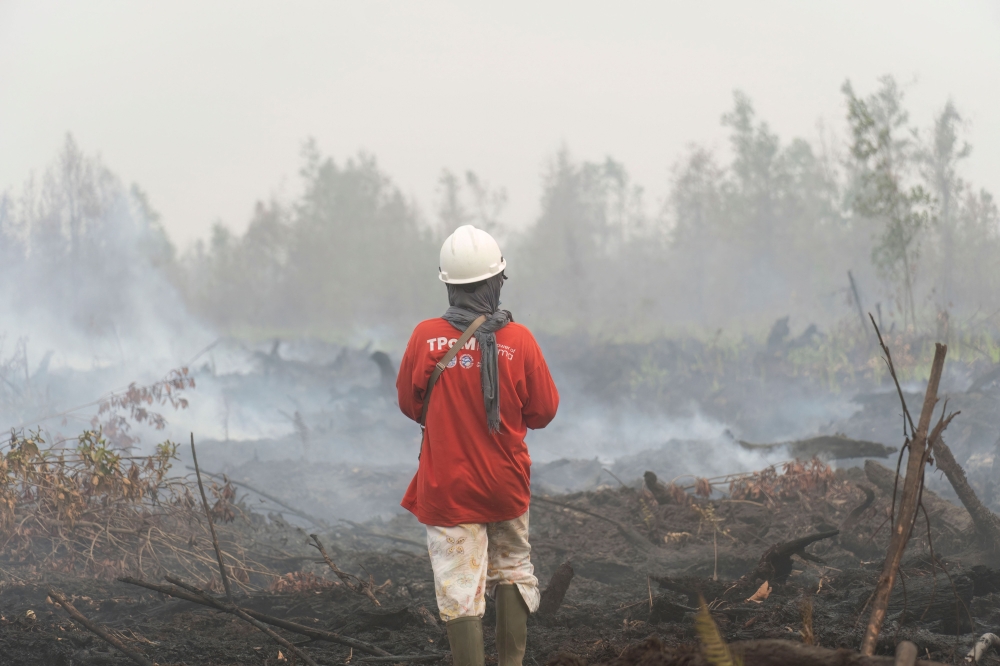
Indonesia is grappling with a severe haze problem, primarily originating from peatland fires, which have been burning persistently and underground in recent weeks. These fires, which often smolder for weeks or months, have significantly impacted air quality in neighboring countries, including Malaysia, Singapore, and the Philippines.
Peatlands are unique ecosystems, formed over thousands of years from organic material that accumulates in waterlogged conditions. They are rich in biodiversity, hosting numerous plant and animal species, including endangered ones like orangutans and tigers. Despite covering only three percent of the world's land surface, peatlands store about a third of global soil carbon, equivalent to twice the amount held by forests.
Indonesia is home to the world's largest tropical peatland area, accounting for roughly a third of the global total. However, 16.4 million hectares of these peatlands are degraded and highly susceptible to fire. The primary cause of these fires is the expansion of industrial plantations for timber, pulp, paper, rice, and palm oil.
To prepare these lands for agriculture, peatlands are drained using extensive canal networks that span about 285,000 kilometers, seven times the Earth's circumference. This drainage leaves the peatlands vulnerable to fire, especially during severe droughts caused by El Niño years.
The impacts of these fires are severe. Although they constitute less than a third of all wildfires in Indonesia, they contribute to the majority of the haze. The toxic smog from these fires contains harmful substances like formaldehyde, hydrogen cyanide, ammonia, and PM2.5 particles, which can penetrate the lungs and bloodstream, leading to increased health issues.
Indonesia and Malaysia have closed hundreds of schools due to the haze, and over 170,000 people in Indonesia alone sought treatment for acute respiratory infections in August and September.
The fires also devastate wildlife habitats, threatening endangered species such as orangutans and Sumatran rhinos. Furthermore, in October 2026, Indonesian wildfires had emitted 140.5 megatonnes of carbon, accounting for about 13 percent of the global total that year, marking Indonesia's highest level of fire emissions since 2019.
Efforts to combat these fires include revoking concession licenses for extractive activities on peatlands, rewetting degraded peatlands, and replanting native species. Indonesia has imposed a moratorium on new permits for clearing primary forests and peatlands and has restored 4.16 million hectares of peatlands, constructed 45,000 canal barriers, and replanted various native species.
However, the effectiveness of these restoration efforts remains questionable. Activists and experts continue to call for stronger measures, such as blocking drainage canals and revoking peatland concessions.
Rewritten by urgent.news; may contain errors — check the original.
Source: malaymail.com