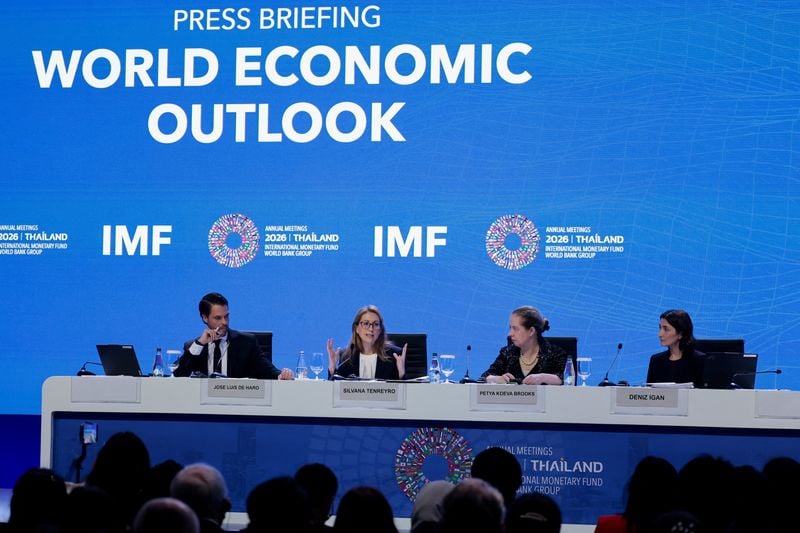
India's economic story in fast lane, IMF projects 7% GDP growth for FY26 and FY27
India is projected to maintain a robust growth rate of 7% in both 2026 and 2027, bolstered by strong domestic demand and a thriving services sector, according to the International Monetary Fund. Positive revisions from the World Bank and OECD highlight resilience amid consumption patterns. However, challenges such as rising energy prices and geopolitical tensions could impact this trajectory, yet…
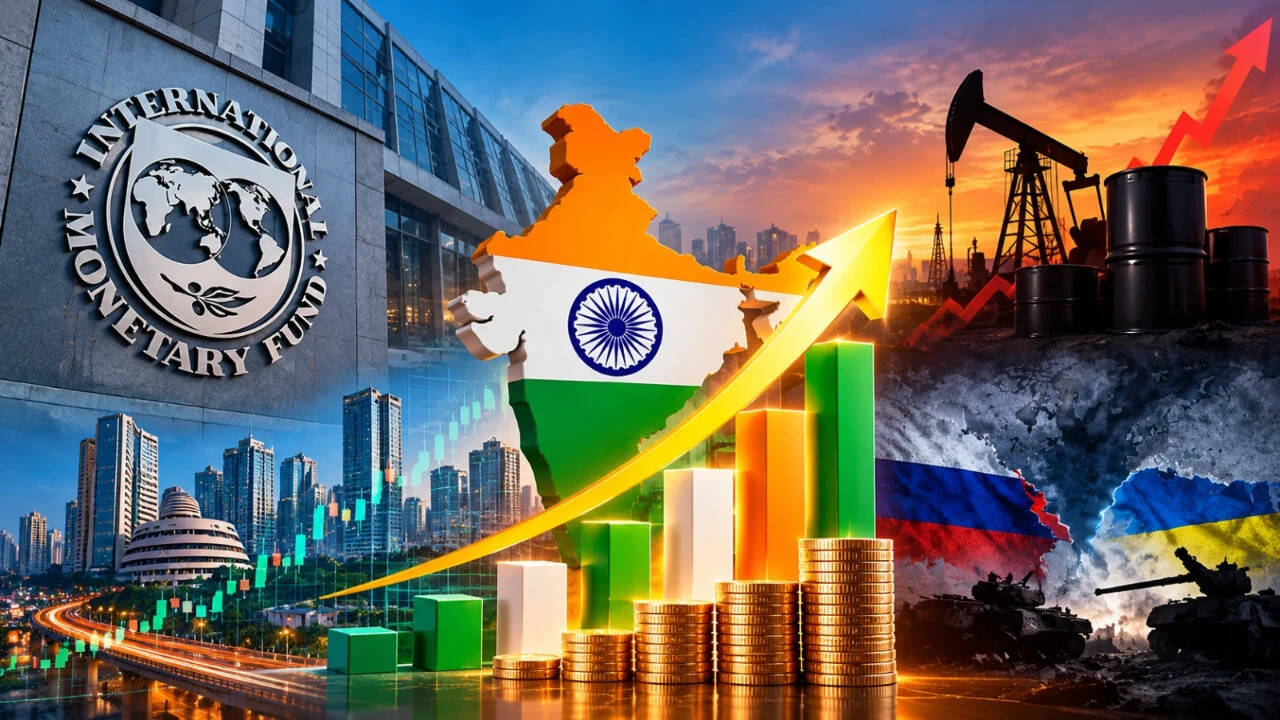
The International Monetary Fund (IMF) predicts India's economy to expand by 7% in both 2026 and 2027, positioning the nation among the world's fastest-growing major economies. This projection is bolstered by robust domestic demand, thriving services sector, and favorable demographic trends. These factors were evident in India's GDP growth of 7.8% in the April-June quarter of the current fiscal year.
IMF chief economist said, "India stands out with upward revisions, reflecting sustained momentum and growing evidence of stronger growth potential supported by favorable demographic dynamics, a large and expanding domestic market, and continued structural reforms."
Despite rising oil prices, India's growth is expected to remain strong, driven by domestic demand and services activity. The agency forecasts India to retain its place as one of the fastest-growing major economies, with growth projected at 7.0% in 2026.
The improved outlook follows stronger-than-expected GDP growth in the April-June quarter, prompting multiple global institutions to revise their forecasts upwards. The World Bank and the Organisation for Economic Co-operation and Development (OECD) have both increased their growth estimates for India, with the World Bank projecting 7.1% growth for 2026-27 and the OECD raising its forecast to 7.1% for the same period.
However, global growth is facing increasing uncertainty, with the IMF warning that the global economy's resilience is becoming "more fragile and more uneven." Higher oil and energy prices could fuel inflation and strain household purchasing power, while below-normal monsoon rainfall might impact agricultural output and rural demand. Additionally, prolonged geopolitical tensions could disrupt supply chains and increase input costs, posing risks to India's economic growth.
Rewritten by urgent.news; may contain errors — check the original.
Sources: en.yna.co.kr · economictimes.indiatimes.com · timesofindia.indiatimes.com · news.rthk.hk
Also reported by 3 other outlets
- IMF upgrades 2026 world economic growth forecast news.rthk.hk
- IMF raises India’s FY27 growth forecast to 7% economictimes.indiatimes.com
- IMF raises S. Korea's growth forecast to 3.3 pct amid chip supercycle en.yna.co.kr