I Built an End-to-End Enterprise Intelligence Simulation to Answer One Question
Explore how I built a governed enterprise AI agent using Neo4j, Qdrant, DuckDB, and MLflow to deliver traceable, auditable answers.
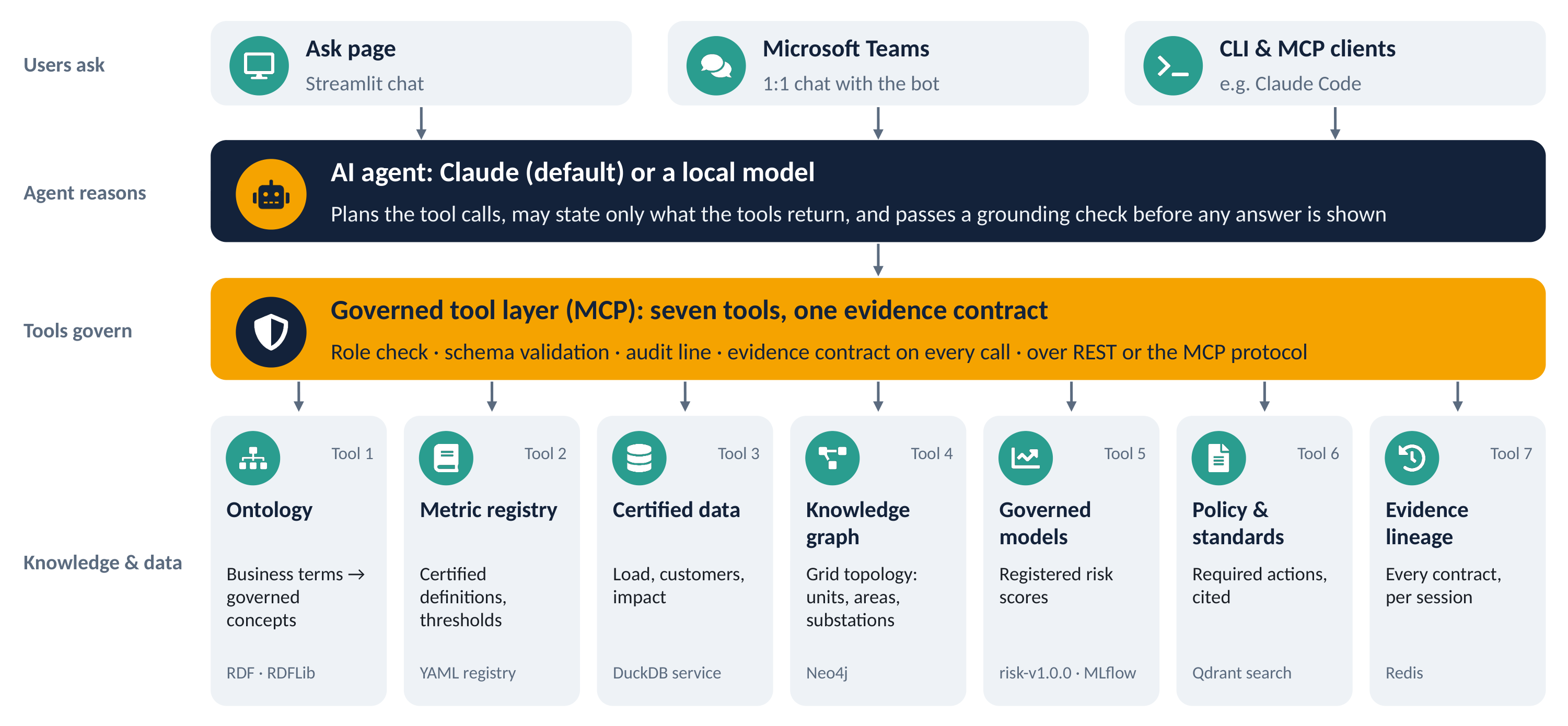
An enterprise AI architecture often appears similar, featuring an AI agent connected to an ontology, knowledge graph, certified data, and vector index. The author sought to determine whether these integrations were truly effective by simulating the entire environment and answering a single question: which overloaded transformers pose the highest customer impact risk within an electricity distribution grid.
The architecture was divided into two tracks: semantic resolution, which determines the user's intent, and evidence retrieval, which gathers accurate information. The system utilized open-source tools like RDFLib, Neo4j, Qdrant, DuckDB, FastAPI, MLflow, Redis, and Streamlit, all running as Docker Compose services. The author generated mock data to simulate 50 transformers, 10 service areas, impact measures, risk scores, and 12 policy documents, ensuring that every run would produce the same configuration for accurate results.
Despite the model's failure to group data properly, the author added a group by / min_count option to the certified query, enabling the data service to perform aggregations accurately. The simulation incorporated governance measures, such as fail-closed authorization, schema validation, circuit breakers with degraded mode, and an audit trail for every tool call.
By focusing on a single, frequently asked question, the author discovered that building the entire architecture around this question forced all components to work harmoniously, resulting in accurate and auditable responses.
Written by urgent.news from HackerNoon's reporting — not their text. Machine-written — may contain errors; check the original before relying on it.