Hall, Woodford win Nobel prize for work on how to stabilize economies
Woodford and Hall are frequently name-checked by the world's top central banks which, after a 2022 inflation surge in the aftermath of the COVID-19 pandemic, are currently grappling with the energy shock triggered by the Iran war.
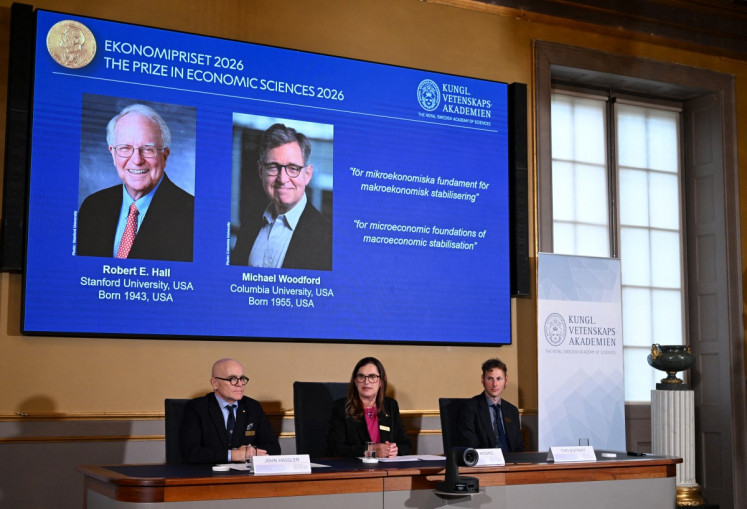
Robert Hall and Michael Woodford have been awarded the 2026 Nobel Economics Prize for their groundbreaking work on stabilizing economies. The committee praised their models which are now used by central banks worldwide to manage shocks such as energy crises and changes in household consumption.
Woodford, from Columbia University, stressed that stabilization should consider the millions of micro-level decisions made by households and businesses. He pointed out that central banks shouldn't view stabilization simply as a top-down exercise.
Hall, 83, from Stanford University, contributed fundamental concepts like "sticky inflation" and the "output gap". His 1978 paper on how household consumption indicates their expectations influenced Woodford's work on consumption determination. Hall highlighted his surprise at winning the prize, noting it validated years of research into economic mechanisms.
The Nobel Economics Prize, established in 1969 by the central bank of Sweden, is the final award of the year and carries a prize of 12 million Swedish crowns. Notably, only three women have ever won, most recently Claudia Goldin in 2023.
Written by urgent.news from The Jakarta Post's reporting — not their text. Machine-written — may contain errors; check the original before relying on it.
This story
This is one outlet's version. Read the fullest account.