Every major Nvidia customer is now a competitor as Microsoft reveals new Maia chip
The trillion-dollar AI race is moving from software to silicon, as Microsoft's massive bet on its proprietary Maia chips proves Big Tech wants to wean itself off Nvidia's dominance. Why it matters: Microsoft's plan to power its AI products with custom silicon shows how every major Nvidia customer is now a competitor, seeking lower costs, improved performance and more control. The shift is…
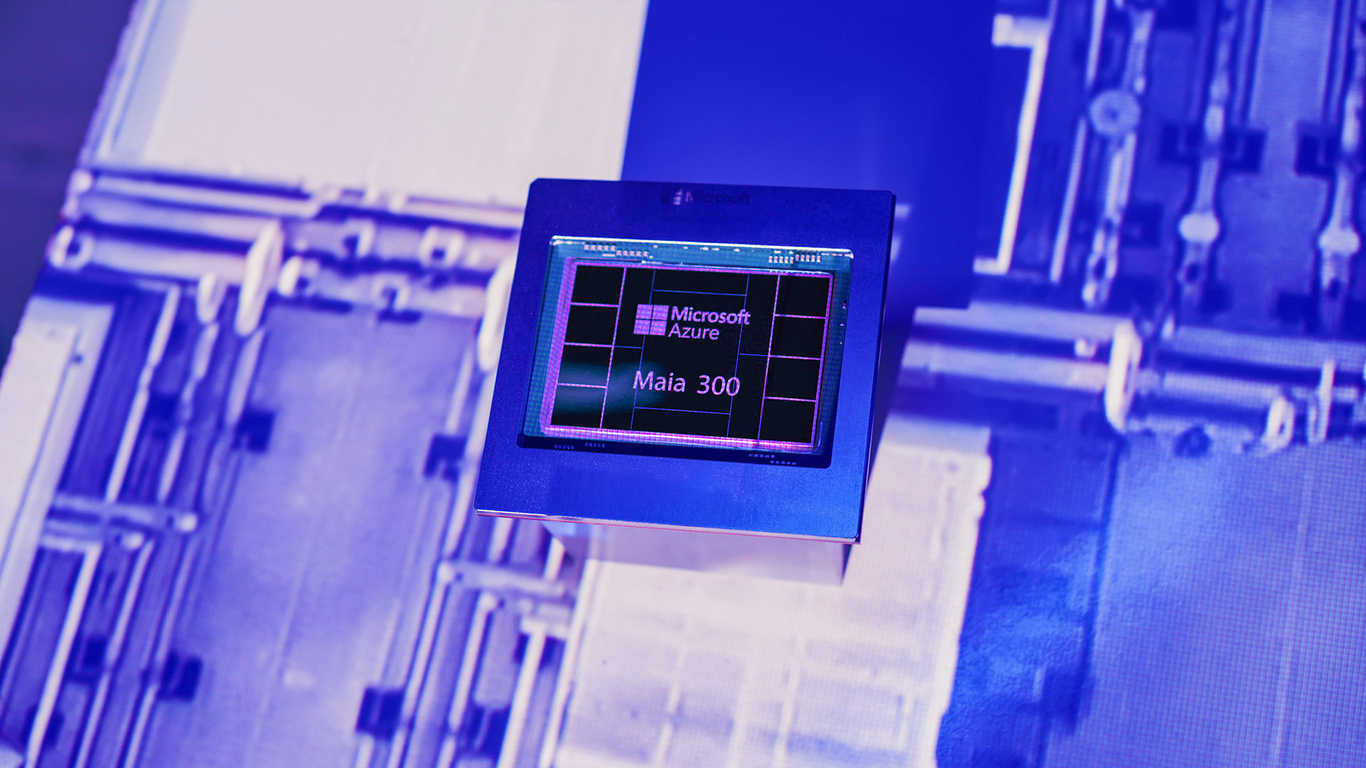
The trillion-dollar AI race is shifting from software to silicon as Microsoft's proprietary Maia chips challenge Nvidia's dominance. This move makes every major Nvidia customer a competitor, seeking lower costs, better performance, and more control over AI computing. Microsoft's latest custom AI accelerator, Maia 300, is set to begin deployment in 2027 and will become the primary inference system for its products and services.
Maia 300 promises 40% more AI tokens per megawatt compared to leading GPU-based systems, and it aims to minimize data movement bottlenecks as AI models grow more complex. Microsoft's strategy is part of a broader trend, with Google, OpenAI, Amazon, and Meta all developing their own AI chips. While Nvidia's revenue more than doubled to $96 billion in the second quarter, competitors are focused on inference, where margins are highest.
Building custom AI hardware demands optimizing memory, networking, software, and power consumption, a challenging endeavor according to Microsoft's Azure Hardware Systems president, Rani Borkar. Despite these efforts, Nvidia remains central to the AI boom, but its customers increasingly want control over their AI technology to capture more economic benefits.
Written by urgent.news from Axios's reporting — not their text. Machine-written — may contain errors; check the original before relying on it.