Commentary: How far will Pakistan go in defending Saudi Arabia against Houthi attacks?
The distinction between supporting Saudi forces and fighting alongside them may become increasingly difficult to maintain, says Derek Grossman of the University of Southern California.
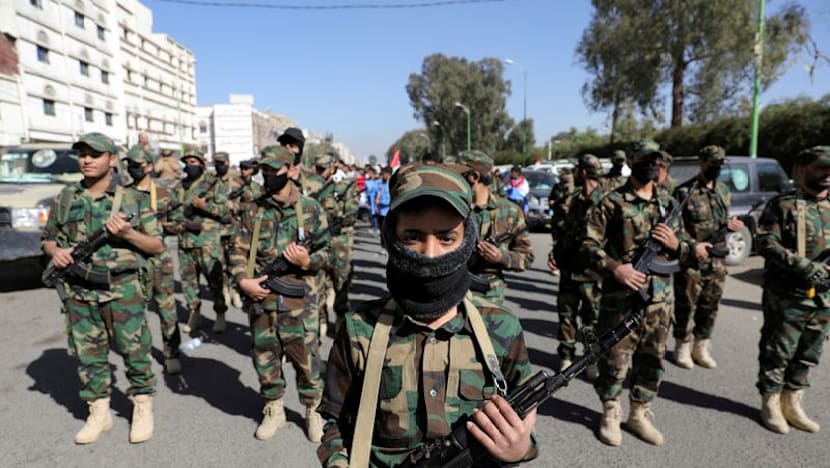
In the wake of recent attacks on Saudi Arabia, Pakistan finds itself navigating a delicate balancing act in its defense commitments. Derek Grossman of the University of Southern California notes that the line between supporting Saudi forces and engaging in direct combat may blur as the conflict escalates. Saudi Arabia, Pakistan, and Turkey are bound by the Mecca Joint Defence Agreement, which obligates the nations to defend one another in the face of an armed attack.
This pact has gained renewed importance as Houthi rebels target Saudi interests and threaten maritime routes in the Red Sea.
Pakistan's response to the attacks has been assertive, with its Defense Minister, Khawaja Asif, declaring that any enemy of Saudi Arabia is an enemy of Pakistan. However, Islamabad appears reluctant to engage in direct combat, opting instead for defensive deployments, intelligence sharing, weapons transfers, and logistical support.
This measured approach allows Pakistan to honor its commitments while limiting its exposure to potential conflicts with Iran, a neighboring nation with which it seeks to maintain stable relations.
Pakistan's involvement in the Saudi defense effort is driven by a complex web of historical ties, economic interests, and regional considerations. The country has long relied on Saudi Arabia for financial assistance, energy supplies, and employment opportunities. In turn, Pakistan provides a valuable workforce and maintains extensive military ties with Saudi Arabia.
While these relationships have bolstered Pakistan's regional standing and economic stability, the new defense agreement may prove to be a costly obligation if it leads to broader conflicts.
The potential involvement of Pakistani military personnel in Saudi operations, even in support roles, poses a significant risk. Houthi missile or drone attacks targeting Saudi forces could escalate tensions and draw Pakistan into the fray. Similarly, any limited strikes by Pakistani aircraft could provoke retaliation from Iran, further complicating Pakistan's security situation.
Maritime security operations near the Bab el-Mandeb Strait could expose Pakistani naval vessels to Houthi aggression, exposing the country to additional risks.
Pakistan's cautious approach to the Saudi defense pact is rooted in a strategic ambiguity surrounding its nuclear weapons capabilities. As a nuclear-armed state, Pakistan has implicitly entered into a collective-defense arrangement with Saudi Arabia, raising questions about whether its nuclear deterrent might extend to Riyadh. While Pakistan has not publicly committed to using nuclear weapons, the ambiguity surrounding its role could create unrealistic expectations and dangerous miscalculations among adversaries, including Iran.
As Pakistan grapples with the demands of its Saudi commitments, it must also contend with other security threats, particularly from India. Tensions between the two nuclear-armed neighbors remain high, with India alleging that Pakistan is behind recent military operations in Kashmir. Pakistan must remain vigilant against renewed confrontation with India while simultaneously fulfilling its defensive obligations to Saudi Arabia.
The dual pressures of managing security crises in the east and west pose a significant challenge for Pakistani military planners.
In conclusion, Pakistan's role in defending Saudi Arabia against Houthi attacks is a complex and multifaceted issue. While the Mecca Joint Defence Agreement obligates the nation to support its allies, Islamabad must carefully balance its commitments with the potential risks of engaging in direct combat. The strategic ambiguity surrounding Pakistan's nuclear capabilities, the need to maintain stable relations with Iran, and the competing demands of other security threats all contribute to the delicate dance that Pakistan must perform in its defense posture.
As the conflict in Yemen intensifies, Pakistan's path forward remains uncertain, requiring a deft balancing act between support for its allies and the preservation of its own national interests.
Rewritten by urgent.news; may contain errors — check the original.
Sources: channelnewsasia.com · nst.com.my