Colombia’s new government: 2016 deal with rebel group has not brought peace – but 132,000 killings
Colombia's new administration disclosed to the United Nations on Monday that more than 132,000 lives were lost and the ranks of armed groups rose from 6,000 to nearly 30,000 since the landmark peace deal with the largest rebel faction in 2016. The Foreign Minister Omar Bula stated during his address to the Security Council that the international endorsement of the peace accord does not align with the available statistics, and achieving lasting peace remains a formidable task for the newly inaugurated conservative President Abelardo de la Espriella, who took office in August.
While the figures cannot be independently confirmed, the peace agreement between the nation and the Revolutionary Armed Forces of Colombia (FARC) concluded over 50 years of conflict, resulting in more than 220,000 fatalities and displacing nearly 6 million people. Bula estimated that 132,930 individuals were murdered in Colombia between the signing in July 2016 and August 2026, alongside nearly 100,000 extortion cases and over 2,750 kidnappings.
The government now confronts not only its most significant remaining rebel group, the National Liberation Army, but also the Clan del Golfo cartel, numerous factions of the ex-FARC rebels, and regional and transnational criminal networks. These organizations have intensified territorial conflicts, subjugating communities and controlling strategic routes through violence, extortion, and illicit enterprises.
Drug trafficking has also reached unprecedented global proportions, with coca cultivation in Colombia surging by over 50% in 2023.
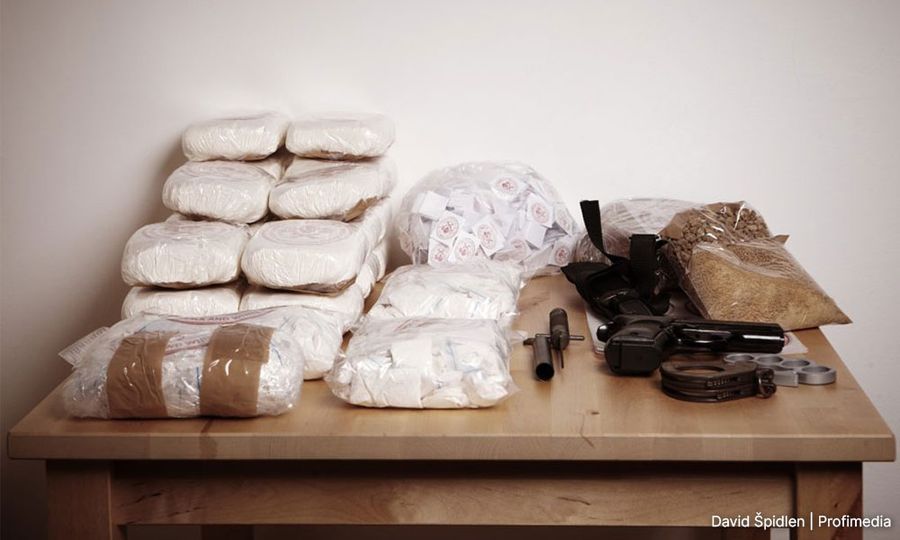
President de la Espriella, a Colombian-American who identifies as "The Tiger" and endorses U.S. President Donald Trump, has vowed to address the rampant violence in Colombia by distancing himself from leftist ex-President Gustavo Petro's policy of negotiating with armed groups. In the six months since his inauguration, security forces have arrested 32,029 individuals, seized over 135 tons of narcotics, and removed 3,414 firearms from circulation.
They have also issued 119 extradition orders to dismantle international drug rings and transnational organized crime in Colombia.
Dealing with a 7.4-magnitude earthquake that struck five days after his inauguration, President de la Espriella emphasized that these actions aim to regain control over territories, weaken armed groups and their funding sources, and restore state authority in regions where criminal organizations sought to supplant it. These efforts underscore the government's commitment to reestablish state control, a crucial policy prerequisite for sustainable peace.
The Security Council, acting on Colombia's request, has been monitoring the 2016 peace agreement, with the U.N. verification mission's mandate set to expire on October 31.
Written by urgent.news from Winnipeg Free Press's reporting — not their text. Machine-written — may contain errors; check the original before relying on it.