Coastal to inland highway: What changed?
The federal government’s decision to divert part of the Lagos-Calabar Coastal Highway through the East-West Road corridor has stirred controversy, with the Minister of Works, Senator David Umahi, defending the move as an engineering necessity aimed at reducing construction costs and ensuring value for public funds. Umahi explained that the original alignment of the coastal […]
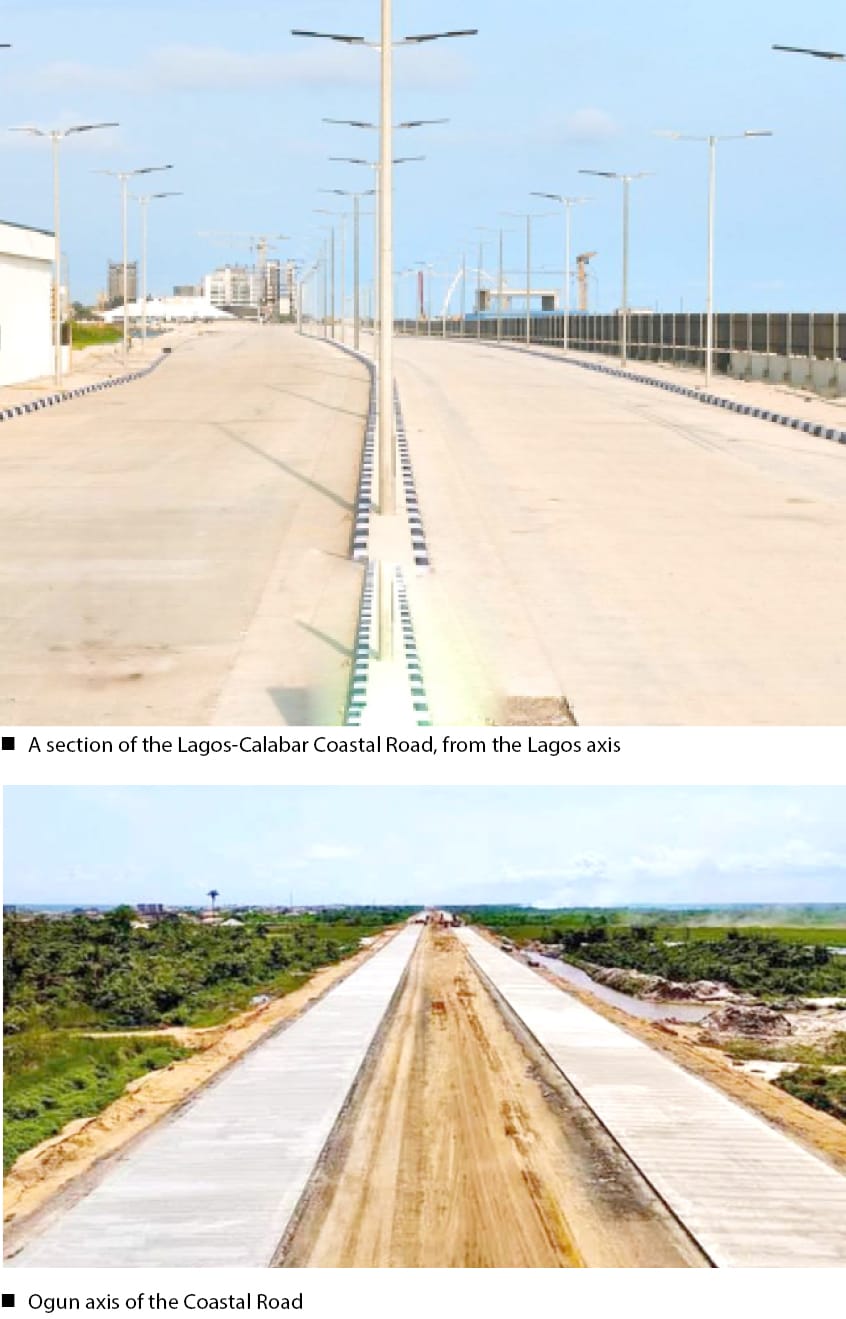
The federal government's decision to reroute part of the Lagos-Calabar Coastal Highway through the East-West Road corridor has sparked controversy. Minister of Works Senator David Umahi defended the move, stating it was an engineering necessity to reduce construction costs and ensure value for public funds. Umahi explained that the original alignment through Ondo State presented significant challenges due to deep pits and unsuitable terrain, which would have increased construction costs substantially.
He insisted that the decision was guided by technical assessments rather than political considerations, emphasizing that proceeding with the original alignment would impose an unnecessary financial burden on the government.
The coastal highway project, a signature initiative of the President Bola Ahmed Tinubu-led administration, aims to ease commuting from Lagos to Calabar. The first phase was commissioned in May 2025, and the road is a four-lane highway from Bar Beach/Victoria Island entry point built with concrete pavement. Originally designed to pass through Ogun, Ondo, Delta, Bayelsa, Rivers, and Akwa-Ibom states, the project is estimated to cost $747 million, including an additional $47 million external loan.
Over 40 kilometers of the highway have been completed, with the federal government having sunk hundreds of billions into the project.
The rerouting affects Sections 4A and 4B of the coastal highway, covering 67 kilometers, with 27 kilometers in Ogun State and about 40 kilometers in Ondo State. The section will terminate around the Ondo-Edo axis. So far, Section 1 (47.47 kilometers from Victoria Island, Lagos) has been completed and is ready for commissioning, while Section 2 (55 kilometers) will be finished next month.
Sections 3A and 3B (65 kilometers covering the Calabar end) have more than 30 percent completion, and construction is ongoing on Section 5 (82 kilometers in Akwa Ibom State) and an 88-kilometer link from Calabar to Ebidi Beach, connecting with the Trans-Saharan route. Despite Umahi's explanation, the diversion of Sections 4A and 4B may remain a subject of public scrutiny due to the project's strategic importance and the substantial public resources committed to its construction.
Written by urgent.news from Daily Trust's reporting — not their text. Machine-written — may contain errors; check the original before relying on it.