China chip claim rattles Samsung and SK Hynix: What is the 4F² breakthrough?
Dubai: Samsung Electronics and SK Hynix shares tumbled on October 13 after China’s CXMT Corp claimed a memory chip breakthrough. SK Hynix fell 10% and Samsung lost 7.4%. The selloff dragged down the broader Kospi index. Over the weekend, CXMT President Cao Kanyu speaking at a conference in Shanghai said that CXMT will launch a data center server chip with a 4F² design before the end of the year.…
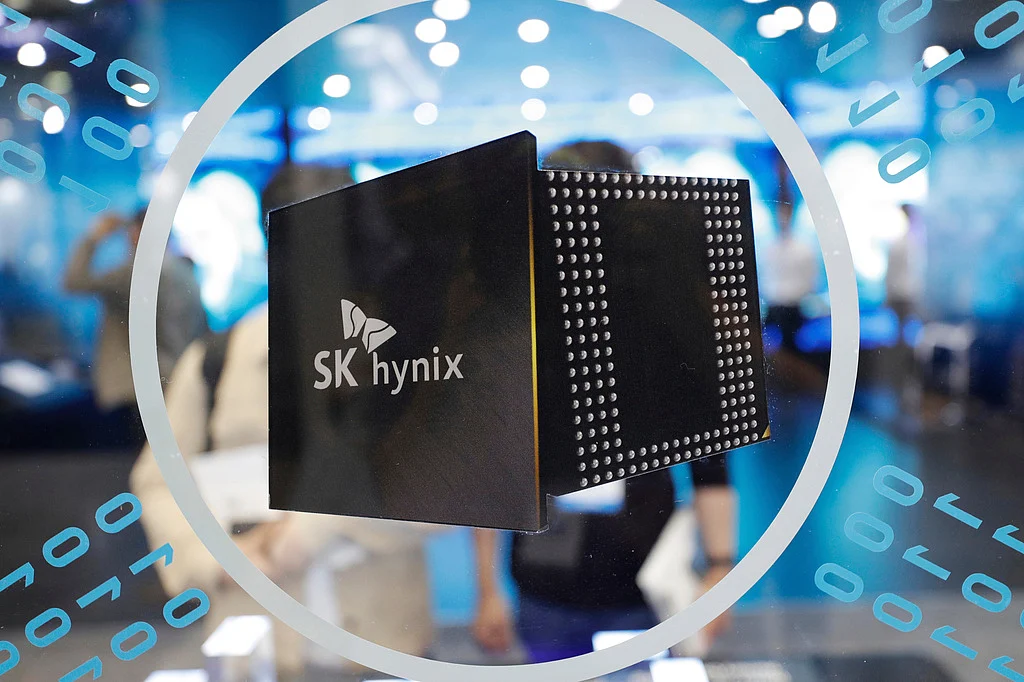
On October 13, Samsung Electronics and SK Hynix stocks plummeted after Chinese company CXMT Corp. announced a memory chip breakthrough. SK Hynix's share price dropped by 10% and Samsung fell 7.4%, causing the Kospi index to decline as well. CXMT's President, Cao Kanyu, announced during a Shanghai conference that CXMT would launch a data center server chip utilizing a 4F² design before the end of the year.
However, the claim remains unsubstantiated as no further details were provided. A 4F² DDR5 server memory refers to a DRAM designed specifically for servers, as opposed to phones or laptops. The "4F²" designation indicates the surface area of a memory cell, measured relative to F, which represents the minimum line-width of the chip.
Today's standard is 6F², while the 4F² design reduces the cell footprint from 3F × 2F to 2F × 2F, potentially increasing density by 30% to 50% on the same chip area. This could result in more memory per server at a lower cost per bit, but it is primarily a matter of physics. To achieve such a tight cell arrangement, transistors must be vertical with a channel running vertically and a gate wrapped around it, a challenge that has made it difficult to manufacture.
SK Hynix has a patent for a vertical-channel DRAM cell in a 4F² structure, acknowledging the complexity of the manufacturing process. Meanwhile, Samsung established a public 3D DRAM development project in 2021 and formed a team in May 2023 to develop mass production of 4F² cells. In June 2025, reports indicated that both companies aimed to validate working 4F² prototypes by the end of that year.
While Samsung is expected to produce 4F² products not until 2028, CXMT seems to have gained a two-year advantage over its Korean rivals, despite US sanctions that prohibit it from using advanced tools like ASML's machines. The claim has rattled investors, especially given CXMT's potential two-year head start.
Written by urgent.news from Gulf News's reporting — not their text. Machine-written — may contain errors; check the original before relying on it.