Build, Buy, Or Rent? How Indian CTOs Are Rethinking The AI Stack
For Indian enterprises adopting AI, choosing the technology is only part of the challenge. Deciding what to own, how much…
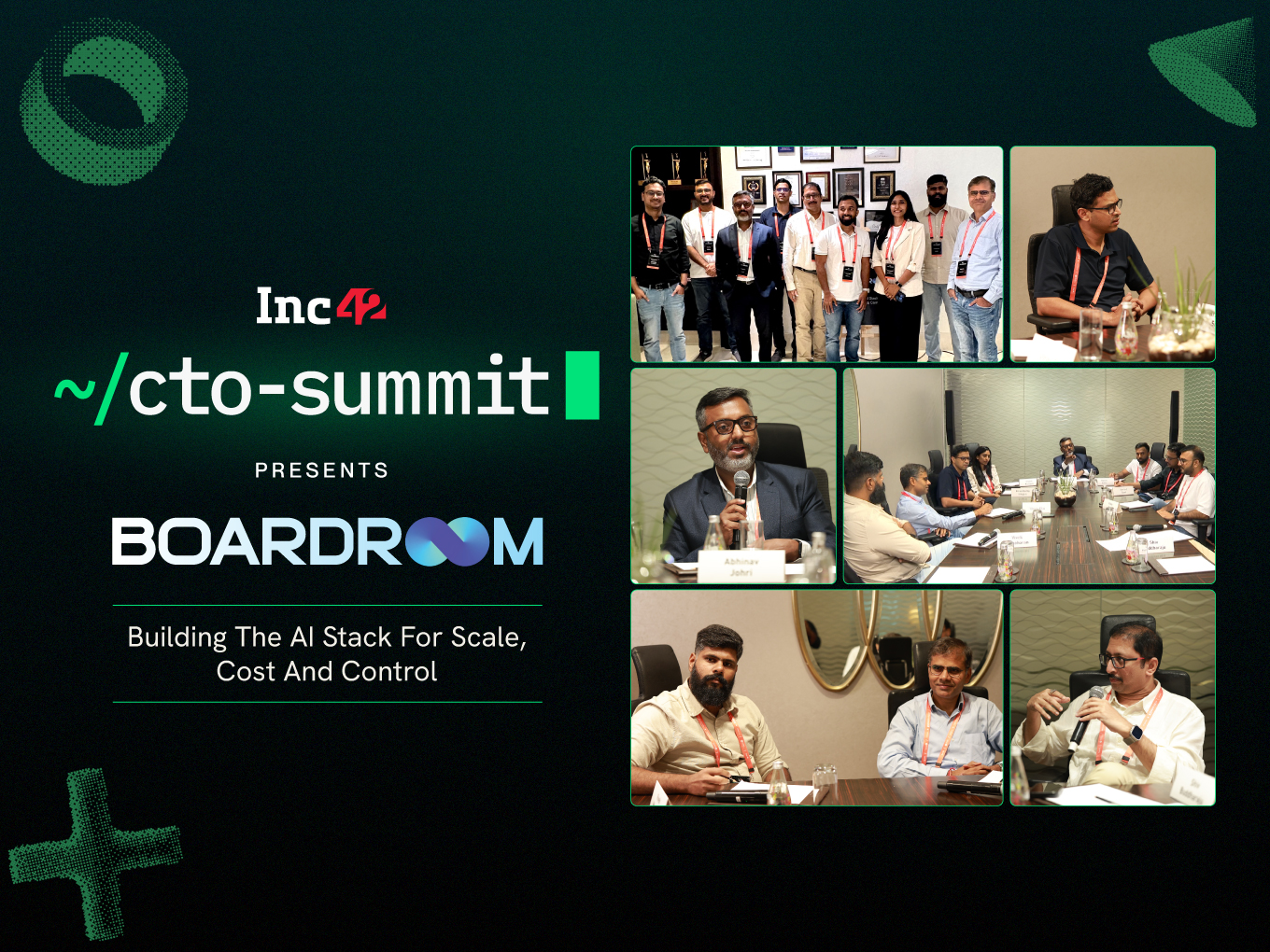
In December 2025, a government report cited by the Nasscom AI Adoption Index revealed that 87% of Indian enterprises are actively using AI solutions. As adoption expands, technology leaders face a complex decision: buy ready-made solutions, build capabilities in-house, or access models from external providers. The second roundtable at Inc42’s inaugural CTO Summit 2026 brought together CTOs to discuss how they are building AI-led systems and organizations.
The conversation centered on whether every problem requires a new technology layer and how companies can create a lasting advantage in the rapidly evolving AI landscape.
Matters.ai’s Harsh Sahu argued that understanding the domain is crucial before implementing AI. He emphasized the need for founders and tech leaders to know their specific domain well to identify gaps and leverage AI to fill them in innovative ways. SeedlingLabs’ Shanti Kuropati highlighted that while frontier models evolve rapidly, proprietary data, context, and workflows can offer a more durable competitive advantage.
For CoinSwitch & Lemonn’s Govind Soni, operational context is paramount when accuracy directly impacts customers' money. Building solutions on top of existing 10-year-old context rather than relying on new technology ensures greater accuracy and reliability.
Oxmiq Labs’ Shiv Buddharaju emphasized that decisions regarding AI workload involve multiple dimensions. The workload for building a product differs substantially from the workload for serving customers at scale. Netradyne’s Vinay Rai suggested that renting intelligence might be a better option for most companies, especially when frontier models evolve rapidly.
He argued that building and maintaining an in-house model could leave companies playing catch-up to faster-moving open-source alternatives. BigHaat’s Shanti Kuropati advocated for retaining control over context, even if it means not owning every technology layer.
The discussion extended to the economics of AI deployment. BigHaat’s Kiran Reddy Singam stressed that technology decisions must be tied directly to business metrics, with their contribution to margins assessed before scaling. For Gravitas’ Vikas Roy, AI expenditure is linked to measurable productivity gains, with the objective of automating processes and increasing the number of placements each telecaller can handle.
Ultimately, the conversation highlighted the importance of balancing cost, speed, data, and business outcomes when deciding how to build, buy, or rent AI capabilities.
Written by urgent.news from Inc42's reporting — not their text. Machine-written — may contain errors; check the original before relying on it.