Boasting South Korean footballers spark rethink of military service exemptions
The way some players celebrated sparked a public backlash, prompting Seoul to reconsider a decades-old system designed to reward sporting success.
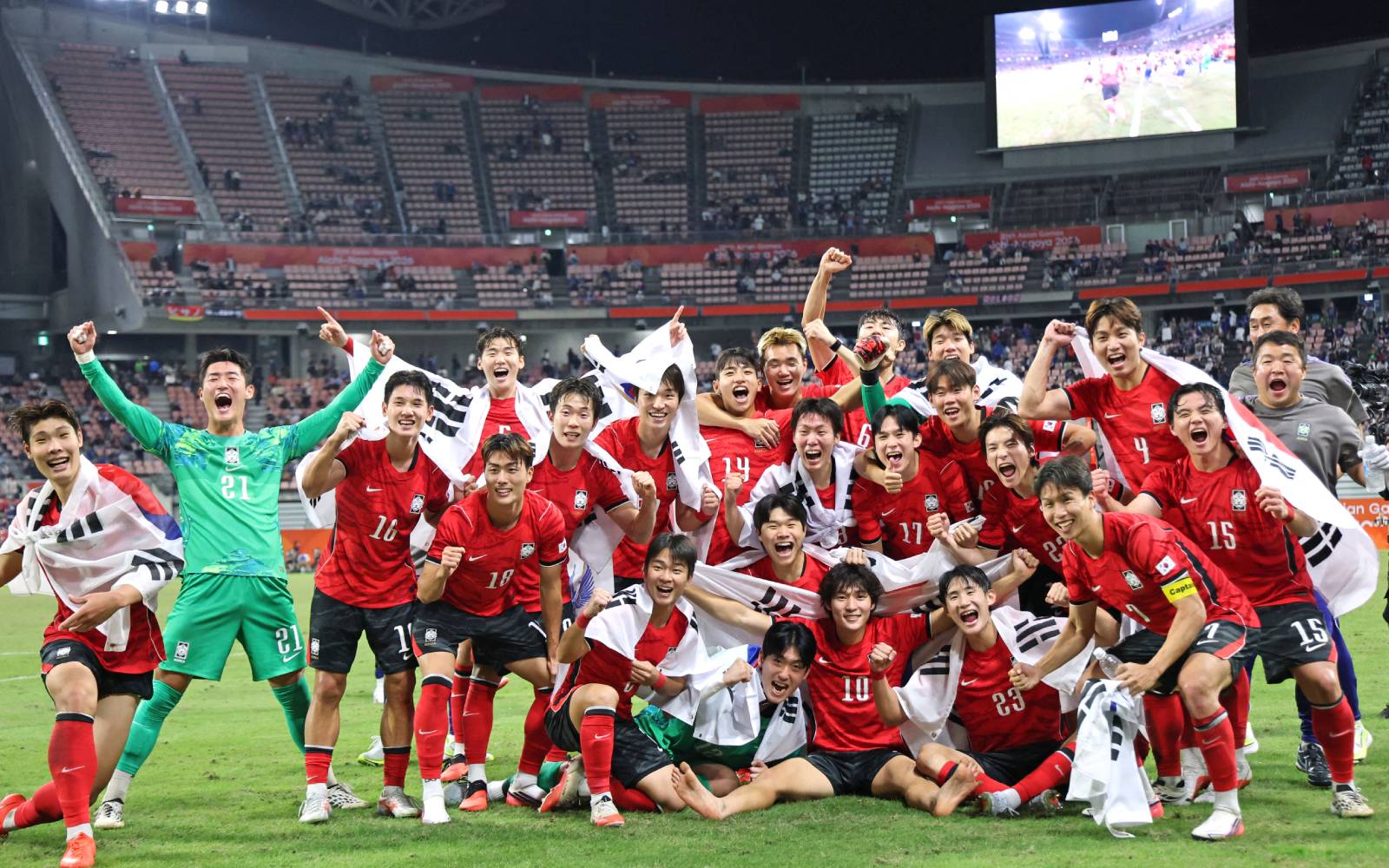
South Korean football players celebrated their gold medal victory at the 2026 Asian Games by boasting about their exemption from mandatory military service. The controversy came to light when Asian Games captain Lee Gi-hyuk declared he wouldn't report for duty, having to do so just nine days later if his team lost. Another player, 19-year-old Park Seung-soo from Newcastle United, further aggravated the situation by wearing a military discharge cap and giving a smiley salute in a video. Both players later apologized for their actions.
This incident has reignited discussions about the system that grants athletes exemptions from mandatory military service, a practice rooted in South Korea's history of prioritizing national prestige. The exemption, introduced in 1973, has long been a sensitive subject in a country where most young men are required to serve between 18 and 21 months.
Under the current system, athletes who win Olympic medals or Asian Games gold are entitled to an exemption that enhances national pride and promotes culture. Artists who win prizes at designated competitions can also benefit from this privilege.
However, the recent controversy has exposed the perceived unfairness of a system that rewards only a select few while thousands of young men are required to serve annually. A defence official speaking on condition of anonymity revealed that while the exemption has become a symbol of reward, it benefits just a few dozen individuals each year.
The debate has prompted the Military Manpower Administration to review the system, including eligibility criteria and public service requirements, with the aim of reforming the current setup. Defence Minister Kang Shin-chul has pledged to gradually reduce the benefits, with the ultimate goal of abolishing the exemptions altogether.
He suggested replacing full exemptions with shorter periods of military service or a reduced term for elite athletes. The debate also highlights how much South Korea has evolved since the system's inception over half a century ago, with a shrinking pool of military recruits, the commercialization of sports, and growing demands for fairness from the public.
Rewritten by urgent.news; may contain errors — check the original.
Sources: smh.com.au · theage.com.au · en.yna.co.kr · koreatimes.co.kr · freemalaysiatoday.com · malaymail.com · iol.co.za · en.antaranews.com
This story
This is one outlet's version. Read the fullest account.
- Explosions heard across border island likely tied to N. Korea's coastal reinforcement: S. Korean military koreatimes.co.kr
- Several hurt, one in 'cardiac arrest' in South Korea market stabbing iol.co.za
- Greens split over Ukraine military aid as Sarah Hanson-Young breaks ranks theage.com.au
- Greens split over Ukraine military aid as Sarah Hanson-Young breaks ranks smh.com.au
- Karim’s daughter submitted Asian Games accreditation application freemalaysiatoday.com
- RI targets narrowing gold medal gap with Thailand in Asian Para Games en.antaranews.com
- ‘I’m not going to the military’: Asian Games footballers spark row over South Korea’s draft rules malaymail.com
- Explosions heard across border island likely tied to N. Korea's coastal reinforcement: S. Korean military en.yna.co.kr