Astronaut captures mesmerizing auroras with iPhone from ISS | Space photo of the day for Oct. 13, 2026
Auroras paint the International Space Station purple in new iPhone photo from orbit.
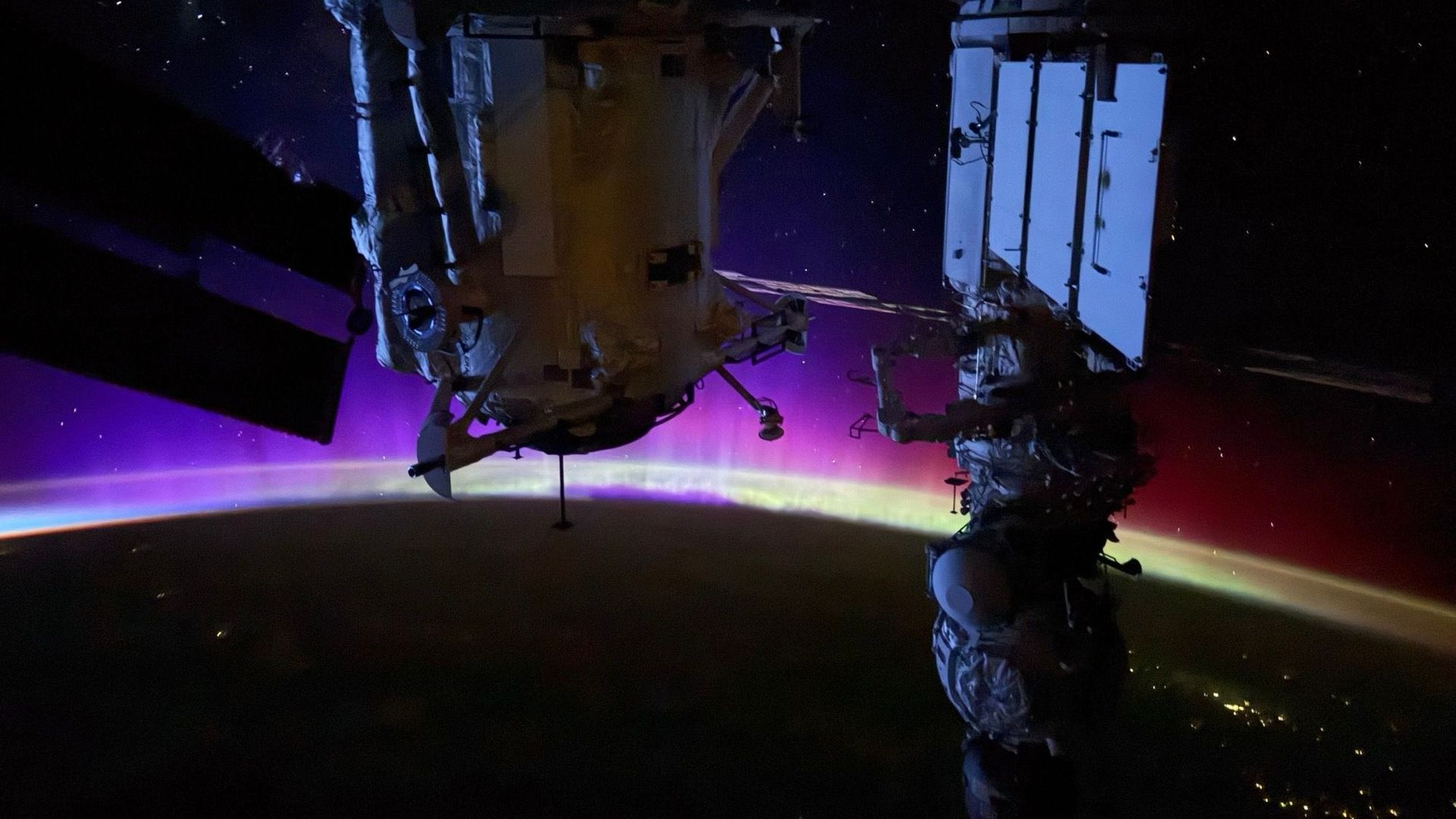
On October 10, 2026, NASA astronaut Anil Menon captured a stunning image of Earth's auroras using his iPhone camera from the International Space Station. The photograph showcases vibrant pink, purple, and red hues of the northern lights sweeping across the night side of Earth, with city lights creating a subtle, blurred backdrop.
Menon described the view as "flying through is rare and amazing" in a subsequent video shared on X, noting that the auroras shimmering on the exterior of the station resembled "Christmas LEDs." The auroras were observed during a period of heightened geomagnetic activity, following several coronal mass ejections (CMEs) that struck Earth's magnetic field, triggering geomagnetic storms.
These storms resulted in auroral displays ranging from mild (G1) to intense (G3) over the weekend. The blue-purple colors in the photo were primarily caused by nitrogen at altitudes of approximately 60-120 miles (100-200 kilometers), while the red tones were generated by oxygen atoms higher up, typically above 125 miles (200 kilometers).
This particular image stands out due to its unique capture using an iPhone camera, a shift from the more conventional Nikon cameras typically employed by astronauts. Smartphone astrophotography has gained popularity in recent years, with iPhones being utilized by astronauts during the Artemis 2 mission to document their historic flyby of the moon.
Rewritten by urgent.news; may contain errors — check the original.
Sources: space.com · cbc.ca · winnipegfreepress.com · globalnews.ca
This story
This is one outlet's version. Read the fullest account.
- Canadian astronaut Joshua Kutryk says he's 'having a blast' on the International Space Station cbc.ca
- ‘This little bit of perfection’: Canadian astronaut Joshua Kutryk on seeing Earth from space globalnews.ca
- Astronaut says it’s important there’s a Canadian at the International Space Station winnipegfreepress.com