AI services may account for almost half of Infosys' work in 2-3 years: CEO Salil Parekh
Parekh said the business, which includes building AI agents, coding work and modernising old technology for clients, is small relative to the company's size but growing so fast that it could account for 20-30% of Infosys' work within a few quarters if the current pace continues.
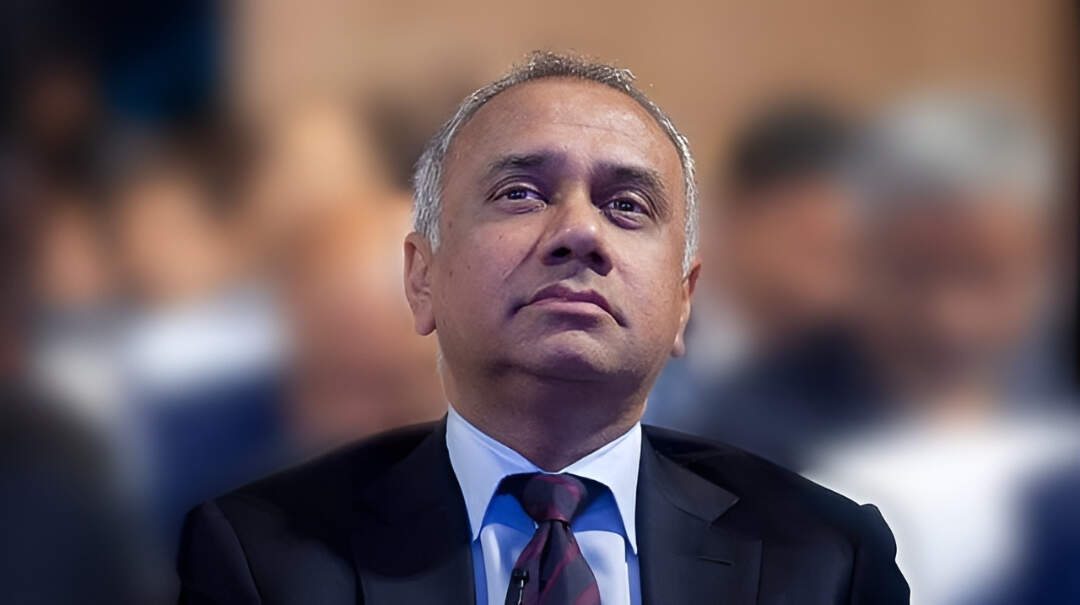
Infosys CEO Salil Parekh spoke at the Bloomberg New Economy Forum 2026 about the rapid growth of the company's AI services. Currently accounting for over 8% of revenue, AI services are projected to contribute nearly half of the company's work within two to three years, Parekh claimed.
The business, which encompasses AI agent development, coding, and modernizing outdated technology for clients, is relatively small in comparison to Infosys' overall size but is expanding at an astounding rate. If this trend persists, AI services could represent 20-30% of the company's operations within a few quarters and potentially half of its work within two or three years, Parekh noted during his presentation.
Parekh highlighted a surge in demand for AI services, asserting that it reflects a strong need for such services in the market. He also addressed concerns about India's IT services industry in the face of AI advancements, expressing optimism about the prospects for Infosys and the broader tech services sector in India.
To support this growth, Infosys has been actively hiring, with 20,000 new college graduates recruited last year and an additional 20,000 planned for the current financial year. These new hires are specifically trained in AI, equipped to assist clients in deploying the technology and managing associated changes.
Currently, around 80,000 of Infosys' 3 lakh employees are engaged in coding tools for clients and various internal projects. As companies adopt AI services, they are showing increasing proficiency in utilizing these services. However, there is a trend towards exploring cheaper alternatives, such as lower-cost tokens or open-weight models, to reduce expenses.
Parekh emphasized the critical role of data in the AI ecosystem, noting that stringent sovereign data and cloud requirements are posing challenges to capacity expansion. He also pointed out risks related to data center construction, such as the high costs of chips and the uncertainty surrounding the longevity of built capacity.
Additionally, Parekh discussed the potential emergence of new foundation models that could significantly lower inference costs, impacting the overall capacity of the AI ecosystem. However, he acknowledged that these developments could have ramifications several years down the line and cautioned about potential backlash against AI build-out, particularly in Western markets. Balancing social responses with economic drivers remains a complex challenge, according to Parekh.
Written by urgent.news from Economic Times Tech's reporting — not their text. Machine-written — may contain errors; check the original before relying on it.
This story
This is one outlet's version. Read the fullest account.