AI could outperform 90% of coders in months, but this is not a crisis: Zoho’s Sridhar Vembu
At TechSparks 2026, Zoho’s Sridhar Vembu spoke about why software automation is not nessarily a crisis, urging the nation to focus on technological ownership, hardware foundations, and self-reliance over foreign IP dependency.
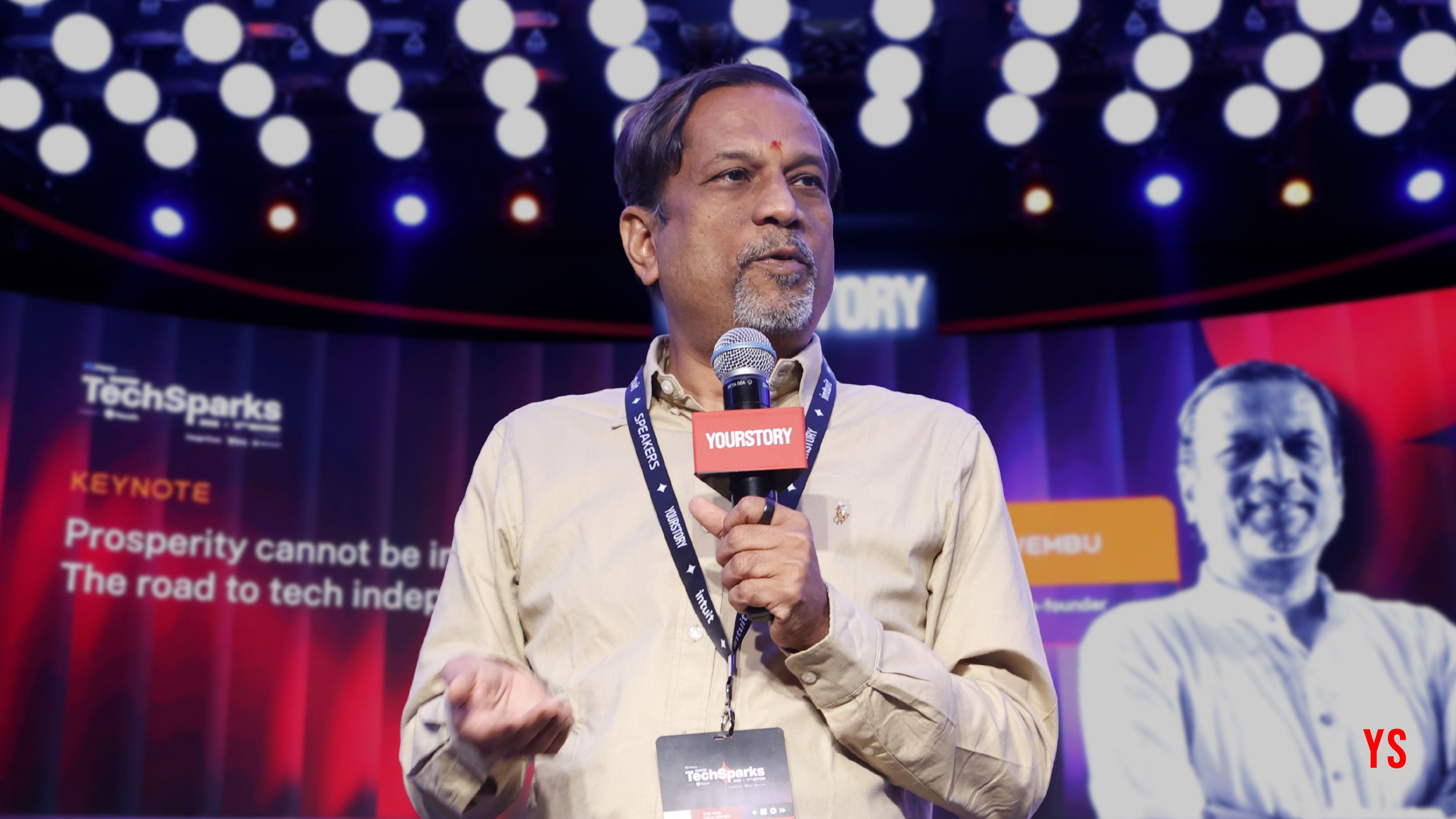
AI technology is advancing rapidly, with the potential to surpass the capabilities of 90% of current programmers within a short timeframe, according to Sridhar Vembu, co-founder and chief scientist of Zoho. Vembu likens the emergence of AI-generated code to a "handloom business," where advanced machines can rapidly produce sophisticated computer scripts.
Currently, AI can generate functional code faster and more efficiently than many human developers, with projections suggesting it could surpass the output of up to 90% of software engineers within three to six months. Venture capitalists have even suggested that intellectual property, the ownership of written software code, may be becoming obsolete.
However, Vembu remains optimistic about the impact on India's economy, noting that a vast majority of the population—around 97%—does not engage in software creation and primarily consume technology as end-users. This means that, even if coding jobs were to disappear, particularly in non-tech hubs such as Tenkasi in Tamil Nadu or Patna in Bihar, the overall economic disruption would be minimal.
Moreover, as software creation costs decrease due to increased automation, this could lead to deflationary pressures across the economy. This means non-technology workers—like teachers, nurses, and barbers—could experience increased real purchasing power as consumer goods become more affordable. Vembu identifies a significant issue hindering India's economic growth: a lack of ownership in technology.
While Indian engineers contribute significantly to software development for global tech giants like Microsoft, Cisco, and Nvidia, the majority of financial returns accrue to foreign intellectual property holders. He used an analogy comparing a Swiss school teacher who can earn an iPhone in just three to four days of work to an Indian teacher who would need months of effort to achieve the same, regardless of their involvement in technology.
Vembu argues that not only tech professionals, but all citizens' income levels in an economy are largely determined by who owns the underlying technology, not just the tech workers. Referring to the 1990s, he points out that India's economic strategy was unduly influenced by Western narratives celebrating IT services outsourcing, which prioritized labor over genuine technology ownership.
To achieve true economic independence, Vembu cites the strategy of East Asian nations like Japan, South Korea, Taiwan, and China. These countries achieved lasting economic independence by first developing foundational domestic layers—like search engines (Baidu) and messaging platforms (WeChat)—before jumping into advanced AI applications.
Vembu warns against prioritizing AI over essential hardware and infrastructure development, as relying entirely on foreign hardware and operating systems could leave India extremely vulnerable to geopolitical risks. He emphasizes that mastering core technologies such as lasers, X-rays, robotics, operating systems, and agricultural technology is crucial for national resilience.
This strategy underpins Zoho's operational approach as infrastructure demands rise. The rapid adoption of AI has led to soaring costs for servers and graphics processing units, with server prices increasing from $8,000 to $45,000. Rather than resorting to layoffs, Vembu states that Zoho is instead redirecting its engineering talent towards deep technology hardware, including the development of in-house server infrastructure.
Vembu highlights this approach, explaining, "Even though our jobs are challenged by the current generation of AI, we don't lay off anybody. We know we can redeploy them to build all this stuff." Vembu concludes by advocating a shift from exporting software services to securing genuine national technological ownership, which he believes is essential for true national resilience and prosperity.
Written by urgent.news from YourStory's reporting — not their text. Machine-written — may contain errors; check the original before relying on it.