A faint glow from the early universe could help solve the mystery of dark energy
Hydrogen may be the most common element in the cosmos, but scientists could use it to do something unique: uncover the nature of dark energy.
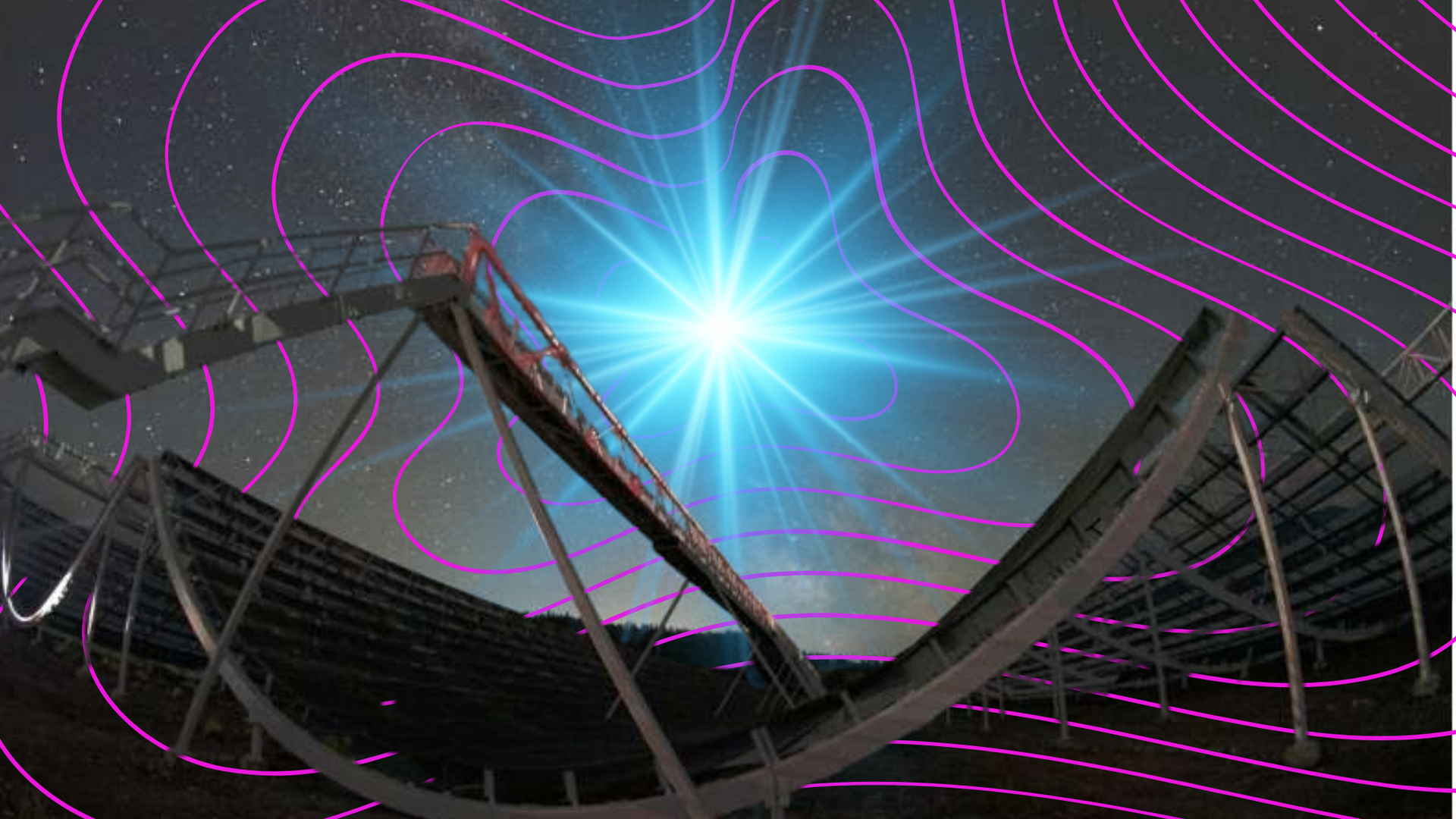
Hydrogen, the most abundant element in the universe, could hold the key to understanding the enigmatic force of dark energy, which is causing the universe's expansion to accelerate. This groundbreaking discovery stems from the CHIME project, a Canadian initiative designed to map the faint radio emissions from hydrogen across the cosmos.
Unlike previous methods that relied on expensive collaborations with other telescopes, CHIME autonomously detects hydrogen's radio glow, making it a faster and more cost-effective approach to studying dark energy.
Mark Halpern, principal investigator of CHIME at the University of British Columbia, described this as a "bold new step in the global cosmology program and a Canadian success story." The inherent challenge in understanding dark energy lies in its sudden onset after the Big Bang's initial expansion, akin to a swing gaining momentum after momentarily halting.
This mysterious force, responsible for 68% of the universe's matter-energy content, could lead to either the universe's cold death through a "Big Rip" or a "Big Crunch" if it weakens and gravity overpowers it.
Hydrogen's significance in this investigation is twofold. Firstly, its presence throughout the universe acts as a cosmic tracer, revealing the distribution of matter. Secondly, CHIME's ability to map this hydrogen without external telescopes allows for a more direct, albeit still indirect, exploration of dark energy. The team has already made strides with a mere 94 nights of data, identifying hydrogen's presence when the universe was just 5 billion years old, aligning with existing measurements.
As they delve deeper into their data spanning seven years, they aim to analyze the hydrogen distribution back to 3 billion years post-Big Bang, offering new insights into galaxy formation and evolution. These findings, published in The Astrophysical Journal, promise to unravel the secrets of dark energy and the ultimate fate of the cosmos.
Written by urgent.news from Space.com's reporting — not their text. Machine-written — may contain errors; check the original before relying on it.