Why Did the Industrial Revolution Not Start in India?
Due to abundant labor, its social structure, and the inertia of an economic system, there was little incentive to initiate mechanization and the Industrial Revolution in India.
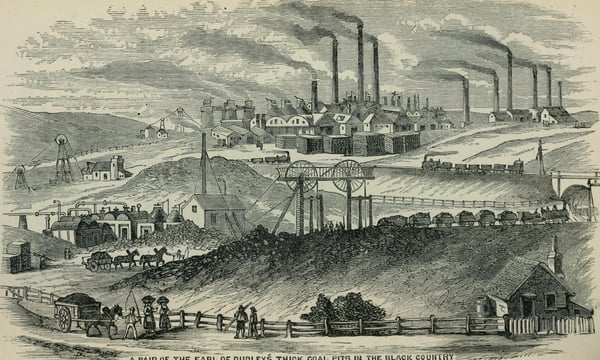
Historians often ponder why the Industrial Revolution originated in Europe and not in other regions like India and the Islamic world. Joseph Needham, a British historian of science, posed this question in 1969, noting that Chinese civilization was far more efficient at applying natural knowledge to practical needs than Western civilizations.
The Industrial Revolution, which marked the transition from agrarian economies to machine- and factory-based production, began in 18th-century Europe, setting the stage for Western dominance over the world through colonization or indirect control. Needham attempted to pinpoint the reason for the Industrial Revolution's absence in China by studying the evolution of science in the country.
However, this inquiry should not be limited to a Western versus Chinese dichotomy. India and the Islamic world could have been better suited for the emergence of industrial civilization than China. Large parts of India and the Islamic world engaged in extensive trade, supported universities, and were fragmented into competing kingdoms and pastoralist peoples.
The Islamic world, like Europe, had to compensate for a shortage of labor. Warfare fostered innovations such as gunpowder, while trade facilitated the spread of innovations like the compass and paper across the region. Two optimal periods in India for an industrial revolution were the 6th century CE, when the Gupta Empire collapsed and a shared elite culture emerged across polities, and the early modern Deccan peninsula, where rival kingdoms sought advantages through trade guilds and oceanic trade.
During the 18th century, the Kingdom of Mysore developed sophisticated rockets and firearms, while the Marathas established ordnance factories for creating cannons and firearms suited to local Indian conditions. While skilled craftsmen drove 18th-century Deccani manufacturing, the region had many of the necessary ingredients for industrialization at the same time as Europe.
The British conquest, however, halted these local moves. Numerous other factors led to the Industrial Revolution commencing in northwest Europe rather than elsewhere, such as India. Industrialization is not an inevitable outcome; it requires specific institutions, worldviews, economic, and geopolitical conditions that coincidentally aligned in 18th-century Europe.
Factors like sufficient labor, sedentary societies, stability internally, flexible labor markets, strong rule of law, and a conducive environment for scientific research and its practical applications were crucial. The state had to fund scientific research, integrate findings with engineering, and invest in efficiency and production improvements.
The benefits must outweigh the costs, and the state had to overcome traditional barriers to enable this process, which often required significant time and capital.
Written by urgent.news from The Diplomat's reporting — not their text. Machine-written — may contain errors; check the original before relying on it.