Vietnam could lose winter by 2100 as major cities face 100 more hot days, scientists warn
Inner Ho Chi Minh City could see 90-100 more days a year above 35 degrees Celsius by the end of the century under a high-emissions scenario, and inner Hanoi 50-90 more, Vietnam's updated climate projections show.
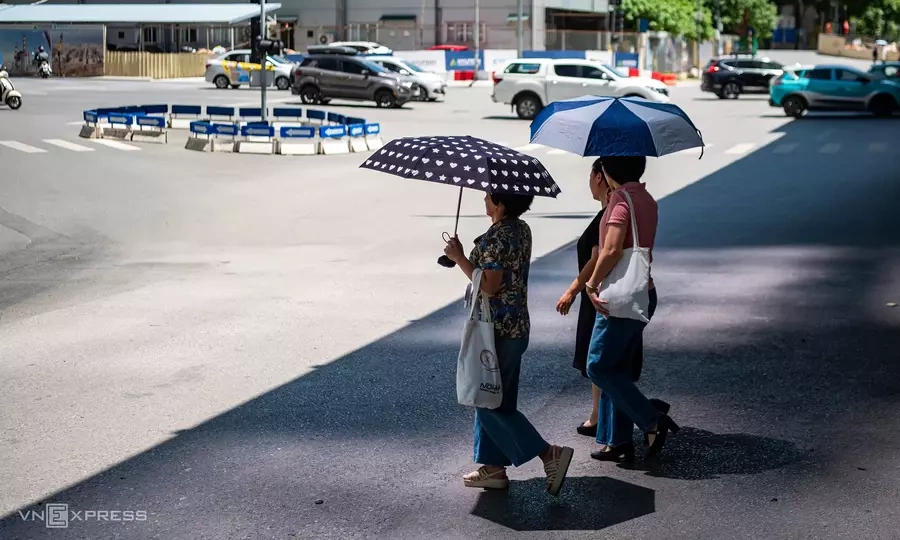
Vietnam's two largest cities, Hanoi and Ho Chi Minh City, are projected to face significant warming by the end of the 21st century, according to a 2025 national climate change scenario from the Ministry of Agriculture and Environment. In the high-emissions scenario, average annual temperatures could rise by 1.7-2 degrees Celsius by mid-century and 3-3.4 degrees by the end of the century in Hanoi, and 1.7-2 degrees and 3-3.1 degrees in Ho Chi Minh City, respectively, from the 1995-2014 baseline.
Urban cores would face even higher increases, with temperatures in Hanoi reaching 3.6-4.2 degrees and in Ho Chi Minh City 3.5-3.7 degrees by the end of the century. The number of days with temperatures above 35 degrees Celsius is expected to surge by 30-70 in Hanoi and 35-70 in Ho Chi Minh City by mid-century, and by 50-90 in Hanoi and 90-100 in Ho Chi Minh City by the end of the century.
This increase in extreme heat could last 15-22 days longer in Hanoi and 20-24 days longer in Ho Chi Minh City by the end of the century. The urban heat island effect, caused by densely built areas with concrete and asphalt, amplifies temperature rises in these areas compared to surrounding green spaces. Health, agriculture, and policymakers must prepare adaptive measures to address the projected climate changes, using the scenario as a scientific basis for long-term planning and infrastructure investment.
Written by urgent.news from VnExpress International's reporting — not their text. Machine-written — may contain errors; check the original before relying on it.