Thai air force to monitor Chinese airbase in Laos
BANGKOK – Thailand’s air force will monitor and analyse developments surrounding a Chinese airbase in Laos, including its potential economic, political and military uses, the air force chief said on Monday. Air Chief Marshal Seksan Khantha, commander-in-chief of the Royal Thai Air Force, cited the airbase in Ban Keun, Laos, as an example of major […] The post Thai air force to monitor Chinese…
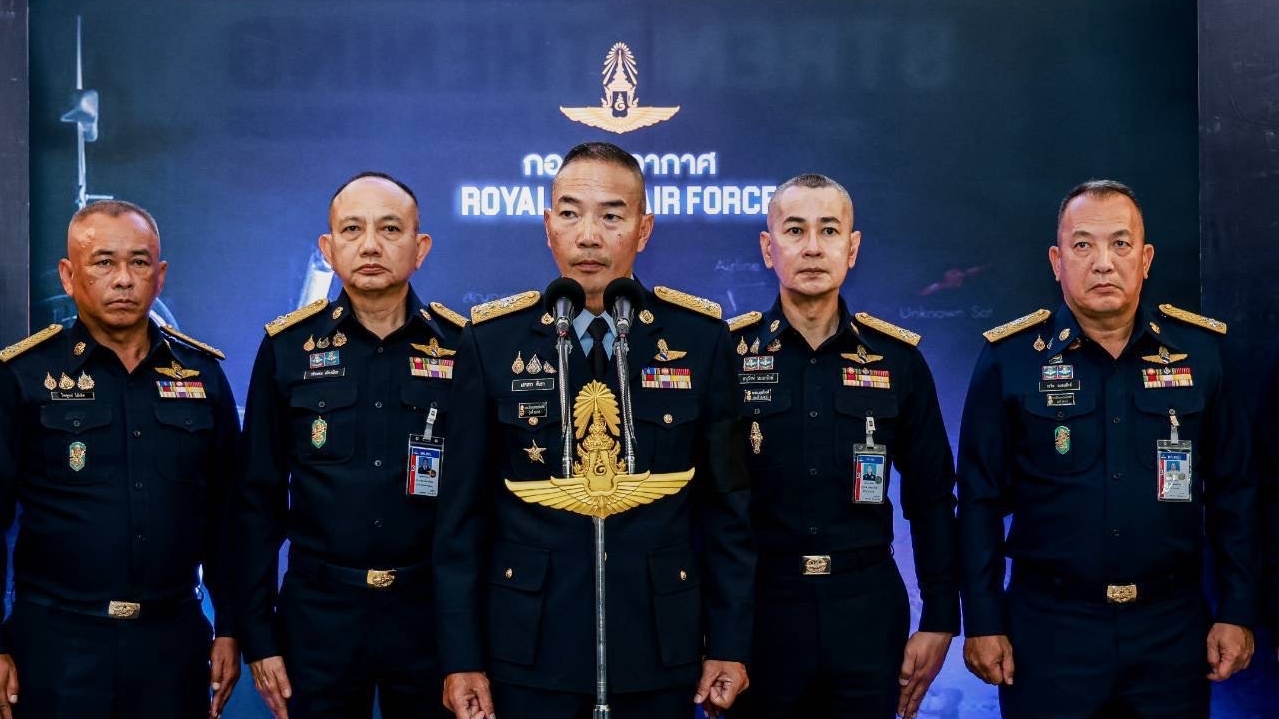
BANGKOK – The Thai air force will monitor and analyze developments associated with a Chinese airbase in Laos, addressing its potential economic, political, and military implications, according to the air force chief who spoke on Monday. Air Chief Marshal Seksan Khantha, the commander-in-chief of the Royal Thai Air Force, highlighted the airbase in Ban Keun, Laos, as a case in point for major powers extending their influence in neighboring countries.
During the unveiling of his policy priorities for 2027-2028 at the Navaminda Kasatriyadhiraj Royal Air Force Academy on October 12, Seksan emphasized the need for Thailand to observe and scrutinize advancements, as well as decipher the underlying intentions behind such projects. "We shall observe developments from a distance and evaluate the diverse signals," he stated, noting that facilities constructed with the participation of major powers could serve multiple purposes, including economic, political, and military agendas.
The airbase officially inaugurated on September 29, coinciding with the China-Laos Friendship Aviation Academy's opening. Beijing disclosed that the China-Laos Joint Support and Training Centre would be co-operated and maintained by both nations to aid in Lao air force pilot training. China's Ministry of National Defence affirmed that the facility was not directed against any third party.
The development has garnered attention from security analysts, who have questioned the facility's potential role in expanding China's military presence in Southeast Asia. Although China and Laos have publicly recognized it as a joint training and support facility, the site carries a historical significance linked to earlier regional conflicts.
During the 1960s and 1970s, the area was reportedly utilized by the United States during its operations in Laos, Vietnam, and Cambodia. Seksan stressed that the issue transcends Laos and is emblematic of broader changes in regional geopolitics over the last five to ten years, as major powers strive to safeguard their interests and augment their influence.
He suggested that Thailand should coordinate with the government, the Ministry of Foreign Affairs, and other pertinent agencies to manage relations with major powers, emphasizing that the country cannot isolate itself from its neighbors. Seksan described Laos as a friendly and peace-loving neighbor that also necessitates economic development.
However, he pointed out that economic, military, and political influence could coalesce, making it crucial for Thailand to monitor developments and evaluate the intentions of the involved countries. He added that Thailand's foreign and military relations should be directed by national interests and mutual benefits while avoiding dependence on any single power.
"In seeking intelligence cooperation, we must be allies without being dominated, competitors without becoming adversaries, and friends who show sincerity," Seksan said. Thailand occasionally has to make compromises or negotiate exchanges to secure benefits for the country, but military diplomacy must remain aligned with the government's foreign policy and the Ministry of Foreign Affairs.
Rewritten by urgent.news; may contain errors — check the original.
Source: khaosodenglish.com